ISA vs Savings Account: Which Is Better for Your Money in 2026?
The ISA vs Savings Account debate is one of the most common questions among UK savers. Whether you’re building an emergency fund, saving for a house deposit or simply looking to earn interest on your money, understanding the differences between these two options can help you make smarter financial decisions.
Thank you for reading this post, don't forget to subscribe!While both ISAs and savings accounts allow you to grow your money, they work differently when it comes to tax, flexibility, contribution limits and long-term benefits. In this guide, we’ll explain the key differences and help you decide which option may be right for your financial goals.
ISA vs Savings Account: Quick Answer
For most UK savers:
- An ISA offers tax-free interest and investment growth.
- A Savings Account may offer competitive rates and easier access to funds.
- ISAs are often beneficial for long-term savings.
- Savings accounts may suit short-term goals and emergency funds.
The best choice depends on your personal circumstances and financial objectives.
What Is an ISA?
An Individual Savings Account (ISA) is a tax-efficient savings or investment account available to UK residents.
One of the biggest advantages is that interest, dividends and investment gains earned within an ISA are generally free from UK income tax and capital gains tax.
Types of ISAs
Cash ISA
Works similarly to a traditional savings account but with tax-free interest.
Stocks and Shares ISA
Allows investors to hold investments such as shares, ETFs and funds within a tax-efficient wrapper.
Lifetime ISA
Designed to help individuals save for a first home or retirement.
Innovative Finance ISA
Allows investments in peer-to-peer lending platforms.
What Is a Savings Account?
A savings account is a bank or building society account that pays interest on deposited funds.
Common options include:
- Easy access savings accounts
- Fixed-rate savings accounts
- Regular saver accounts
- Notice accounts
Unlike ISAs, savings accounts do not provide a dedicated tax-free wrapper, although many people benefit from the Personal Savings Allowance.
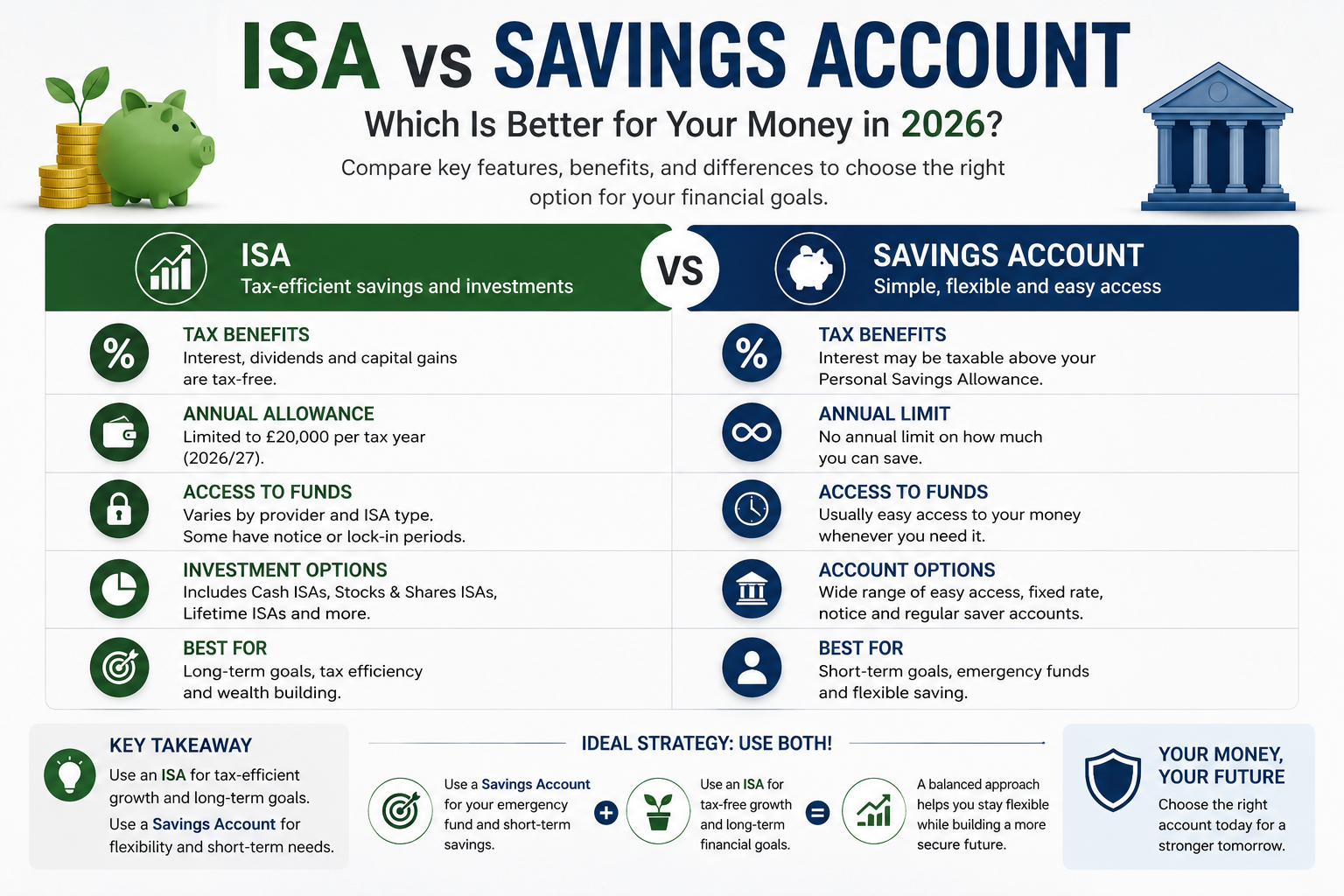
ISA vs Savings Account: Key Differences
| Feature | ISA | Savings Account |
|---|---|---|
| Tax on Interest | Usually Tax-Free | May Be Taxable |
| Annual Allowance | Yes | No Limit |
| Access to Funds | Depends on Provider | Usually Flexible |
| Investment Options | Available | No |
| Suitable for Long-Term Saving | Yes | Often Short-Term |
ISA vs Savings Account Tax Benefits
One of the biggest reasons people choose an ISA is the tax advantage.
ISA Tax Benefits
- Tax-free interest
- Tax-free dividends
- Tax-free capital gains
- No need to report ISA income on tax returns
For higher-rate taxpayers and long-term investors, these benefits can become increasingly valuable over time.
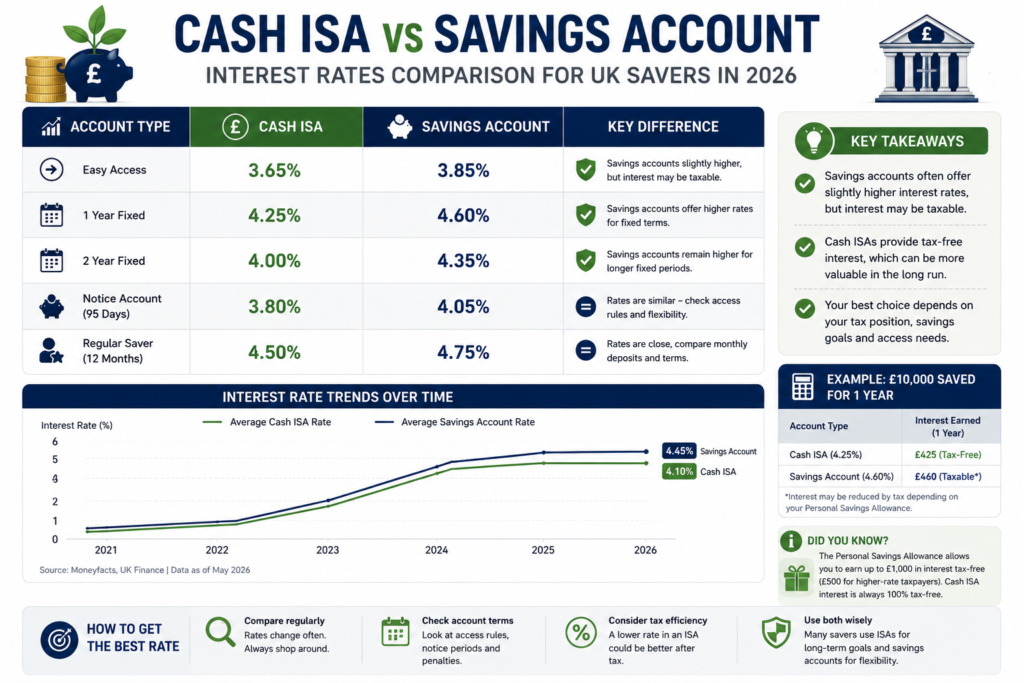
SA vs Savings Account Interest Rates
Interest rates are often a key factor when comparing products.
Cash ISA Rates
Cash ISA rates can vary depending on:
- Provider
- Account type
- Fixed or variable rate
Savings Account Rates
Savings accounts may sometimes offer higher headline rates, particularly fixed-term products.
However, tax considerations should also be taken into account when comparing returns.
Which Option Is Better for Different Savers?
ISA vs Savings Account for Beginners
Many beginners start with a savings account because of its simplicity and accessibility.
ISA vs Savings Account for Long-Term Savings
An ISA may be more attractive for long-term goals due to its tax advantages.
ISA vs Savings Account for Higher Earners
Individuals who exceed their Personal Savings Allowance may benefit significantly from ISA tax protection.
ISA vs Savings Account for Emergency Funds
Easy access savings accounts are often preferred for emergency funds because money can usually be withdrawn quickly.
Common Mistakes to Avoid
ISA vs Savings Account for Ignoring Tax Implications
Some savers focus only on interest rates and overlook tax efficiency.
Chasing Rates Alone
The highest rate isn’t always the best option if access restrictions don’t suit your needs.
Not Reviewing Accounts Regularly
Interest rates change frequently.
Comparing products periodically can help maximise returns.
Overlooking ISA Allowances
Unused ISA allowances generally cannot be carried forward to future tax years.
ISA vs Savings Account: Pros and Cons
ISA Pros
- Tax-efficient
- Long-term benefits
- Investment options available
- Useful for higher earners
ISA Cons
- Annual allowance limits
- Some products restrict withdrawals
Savings Account Pros
- Easy to understand
- Flexible access
- Wide range of providers
- Suitable for emergency savings
Savings Account Cons
- Interest may be taxable
- Limited long-term tax advantages
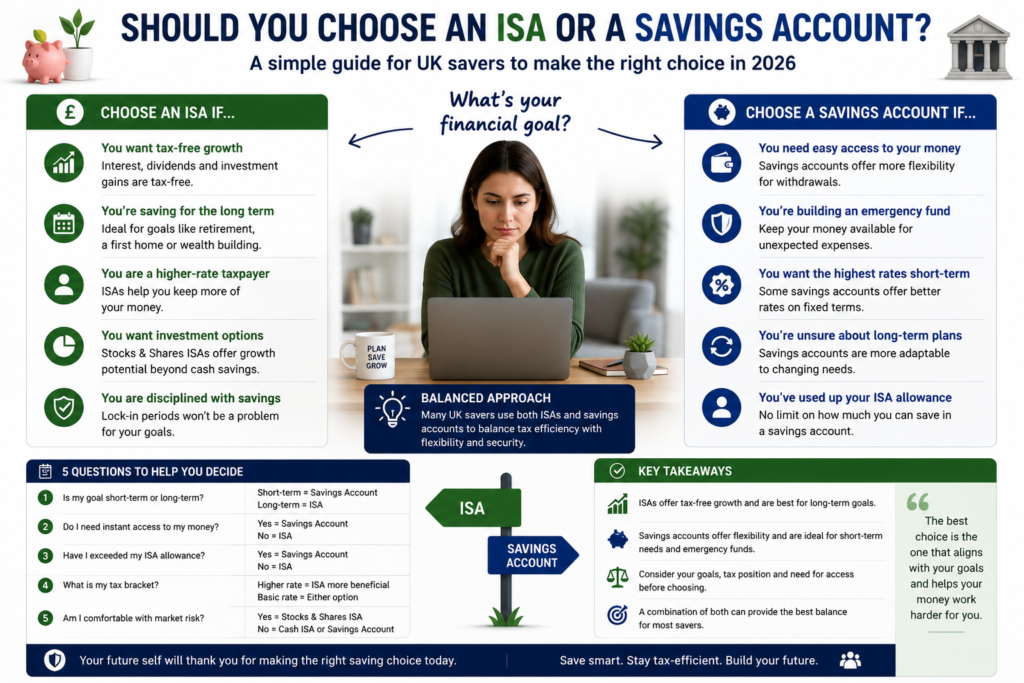
ISA vs Savings Account: Which Is Better in 2026?
There is no one-size-fits-all answer.
An ISA may be better if:
- You want tax-free growth.
- You are saving for long-term goals.
- You are investing regularly.
A savings account may be better if:
- You need quick access to cash.
- You are building an emergency fund.
- You want maximum flexibility.
Many UK savers use both options as part of a balanced financial plan.
ISA vs Savings Account Key Takeaways
- ISAs offer tax-efficient savings and investment opportunities.
- Savings accounts often provide flexibility and easy access.
- Tax considerations can make a significant difference over time.
- Interest rates should not be the only factor when choosing an account.
- Many savers benefit from using both ISAs and savings accounts.
ISA vs Savings Account FAQ Section
What is the difference between an ISA and a savings account?
An ISA provides tax-free growth, while a savings account may be subject to tax depending on your circumstances.
Is an ISA better than a savings account?
It depends on your goals, tax position and need for access to funds.
Can I have both an ISA and a savings account?
Yes. Many UK savers use both types of accounts.
Are Cash ISAs completely tax-free?
Interest earned within a Cash ISA is generally free from UK income tax.
What is the ISA allowance?
The government sets an annual ISA allowance each tax year.
Are savings accounts safer than ISAs?
Cash ISAs and standard savings accounts generally offer similar protection when held with regulated institutions.
Can I withdraw money from an ISA?
Many ISAs allow withdrawals, although rules vary by provider.
Should beginners choose an ISA or a savings account?
Beginners often start with a savings account, but an ISA can be beneficial for long-term goals.
Author Bio
UK Markets Today Editorial Team
UK Markets Today provides trusted financial news, investing guides, market analysis and economic insights for UK readers.
Disclaimer
This article is for informational and educational purposes only and does not constitute financial, investment, or tax advice. Financial products and tax rules can change. Consider seeking professional advice before making financial decisions.
CTA
Compare Your Savings Options Today
Whether you’re building an emergency fund or planning for long-term financial goals, understanding the difference between an ISA and a savings account can help you make more informed decisions.
Stay updated with UK Markets Today for the latest personal finance guides, investing insights and UK market news.