Creditors Amount Falling Within One Year: A Simple How-To Guide
Reading a balance sheet can feel like opening a toolbox without labels. You know the tools matter, but it is not always clear which one does what. One figure that often causes confusion is creditors amount falling within one year. Yet, once you understand it, this number becomes one of the most useful indicators of short-term financial health.
Thank you for reading this post, don't forget to subscribe!In this guide, we break down what creditors amount falling within one year means, why it matters, and how to use it properly. Most importantly, everything is explained in clear, everyday language. No jargon. No guesswork.
What Does Creditors Amount Falling Within One Year Mean in Accounting?
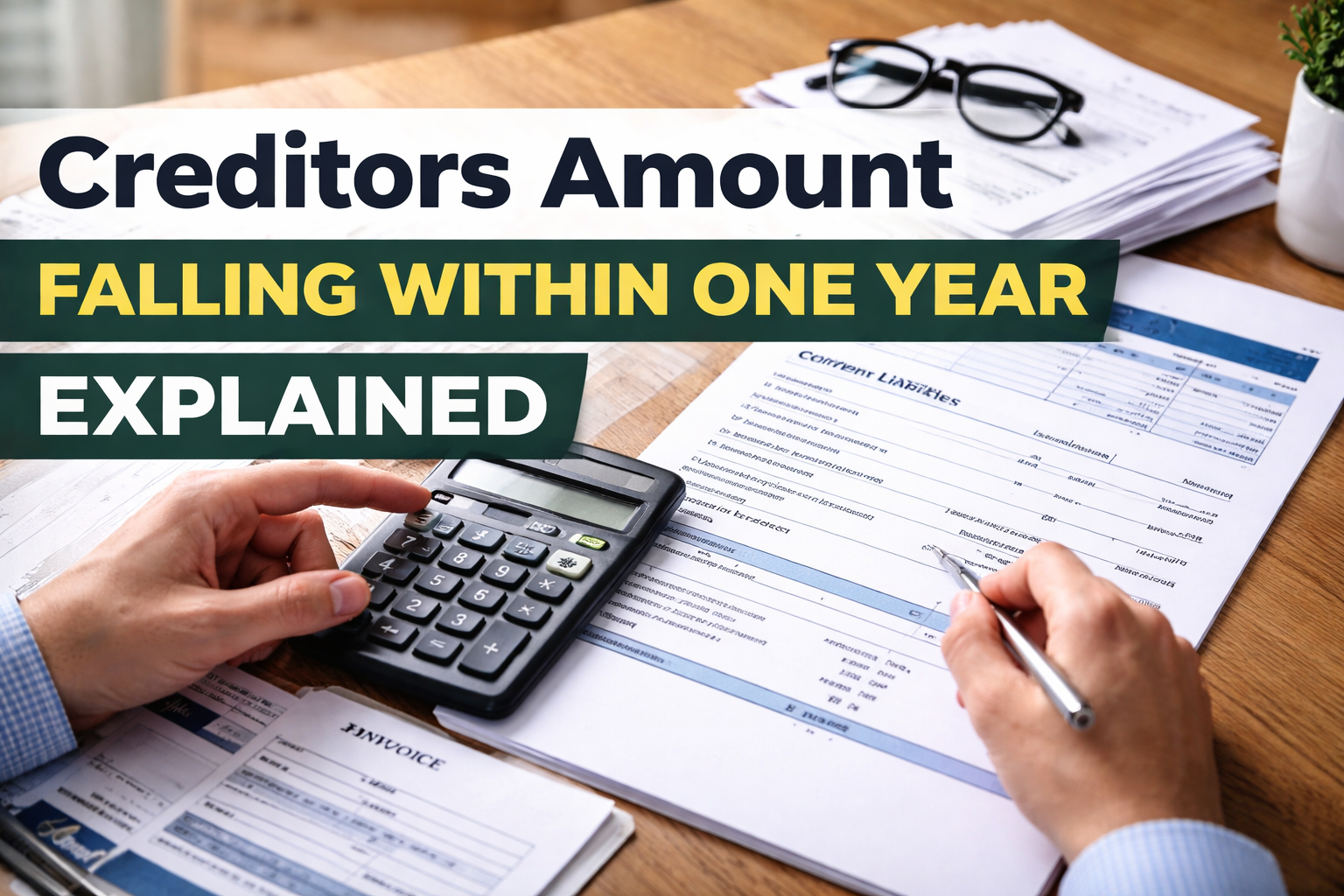
Simply put, creditors amount falling within one year shows how much money a business must pay out within the next 12 months.
This figure appears on the balance sheet under current liabilities. It includes debts, bills, and payments that are due soon. In other words, it answers one key question:
How much cash does the business need in the near future?
Because of this, lenders, investors, and owners all pay close attention to this number..
Why Creditors Amount Falling Within One Year Matters
Cash flow keeps a business alive. Therefore, knowing what payments are due soon helps avoid surprises.
A high creditors amount falling within one year can mean pressure. However, it does not always signal trouble. Many healthy businesses carry short-term debt. What matters is whether the business can pay it.
On the other hand, a low figure usually shows strong control and good planning.
In short, this number helps you:
Plan cash flow
Avoid late payments
Spot short-term risks early
Show financial control to lenders
Where You Find Creditors Amount Falling Within One Year
You will find this figure in the liabilities section of a balance sheet.
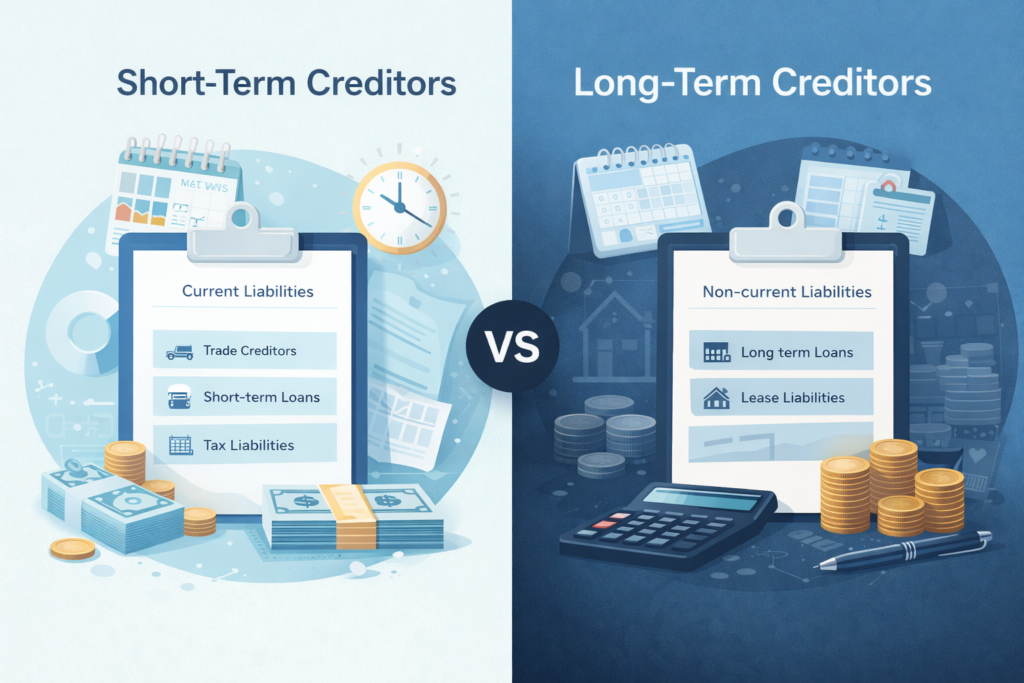
It sits under current liabilities, which means debts due within 12 months. Anything due after that appears under long-term liabilities instead.
Because of this split, the balance sheet gives a clear timeline of what must be paid soon and what can wait.
What Types of Creditors Are Included?
Several different items make up creditors amount falling within one year.
Trade Creditors
These are unpaid invoices from suppliers. They often relate to stock, materials, or services already received.
Short-Term Loans
Any loan repayment due within the next year counts here. Even part of a long-term loan may fall into this section.
Accrued Expenses
These are costs already incurred but not yet paid. Common examples include wages, rent, utilities, and interest.
Tax Liabilities
Corporation tax, VAT, and PAYE owed to HMRC usually appear here. In many cases, tax makes up a large portion of short-term creditors.
Dividends Payable
If dividends have been declared but not paid, they are included as creditors.
Deferred Income
This refers to money received for work not yet completed. Although the cash is in hand, the obligation still exists.
What Is Not Included?
Not all debts fall under creditors amount falling within one year.
For example:
- Long-term loans with no payments due this year
- Mortgages payable over several years
- Lease obligations beyond 12 months
Instead, these appear under long-term liabilities.
Are There Exceptions to the One-Year Rule?
Sometimes, a debt is technically due within a year but is not expected to be paid.
This can happen when:
- A loan is refinanced
- A supplier agrees to delayed payment
- A payment plan is arranged due to hardship
Even so, these agreements do not always change how figures appear on the balance sheet. For that reason, professional advice is often helpful.
Who Uses This Information?
Many groups rely on creditors amount falling within one year.
- Business owners use it for cash flow planning
- Banks review it before approving loans
- Suppliers assess it before offering credit
- Investors study it to measure risk
- HMRC checks it for tax purposes
Because of this, accuracy is essential.
How Creditors Affect Cash Flow
Short-term creditors have a direct impact on cash flow. If upcoming payments exceed expected income, pressure builds quickly.
However, good planning reduces that risk. For example, negotiating longer payment terms can help. Likewise, paying suppliers on time builds trust.
As a result, monitoring due dates and amounts is vital.
Using Creditors When Refinancing
When applying for refinancing, lenders focus heavily on current liabilities.
They usually review:
- Total short-term debt
- Payment history
- Balance between assets and liabilities
For this reason, hiding information rarely works. In fact, it often leads to rejection. Clear and honest figures build confidence instead.
Practical Tips to Manage Creditors Amount Falling Within One Year
Managing creditors does not need to be complex.
- Update your balance sheet regularly
- Track payment deadlines closely
- Plan ahead for tax bills
- Review supplier terms often
- Seek advice early if cash tightens
By following these steps, you reduce risk and stay in control.
Common Mistakes to Avoid
Some mistakes appear frequently.
- Forgetting accrued expenses
- Ignoring partial loan repayments
- Confusing cash with profit
- Leaving accounts outdated
Avoiding these errors improves accuracy and decision-making..
Final Thoughts
Creditors amount falling within one year is more than an accounting label. It represents real payments that affect daily operations.
When you understand this figure, you can plan better and avoid surprises. While debt is normal in business, poor management creates problems.
Handled correctly, this number becomes a planning tool rather than a warning sign.
Frequently Asked Questions
What does creditors amount falling within one year mean?
It shows the total amount a business must pay to creditors within the next 12 months.
Is a high creditor balance bad?
Not always. However, it may signal cash flow risk if not managed properly.
Where does this appear in company accounts?
It appears under current liabilities on the balance sheet.
Can creditors be reduced?
Yes. Paying off debts, renegotiating terms, or refinancing can reduce short-term creditors.