USD to GBP Exchange Rate Explained: Live Value, Trends, Forecasts & UK Insights
USD to GBP is one of the most searched currency conversions in the UK, especially for investors, businesses, travellers, and people sending money internationally. This guide explains how the USD to GBP exchange rate works, what influences it, historical trends, future outlook, and how UK users can get the best value when converting US dollars to British pounds.
Thank you for reading this post, don't forget to subscribe!Reviewed using official central bank data, FCA-regulated financial sources, and trusted UK market analysis platforms.
Overview: What Does USD to GBP Mean?
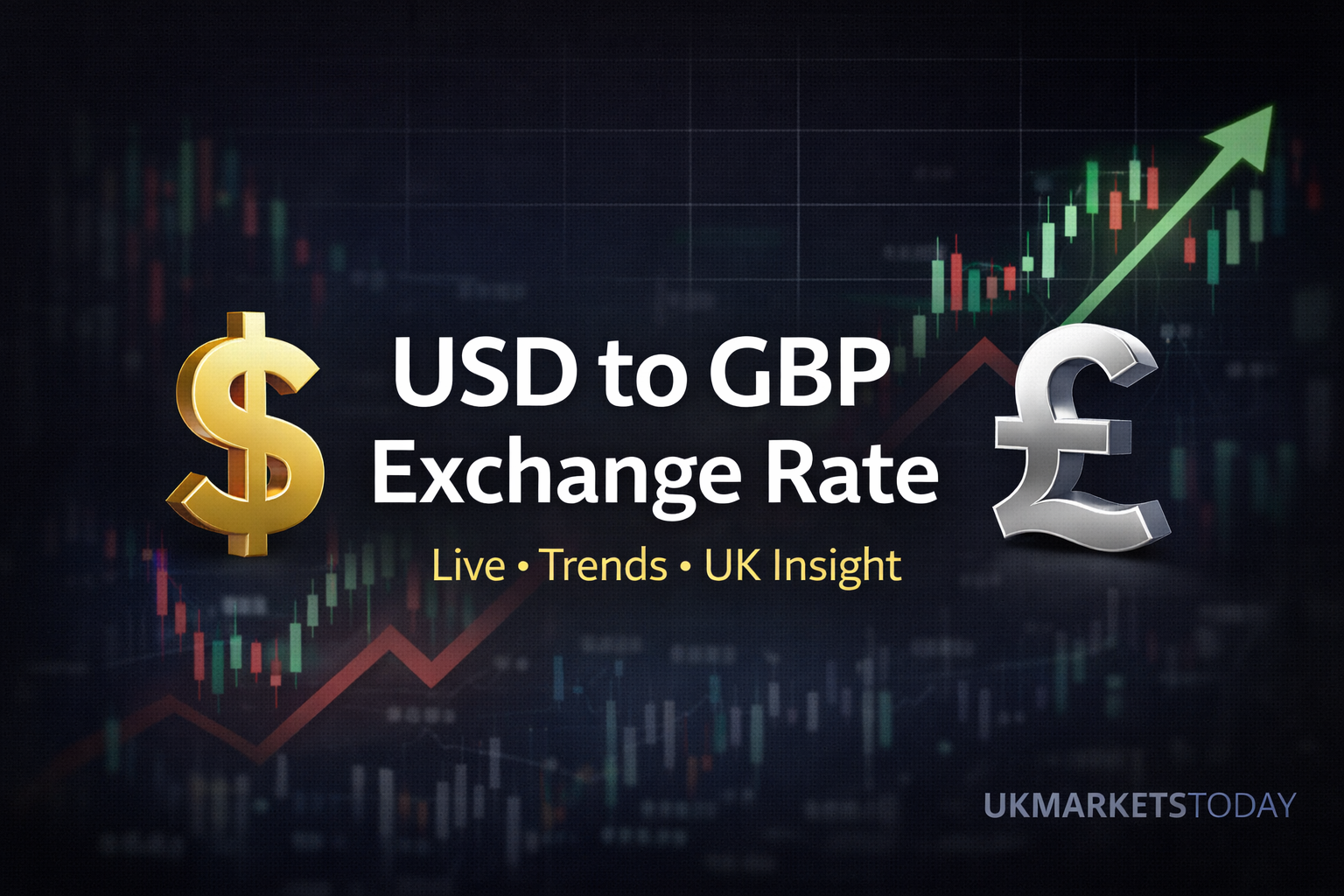
USD to GBP refers to the exchange rate between the United States Dollar (USD) and the British Pound Sterling (GBP). It shows how many pounds you receive for one US dollar.
For example:
- If USD to GBP = 0.79, then $1 equals £0.79
- If the rate rises, the dollar strengthens
- If it falls, the pound strengthens
This exchange rate matters greatly for:
- UK investors holding US assets
- Businesses importing or exporting with the US
- Individuals converting dollars to pounds
- Travellers and international students
Why USD to GBP Is So Important in the UK
The United States is one of the UK’s largest trading partners. As a result, movements in the USD to GBP exchange rate directly impact:
- UK stock market returns on US shares
- Import and export costs
- Inflation and consumer prices
- Interest rate expectations
- Overseas property and investment decisions
Because the pound and dollar are both global reserve currencies, even small changes in USD can have large economic effects.
How the USD to GBP Exchange Rate Works
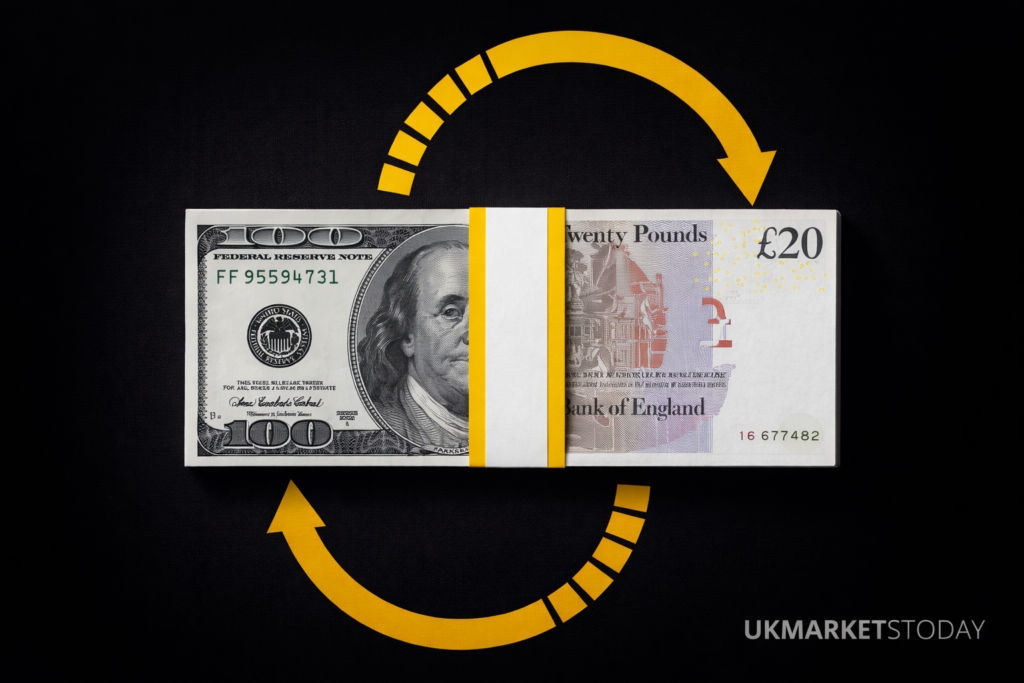
The USD to GBP rate is determined by the foreign exchange (forex) market, which operates 24 hours a day.
Key influences include:
- Supply and demand for USD and GBP
- Interest rate decisions by central banks
- Economic data releases
- Market sentiment and risk appetite
The rate you see online is usually the mid-market rate, while banks and providers often add a margin.
Central Banks and USD to GBP Movements
Bank of England (BoE)
The BoE controls UK monetary policy. Interest rate hikes often strengthen the pound, while cuts may weaken it.
US Federal Reserve (Fed)
The Fed sets US interest rates. Higher US rates typically support a stronger dollar.
When the Fed and BoE move in opposite directions, it volatility increases.
Key Economic Factors Affecting USD to GBP
1. Interest Rates
Higher interest rates attract foreign investment, strengthening a currency.
2. Inflation
High inflation usually weakens a currency if not controlled.
3. Economic Growth
Strong GDP growth supports currency confidence.
4. Political Stability
Uncertainty often weakens currencies, particularly GBP during major UK political events.
Historical USD to GBP Trends
Historically:
- GBP was stronger than USD before the 2008 financial crisis
- Post-crisis, USD gained strength due to global demand
- Brexit caused major GBP volatility
- Recent years show USD strength driven by higher US interest rates
Over the long term, it has ranged between 0.65 and 0.85, showing how volatile this pair can be.
USD to GBP Forecast: What Experts Watch
While no forecast is guaranteed, analysts focus on:
- Future BoE vs Fed rate decisions
- UK inflation trends
- US employment and GDP data
- Global risk sentiment
Many UK analysts expect continued volatility rather than a stable long-term trend.
Best Ways to Convert USD to GBP in the UK
Banks
- Safe but often poor exchange rates
- High hidden fees
Online Money Transfer Services
- Better rates than banks
- Faster transfers
- FCA-regulated providers preferred
Currency Brokers
- Suitable for large transfers
- Personal support
Travel Money
- Worst rates, avoid for large sums
To GBP for UK Investors
If you invest in:
- US stocks
- US ETFs
- US property
Then USD to GBP fluctuations affect your real returns, even if asset prices rise.
Some UK investors use currency hedging to reduce risk.
USD for Businesses
UK businesses trading with the US face:
- Exchange rate risk
- Pricing uncertainty
- Margin pressure
Many firms use:
- Forward contracts
- FX hedging strategies
- Multi-currency accounts
Is It a Good Time to Convert USD to GBP?
There is no perfect timing, but consider:
- Rate trends
- Your personal or business needs
- Risk tolerance
For large sums, spreading conversions over time can reduce risk.
Trusted External Sources
You should always include authoritative external links for E-E-A-T:
- Bank of England – Exchange Rates
- US Federal Reserve
- Office for National Statistics (UK)
- Financial Conduct Authority (FCA)
- MoneyHelper UK
Common USD to GBP Conversion Mistakes
- Using airport exchange desks
- Ignoring hidden fees
- Not checking FCA regulation
- Relying on outdated rates
Avoiding these can save significant money.
Frequently Asked Questions (FAQs)
What is USD to GBP?
It is the exchange rate showing how many British pounds one US dollar is worth.
Why does USD to GBP change daily?
It fluctuates due to interest rates, economic data, and global market demand.
Is USD stronger than GBP?
At times yes, especially when US interest rates are higher than UK rates.
Where can I get the best USD to GBP rate in the UK?
FCA-regulated online money transfer services usually offer the best rates.
Does USD to GBP affect UK investments?
Yes. Currency movements can increase or reduce returns on US assets.
Is USD to GBP likely to stay volatile?
Yes. Ongoing economic and geopolitical factors suggest continued volatility.
Final Thoughts: USD to GBP for UK Users
It is far more than a simple currency conversion. It affects investments, businesses, travel, and everyday financial decisions across the UK. Understanding how the rate works, what drives it, and how to convert smartly can protect your money and improve outcomes.
Staying informed through trusted sources and avoiding poor exchange methods is essential, especially in a highly competitive and fast-moving currency market.