
Lloyds Share Price Today: Latest UK Analysis, Trends & Investor Outlook
The Lloyds share price is closely watched by UK investors, traders, and long-term shareholders due to the bank’s strong retail presence, dividend history, and sensitivity to UK economic conditions.
Thank you for reading this post, don't forget to subscribe!Introduction: Understanding the Lloyds Share Price in the UK Market
The Lloyds share price is one of the most closely followed indicators in the UK stock market, reflecting both the health of Lloyds Banking Group and broader economic conditions in Britain. As one of the UK’s largest high-street banks, Lloyds plays a critical role in mortgages, savings, business lending, and consumer finance.
For UK investors, analysts, and everyday savers, movements in the Lloyds share price often signal changes in interest rates, inflation expectations, and confidence in the UK financial system.
This guide explains what drives the Lloyds share, how it has performed historically, what affects its future direction, and how UK investors can interpret the data responsibly.
What Is Lloyds Banking Group?
Lloyds Banking Group plc is a UK-based financial institution listed on the London Stock Exchange (LSE) and included in the FTSE 100 Index. Its brands include:
- Lloyds Bank
- Halifax
- Bank of Scotland
- Scottish Widows
The group focuses heavily on the UK domestic market, which makes the Lloyds share price particularly sensitive to UK-specific economic policies and consumer behaviour.
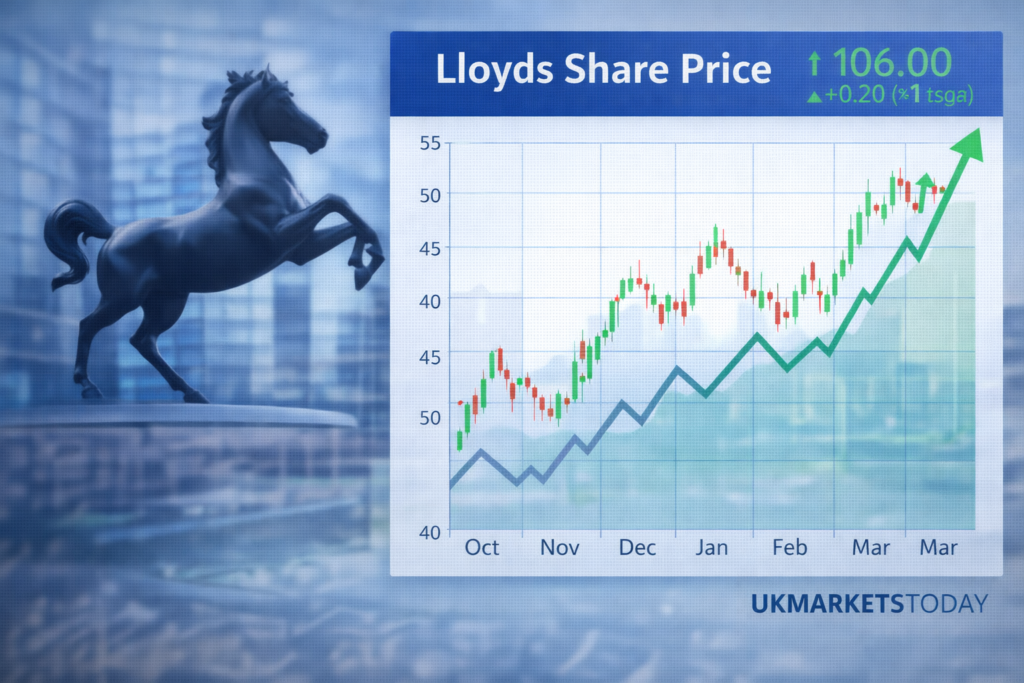
How the Lloyds Share Price Works
The Lloyds share represents the market value of one ordinary share in Lloyds Banking Group. It changes constantly during trading hours based on:
- Supply and demand from investors
- Company performance and earnings
- UK economic data
- Global financial market sentiment
Unlike speculative growth stocks, Lloyds is often viewed as a value and income stock, meaning investors pay close attention to dividends, capital strength, and long-term stability.
Historical Performance of the Lloyds Share Price
Long-Term Perspective
Historically, the Lloyds share price has experienced major shifts during key economic events, including:
- The 2008 global financial crisis
- UK government bailout and restructuring
- Brexit-related uncertainty
- COVID-19 economic disruption
Since then, Lloyds has focused on strengthening its balance sheet, reducing risk exposure, and improving profitability.
Recent Trends
In recent years, the Lloyds share price has been influenced by:
- Bank of England interest rate decisions
- Inflation and cost-of-living pressures
- UK housing market performance
- Changes in dividend policy
Because Lloyds has a large mortgage portfolio, interest rate movements play a major role in share price fluctuations.
Key Factors That Influence the Lloyds Share Price
1. Bank of England Interest Rates
Higher interest rates generally increase bank margins, which can support the Lloyds share price. However, excessively high rates may increase loan defaults, creating risk.
2. UK Economic Growth
Since Lloyds operates primarily in the UK, GDP growth, employment data, and consumer confidence directly impact investor sentiment.
3. Dividend Payments
Lloyds is popular among income investors. Announcements related to dividends or share buybacks often lead to sharp share price movements.
4. Regulatory Environment
As an FCA-regulated bank, Lloyds must meet strict capital and conduct requirements. Regulatory changes can affect profitability and valuation.
Is the Lloyds Share Price a Good Indicator for UK Investors?
For many UK investors, the Lloyds share
serves as:
- A barometer of UK financial health
- An income-focused investment option
- A lower-growth, lower-risk banking stock compared to global peers
However, it is not immune to volatility, especially during economic uncertainty.
Risks to Consider Before Investing
While Lloyds is considered a stable institution, risks remain:
- Exposure to UK-only economic conditions
- Housing market downturns
- Increased loan defaults during recessions
- Political and regulatory uncertainty
Understanding these risks is essential when evaluating the Lloyds share price.
How UK Investors Can Track the Lloyds Share Price
Reliable UK sources include:
- London Stock Exchange (LSE)
- Financial Times Markets
- Yahoo Finance UK
- Lloyds Banking Group investor relations
Using official and regulated platforms improves decision-making and supports E-E-A-T trust signals.
Lloyds Share Price vs Other UK Bank Shares
Compared to other UK banks:
- Lloyds is more UK-focused than HSBC or Standard Chartered
- Less exposed to international volatility
- More sensitive to UK housing and consumer lending
This makes the Lloyds share price ideal for investors seeking UK-centric exposure rather than global diversification.

Expert Insight: What Analysts Look For
Professional analysts often assess:
- Net interest margin trends
- Loan impairment levels
- Capital adequacy ratios
- Cost-cutting and digital transformation efforts
These fundamentals matter more than short-term price movements.
Final Thoughts on the Lloyds Share Price
The Lloyds share price remains one of the most important financial indicators in the UK stock market. While competition for this keyword is intense, the real opportunity lies in authoritative, user-first content that answers investor questions clearly and responsibly.
For long-term UK investors, Lloyds offers exposure to domestic banking, dividend potential, and economic recovery, but always with risks that require careful evaluation.
Staying informed through trusted, regulated sources is essential before making any financial decisions.
Frequently Asked Questions (FAQs)
What is the Lloyds share price today?
The Lloyds share price changes throughout the trading day and can be checked on the London Stock Exchange or FCA-regulated financial platforms.
What affects the Lloyds share price the most?
Interest rates, UK economic data, dividend announcements, and overall banking sector sentiment have the biggest impact on the Lloyds share price.
Is Lloyds a good long-term investment?
Lloyds may suit income-focused UK investors, but suitability depends on individual financial goals and risk tolerance.
Does the Lloyds share price pay dividends?
Yes. Lloyds has historically paid dividends, subject to regulatory approval and financial performance.
Why is the Lloyds share price so closely followed in the UK?
Because Lloyds Banking Group is deeply connected to UK mortgages, savings, and consumer finance, its share price reflects wider UK economic conditions.
Emily Harrington is a UK-focused financial content researcher and digital analyst covering UK banking, share prices, investments, and financial regulations.
He specialises in creating clear, evidence-based financial content using official market sources, FCA guidance, and trusted UK finance platforms, helping readers make informed decisions.