
Access to Work Scheme UK: Eligibility, Support and How to Apply
If you are searching for practical workplace support in the UK, the access to work scheme could make a major difference to your career and financial stability. The access to work scheme is a government-backed programme designed to help people with disabilities or health conditions stay in work, move into employment or become self-employed by providing financial and practical assistance.
Thank you for reading this post, don't forget to subscribe!In recent years, awareness of workplace inclusion and accessibility has increased significantly across the UK. More businesses are investing in inclusive hiring, while employees are becoming more aware of their rights and available support. As a result, interest in the access to work scheme continues to grow, especially among workers seeking flexible support and employers aiming to create accessible workplaces.
Whether you are employed full-time, self-employed or preparing to start a new role, understanding how this scheme works can help you access valuable support and remove workplace barriers.
What Is the Access to Work Scheme?
The access to work scheme is a UK government programme managed through GOV.UK. It provides funding and support for people whose disabilities or health conditions affect their ability to work.
The scheme does not replace employer responsibilities under equality legislation. Instead, it offers additional help where workplace adjustments alone may not fully meet the employee’s needs.
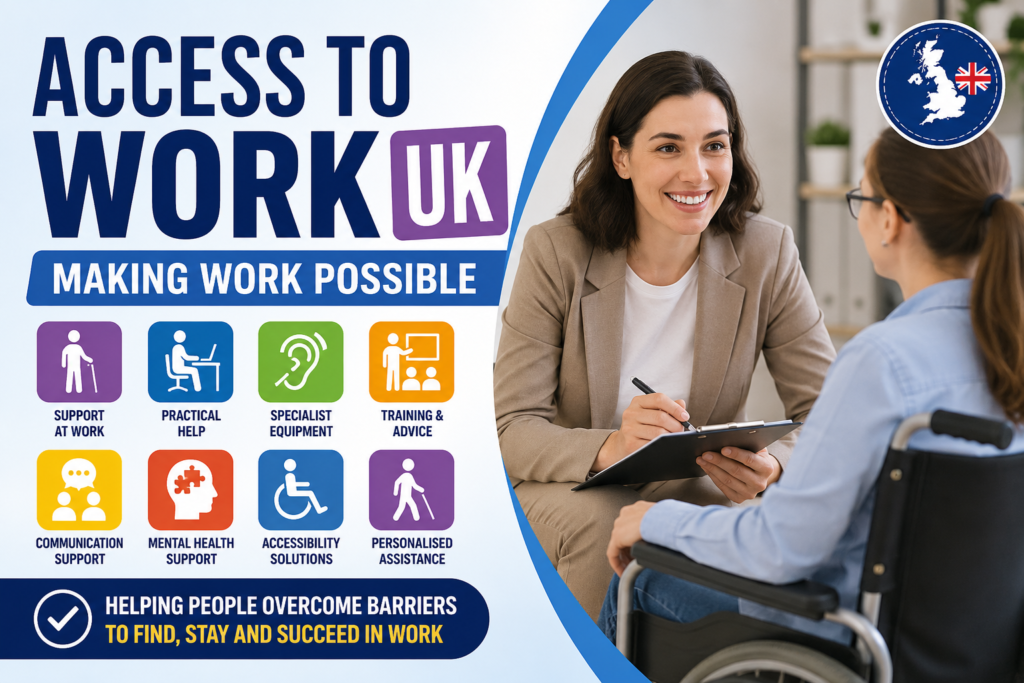
Support can include:
- Specialist equipment
- Mental health support
- Support workers
- Communication assistance
- Travel support
- Workplace adaptations
The overall goal is to help people remain productive and independent in the workplace.

Why the Access to Work Scheme Matters in the UK
Workplace accessibility is becoming a major focus across the UK job market.
Businesses are increasingly recognising that inclusive workplaces can:
- Improve employee retention
- Increase productivity
- Strengthen company culture
- Expand hiring opportunities
At the same time, employees with disabilities or long-term health conditions often face additional financial and practical challenges when entering or remaining in employment.
The access to work scheme helps bridge that gap by reducing costs and providing targeted support.
For many people, this support can significantly improve:
- Career opportunities
- Financial independence
- Confidence at work
- Long-term job stability
Who Can Apply for the Access to Work Scheme?
Many people are surprised by how broad the eligibility criteria can be.
You may qualify if you:
- Are aged 16 or over
- Live in England, Scotland or Wales
- Have a disability or health condition affecting work
- Are employed, self-employed, or starting work
The scheme can support:
- Full-time workers
- Part-time employees
- Apprentices
- Freelancers
- Business owners
Health conditions may include:
- Physical disabilities
- Sensory impairments
- Mental health conditions
- Neurodivergent conditions
Each application is assessed individually.
What Support Does the Access to Work Scheme Provide?
The support available depends on individual workplace needs.
Specialist Equipment Support
Funding may help pay for equipment such as:
- Ergonomic desks
- Adapted keyboards
- Screen readers
- Voice recognition software
This can improve productivity and reduce physical strain.
Mental Health Support Through the Access to Work Scheme
Mental health support has become increasingly important in UK workplaces.
The scheme may provide:
- Tailored coping strategies
- One-to-one support sessions
- Workplace mental health guidance
This support can help employees manage anxiety, stress, depression, or other mental health challenges more effectively.
Travel Assistance Under the Access to Work Scheme
Some individuals may struggle to use public transport due to health conditions.
The scheme may contribute toward:
- Taxi fares
- Travel to and from work
- Travel during working hours
This can be especially useful for workers in areas with limited transport accessibility.
Support Workers and Communication Assistance
The access to work scheme may fund support workers such as:
- Sign language interpreters
- Job coaches
- Personal assistants
This can help employees communicate effectively and complete daily tasks more comfortably.
Workplace Adjustments and Adaptations
Funding may support workplace changes including:
- Lighting adjustments
- Noise reduction
- Accessible workstations
- Modified office layouts
These adjustments help create safer and more inclusive work environments.
How Much Funding Can You Receive?
Funding varies depending on individual circumstances and the type of support required.
In some cases:
- New employees may receive substantial funding support
- Existing employees may involve employer cost-sharing
- Self-employed workers may receive direct assistance
There is no universal fixed amount because every situation is assessed separately.
How to Apply for the Access to Work Scheme
Applying is generally straightforward, but preparation is important.
Step 1: Start Your Application
Applications are submitted through GOV.UK.
You may need:
- Contact details
- Employment information
- Details about your condition
- Workplace challenges
Step 2: Assessment Process
An adviser may contact you to discuss your needs.
This may involve:
- Workplace assessments
- Equipment recommendations
- Discussions with employers
The process focuses on identifying practical solutions.
Step 3: Approval and Funding
If approved, you will receive:
- A support plan
- Funding details
- Guidance on claims and implementation
Support arrangements can then begin.
Common Access to Work Scheme Mistakes to Avoid
Some applications are delayed due to avoidable mistakes.
Common issues include:
- Providing incomplete information
- Being unclear about workplace challenges
- Missing communication from advisers
- Delaying supporting documents
Clear explanations and accurate information can improve the process significantly.
Benefits of the Access to Work Scheme for Employers
The scheme does not only benefit employees.
Employers can also gain advantages such as:
- Better employee retention
- Reduced workplace adjustment costs
- Improved inclusion policies
- Access to wider talent pools
Inclusive workplaces are increasingly important across the UK business environment.
Key Takeaways
The Access to Work Scheme Helps Remove Workplace Barriers
It provides financial and practical support for people with disabilities or health conditions.
Support Can Include Equipment, Travel and Mental Health Assistance
Funding is tailored to individual needs.
Both Employees and Employers Can Benefit
The scheme supports workplace inclusion and long-term productivity.
Applications Are Managed Through GOV.UK
Always use official government guidance when applying.
Trusted UK Resources
For official information and updates, refer to:
These sources provide the latest eligibility guidance and application procedures.
Responsible Guidance
This article is written for educational and informational purposes based on publicly available UK government information and employment support guidance.
Support eligibility and funding decisions may vary depending on personal circumstances. Readers should always review official guidance and seek professional advice where necessary.
Final Thoughts
The access to work scheme remains one of the most valuable workplace support programmes available in the UK. It helps employees overcome practical barriers while encouraging businesses to build more inclusive and accessible environments.
As awareness around workplace wellbeing and accessibility continues to grow, understanding this scheme can help both workers and employers make informed decisions. Whether you need specialist equipment, travel assistance or mental health support, the scheme could provide valuable help that improves long-term employment opportunities and workplace confidence.
FAQ Section
What is the access to work scheme?
The access to work scheme is a UK government programme that provides financial and practical support to people with disabilities or health conditions in the workplace.
Who qualifies for the access to work scheme?
People aged 16 or over in England, Scotland or Wales with a condition affecting their ability to work may qualify.
Does the access to work scheme cover mental health support?
Yes. The scheme may provide tailored mental health support and workplace coping assistance.
Can self-employed workers apply for the access to work scheme?
Yes. Self-employed individuals may qualify if they meet eligibility requirements.
Do you have to repay access to work funding?
Most support provided through the scheme does not need to be repaid.
How long does the application process take?
Processing times vary depending on application complexity and support requirements.
Can employers apply on behalf of employees?
Employees usually apply themselves, but employers may assist during the process.
Author Bio
UK Markets Today Editorial Team
UK Markets Today covers finance, investing, business, market trends, startups and economic updates for UK readers. Our editorial content focuses on clear, practical and trustworthy information designed to help readers make informed financial and business decisions.
Disclaimer
This article is for informational purposes only and does not constitute financial, legal or employment advice. Information may change over time and readers should always refer to official UK government guidance before making decisions related to workplace support or funding.
CTA
Looking for more UK finance, business, and market insights? Explore more expert guides on UK Markets Today and stay updated with the latest financial trends, workplace support schemes, investing tips, and economic developments across the UK.