
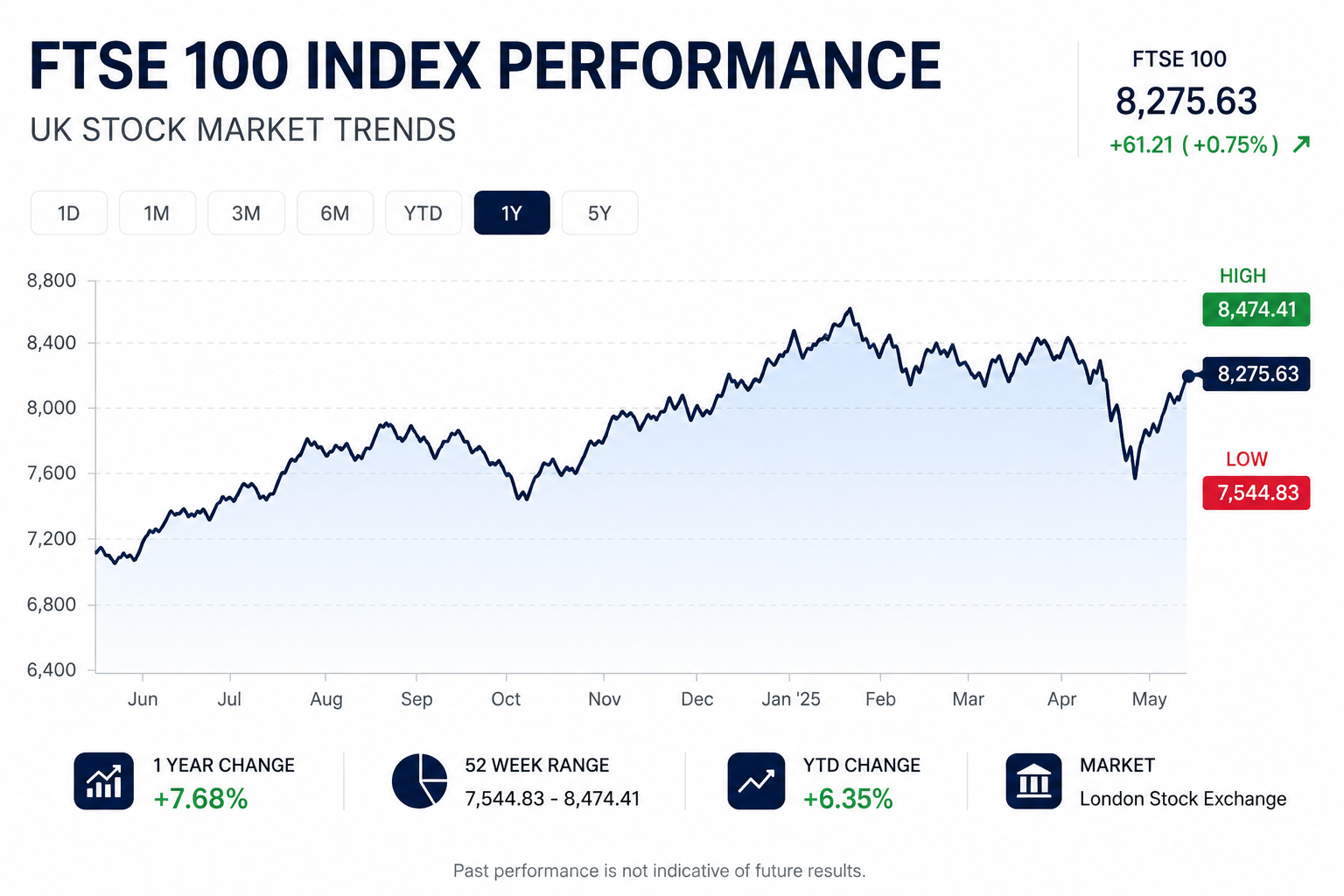
What Is the FTSE 100 Index? A Beginner’s Guide for UK Investors
The FTSE 100 Index is the benchmark stock market index of the United Kingdom and tracks the 100 largest companies listed on the London Stock Exchange by market value. For many investors, the FTSE 100 serves as a snapshot of the health of the UK stock market and a useful indicator of investor confidence.
Thank you for reading this post, don't forget to subscribe!Whether you are new to investing or building a diversified portfolio, understanding the FTSE 100 can help you make more informed financial decisions. The index includes some of the UK’s most recognised businesses operating across sectors such as banking, energy, healthcare, consumer goods, mining and telecommunications.
Key Takeaways
- The FTSE 100 Index tracks the 100 largest companies listed in London.
- It is widely considered the main UK stock market benchmark.
- Investors can gain exposure through ETFs, index funds and shares.
- The index includes global businesses that generate revenue worldwide.
- Many pension funds and investment portfolios use the FTSE 100 as a core holding.
How the FTSE 100 Works
The FTSE 100 is weighted by market capitalisation. This means larger companies have a greater influence on the index’s movements than smaller companies.
For example, when major constituents such as large banks, energy firms, or pharmaceutical companies experience significant price changes, they can move the overall FTSE 100 higher or lower.
The index is reviewed quarterly to ensure it continues to represent the UK’s largest listed companies.
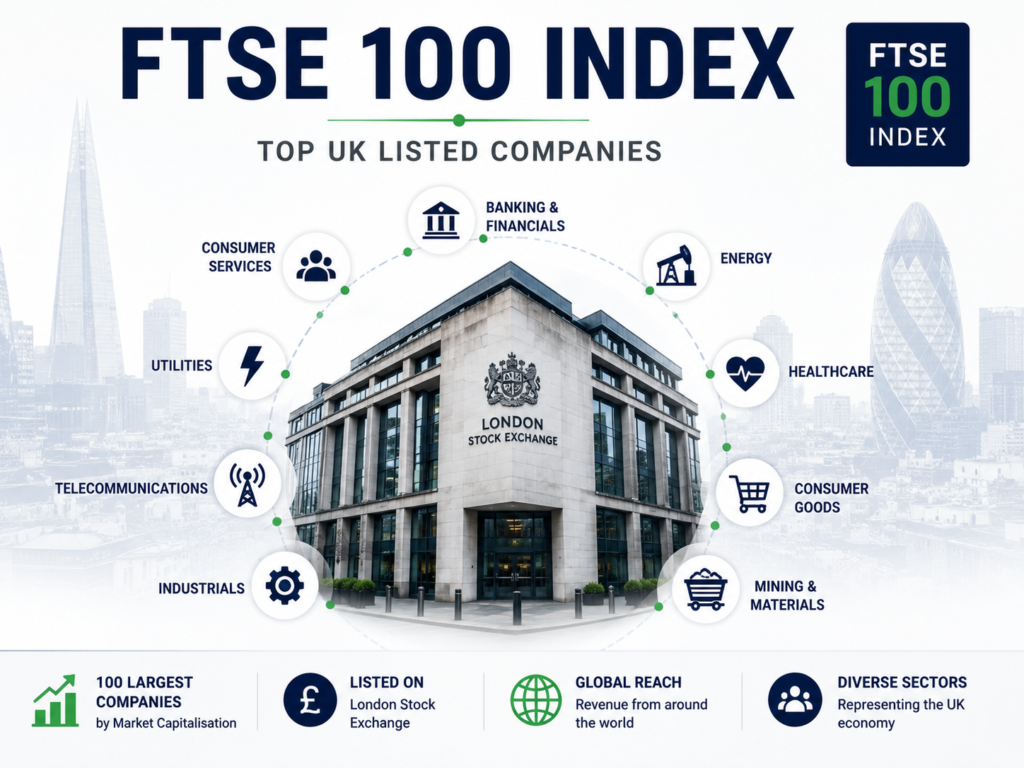
FTSE 100 Index Companies: Who Is Included?
The FTSE 100 contains businesses from various industries.
Examples of sectors represented include:
FTSE 100 Banking Companies
- Major UK banking institutions
- Financial services firms
- Insurance providers
FTSE 100 Energy Companies
- Oil and gas producers
- Renewable energy businesses
- Utility providers
FTSE 100 Consumer Brands
- Food manufacturers
- Consumer goods companies
- Retail businesses
Because many FTSE 100 companies operate globally, their performance is often influenced by international economic conditions rather than just UK economic activity.
Why the FTSE 100 Matters for UK Investors
The FTSE 100 is important because it provides:
- A measure of stock market performance
- Exposure to large established companies
- Dividend income opportunities
- Portfolio diversification
- Long-term wealth-building potential
Investors frequently monitor the FTSE 100 to understand broader market trends and economic sentiment.
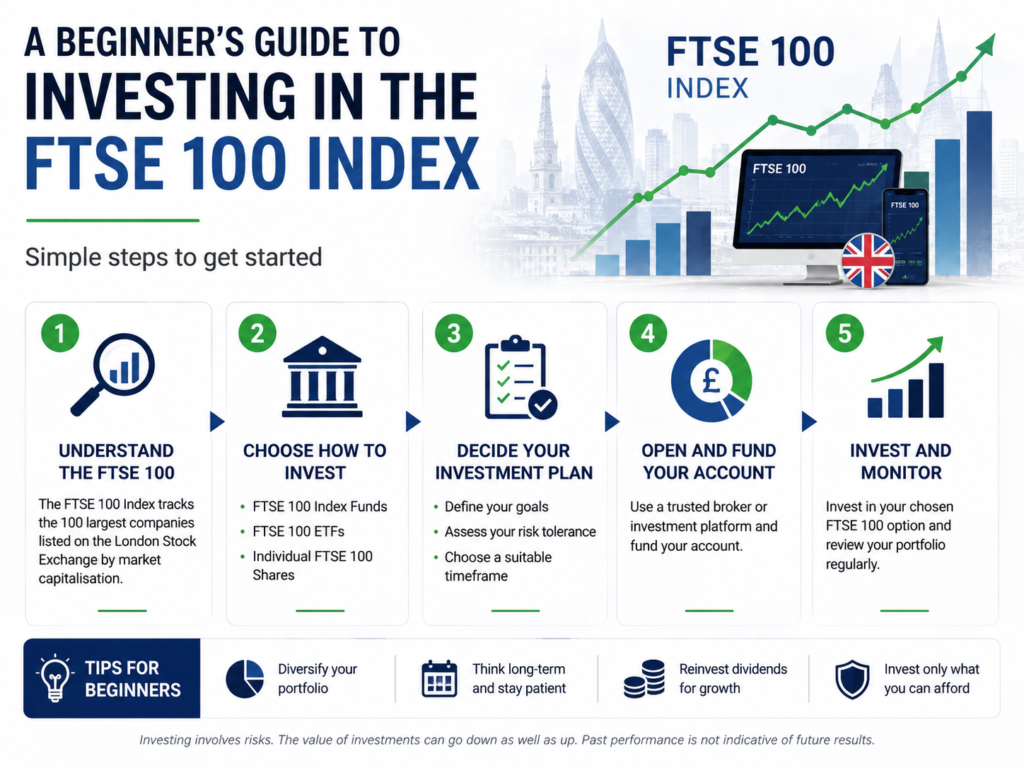
How to Invest in the FTSE 100
There are several ways to gain exposure to the FTSE 100.
FTSE 100 Index Funds
Index funds aim to replicate the performance of the FTSE 100.
FTSE 100 Index ETFs
Exchange-traded funds offer a simple and cost-effective way to invest.
Individual FTSE 100 Shares
Investors can purchase shares directly in companies listed within the FTSE 100.
FTSE 100 Index Performance in Recent Years
The FTSE 100 has experienced periods of volatility driven by:
- Inflation
- Interest rate changes
- Global economic growth
- Energy prices
- Geopolitical events
Despite short-term fluctuations, the FTSE 100 remains a key component of many long-term investment strategies.
FTSE 100 Index vs FTSE 250
Many investors compare the FTSE 100 with the FTSE 250.
| Feature | FTSE 100 | FTSE 250 |
|---|---|---|
| Companies | 100 Largest | Next 250 Largest |
| International Exposure | Higher | Lower |
| UK Exposure | Moderate | Higher |
| Volatility | Lower | Higher |
| Growth Potential | Moderate | Higher |
Advantages of Investing in the FTSE 100 Index
FTSE 100 Index Diversification
Exposure to multiple industries.
FTSE 100 Index Dividend Potential
Many constituents pay regular dividends.
FTSE 100 Index Accessibility
Easy access through ETFs and index funds.
Risks of Investing in the FTSE 100 Index
- Market volatility
- Economic downturns
- Currency fluctuations
- Sector concentration risks
Understanding these risks is important before investing.
Conclusion
The FTSE 100 Index remains one of the most important benchmarks for UK investors. Whether you are building a pension portfolio, investing through an ISA or simply learning about the stock market, understanding how the FTSE 100 Index works can provide valuable insights into the UK economy and investment landscape.
For long-term investors seeking diversification, income potential and exposure to established companies, the FTSE 100 continues to play a significant role in portfolio construction.
FAQ
What is the FTSE 100 Index?
The FTSE 100 tracks the 100 largest publicly listed companies on the London Stock Exchange.
Is the FTSE 100 Index a good investment?
Many investors use the FTSE 100 as a long-term investment due to diversification and dividend opportunities.
How can beginners invest in the FTSE 100 Index?
Most beginners invest through FTSE 100 Index ETFs or index funds.
How often is the FTSE 100 Index updated?
The index value changes throughout trading hours and its constituents are reviewed quarterly.
What companies are in the FTSE 100 Index?
The index includes large companies from sectors such as banking, energy, healthcare, mining and consumer goods.
Does the FTSE 100 Index pay dividends?
The index itself does not pay dividends, but many constituent companies distribute dividends to shareholders.
Author Bio
UK Markets Today Editorial Team
UK Markets Today provides trusted financial news, market analysis, investing guides and economic insights for UK readers.
Disclaimer
This article is for informational purposes only and does not constitute financial advice. Investments can rise and fall in value and past performance does not guarantee future results.
CTA
Want more UK investing insights?
Follow UK Markets Today for the latest stock market news, investment guides, FTSE analysis and economic updates designed for UK investors.