

Mortgage in Principle Explained: How It Works in the UK (2026)
Buying a property is one of the biggest financial commitments most people will ever make. Before you start viewing homes or making offers, many buyers choose to obtain a Mortgage in Principle. It gives you an estimate of how much you may be able to borrow and shows sellers that you’re financially prepared to move forward.
Thank you for reading this post, don't forget to subscribe!Whether you’re a first-time buyer, moving home, or considering a remortgage, understanding how a Mortgage in Principle works can make the home-buying process smoother. In this guide, we’ll explain what it is, how to apply, how it differs from a full mortgage offer and the key factors UK buyers should consider in 2026.
What Is a Mortgage in Principle?
A Mortgage in Principle is an initial indication from a mortgage lender that they may be willing to lend you a certain amount based on the financial information you provide.
It’s often referred to as:
- Agreement in Principle (AIP)
- Decision in Principle (DIP)
- Mortgage Promise
- Mortgage Pre-Approval
Although the names differ, they generally refer to the same concept.
A Mortgage in Principle is not a legally binding mortgage agreement. Instead, it acts as an early assessment of your borrowing potential before submitting a full mortgage application.
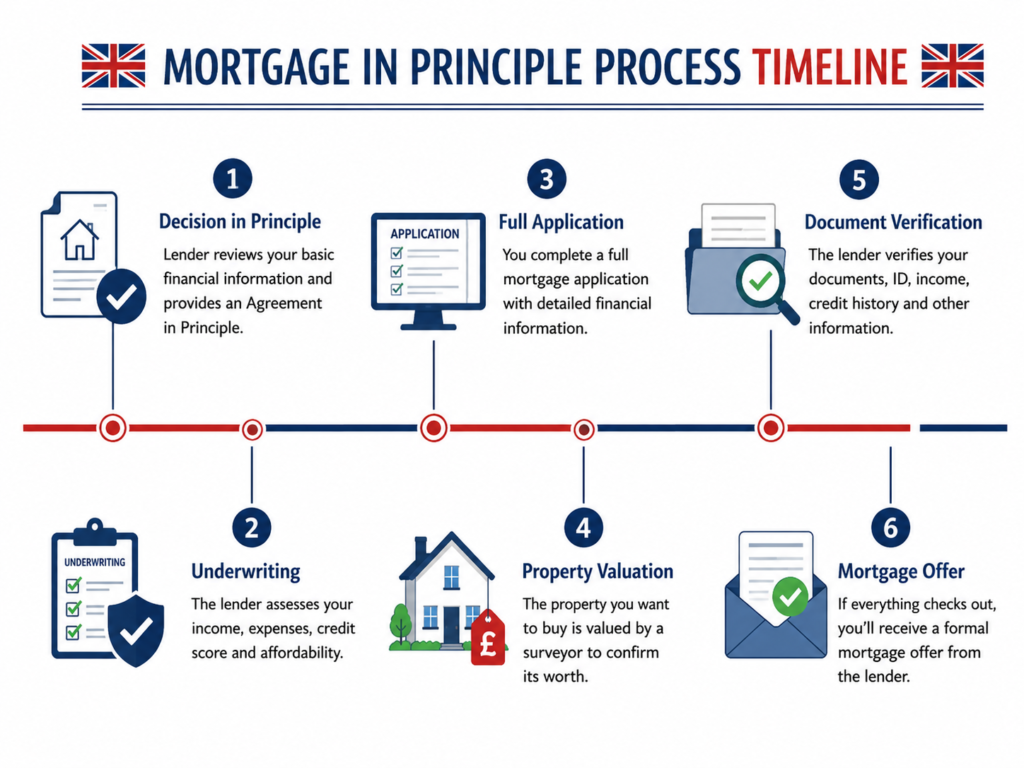
How Does a Mortgage in Principle Work?
Applying for a Mortgage in Principle is usually straightforward and can often be completed online within minutes.
A lender will typically ask for information such as:
- Your annual income
- Employment status
- Monthly expenses
- Existing debts
- Credit commitments
- Deposit amount
- Property budget
Some lenders perform only a soft credit check, while others may carry out a hard credit search. This depends on the lender’s policy, so it’s worth checking before applying.
If the lender is satisfied with the information provided, they may issue a Mortgage in Principle showing the maximum amount they could potentially lend.
Remember, this is only an estimate. Your final mortgage offer will depend on additional checks, property valuation, affordability assessments and lender criteria.
Why Is a Mortgage in Principle Important?
Getting a Mortgage in Principle can provide several advantages during your property search.
Helps You Set a Realistic Budget
Knowing approximately how much you could borrow allows you to search for homes within your likely price range.
Shows You’re a Serious Buyer
Estate agents and sellers often prefer buyers who already have a Mortgage in Principle because it demonstrates financial preparation.
Speeds Up the Buying Process
Having your financial information reviewed early can make the full mortgage application process quicker once your offer on a property is accepted.
Gives You More Confidence
Rather than guessing what you can afford, you’ll have a clearer understanding of your borrowing potential.
Who Should Get a Mortgage in Principle?
A Mortgage in Principle can benefit many different buyers.
First-Time Buyers
If you’re purchasing your first property, a Mortgage in Principle helps you understand your budget before beginning your search.
Home Movers
If you’re selling one property and buying another, it provides confidence about your likely borrowing capacity.
Buy-to-Let Investors
Property investors may also use a Mortgage in Principle before making offers, although lending criteria differ from residential mortgages.
Remortgaging Homeowners
Some homeowners exploring remortgaging options may obtain an initial lending assessment before switching lenders.
What Information Do You Need for a Mortgage in Principle?
Although requirements vary between lenders, you’ll usually need:
- Proof of identity
- UK address history
- Employment details
- Annual income
- Monthly expenditure
- Existing loans or credit cards
- Deposit amount
- Bank account details (in some cases)
Providing accurate information is important because discrepancies may affect your full mortgage application later.
Does a Mortgage in Principle Affect Your Credit Score?
This is one of the most common questions asked by UK buyers.
The answer depends on the lender.
Soft Credit Search
Many lenders use a soft search when issuing a Mortgage in Principle. This allows them to assess your eligibility without leaving a visible mark on your credit file that other lenders can see.
Hard Credit Search
Some lenders carry out a hard credit search instead. Multiple hard searches within a short period may affect how future lenders assess your application.
Before applying, check the lender’s policy so you know which type of credit search they use.
Mortgage in Principle vs Mortgage Offer
Many buyers assume these are the same thing, but they’re very different.
| Mortgage in Principle | Mortgage Offer |
|---|---|
| Initial borrowing estimate | Formal mortgage approval |
| Based on basic financial details | Based on full application and checks |
| Not legally binding | Official lending offer |
| Helps when viewing properties | Required before completing a purchase |
| Usually issued quickly | Takes longer due to full underwriting |
A Mortgage in Principle is an important first step, but it does not guarantee you’ll receive a mortgage. Lenders will still assess your finances, credit history, affordability and the property itself before issuing a final mortgage offer.
Benefits of a Mortgage in Principle
Obtaining a Mortgage in Principle before searching for a property offers several advantages, particularly in a competitive UK housing market.
1. Confirms Your Budget
A Mortgage in Principle gives you a clearer idea of how much you may be able to borrow. This helps you focus on properties within your budget and avoid wasting time viewing homes you cannot realistically afford.
2. Strengthens Your Offer
Many estate agents and sellers prefer buyers who already have a Mortgage in Principle because it shows you’ve already taken the first step towards securing finance.
3. Speeds Up the Buying Process
When your offer is accepted, much of the initial financial assessment has already been completed, making the mortgage application process smoother.
4. Builds Confidence
Knowing your estimated borrowing limit allows you to negotiate with confidence and reduces uncertainty during the home-buying process.
Are There Any Drawbacks?
Although a Mortgage in Principle is useful, there are a few things to consider.
It’s Not a Guaranteed Mortgage
A Mortgage in Principle is only an indication that a lender may be willing to lend you money. Your final mortgage application could still be declined if circumstances change or additional checks reveal issues.
It Has an Expiry Date
Most Mortgage in Principles are valid for around 60 to 90 days, although this varies by lender.
Your Financial Situation May Change
Changes in employment, income, debts or credit history before your full application could affect your mortgage eligibility.
How to Apply for a Mortgage in Principle
Applying is usually quick and straightforward.
Step 1: Check Your Credit Report
Before applying, review your credit report for any errors and ensure your financial information is up to date.
Step 2: Calculate Your Budget
Consider:
- Your deposit
- Monthly income
- Regular expenses
- Existing debts
- Future financial commitments
Step 3: Compare Mortgage Lenders
Different lenders have different affordability criteria, interest rates and lending policies.
Step 4: Submit Your Application
Provide accurate information about:
- Employment
- Income
- Address history
- Deposit
- Existing financial commitments
Step 5: Receive Your Mortgage in Principle
If successful, you’ll receive confirmation showing the estimated amount the lender may be prepared to lend.
Why Could a Mortgage in Principle Be Declined?
Several factors may affect your application.
Common reasons include:
- Low credit score
- High existing debt
- Unstable employment
- Insufficient income
- Inaccurate information
- Recent missed payments
- Multiple recent credit applications
A declined Mortgage in Principle doesn’t necessarily mean you’ll never qualify for a mortgage. Improving your financial profile may increase your chances in the future.
How to Improve Your Chances of Approval
You can improve your likelihood of receiving a Mortgage in Principle by:
- Checking your credit report regularly.
- Paying bills on time.
- Reducing outstanding debt.
- Saving a larger deposit.
- Avoiding unnecessary credit applications.
- Keeping your financial information accurate.
- Demonstrating stable employment and income.
Expert Tips for First-Time Buyers
- Save as much deposit as possible before applying.
- Compare lenders rather than applying to several at once.
- Ask whether the lender performs a soft or hard credit check.
- Don’t make major financial changes before your mortgage completes.
- Keep all financial documents organised for your full application.
Common Mistakes to Avoid
Many buyers make avoidable mistakes when applying for a Mortgage in Principle.
Avoid:
- Applying with multiple lenders on the same day.
- Providing inaccurate financial information.
- Ignoring your credit report.
- Taking out new loans before buying a property.
- Assuming a Mortgage Principle guarantees approval.
- Forgetting that the document expires.
Key Takeaways
- A Mortgage in Principle provides an estimate of how much a lender may be willing to lend.
- It helps buyers understand their budget before viewing properties.
- Many sellers and estate agents prefer buyers who already have one.
- It is not a legally binding mortgage offer.
- Your financial circumstances and property checks still determine final approval.
- Comparing lenders and maintaining a healthy credit profile can improve your chances of success.
Frequently Asked Questions
What is a Mortgage in Principle?
A Mortgage in Principle is an initial indication from a lender of how much they may be willing to lend based on your financial information.
Is a Mortgage in Principle guaranteed?
No. It is not a guarantee of a mortgage. A lender will still carry out affordability checks, property valuation, and underwriting before issuing a formal mortgage offer.
How long does a Mortgage in Principle last?
Most lenders issue a Mortgage in Principle that remains valid for approximately 60 to 90 days, although this varies.
Does a Mortgage in Principle affect my credit score?
Some lenders use a soft credit search, while others perform a hard search. Always check the lender’s policy before applying.
Can I make an offer without a Mortgage in Principle?
Yes, but many estate agents and sellers prefer buyers who already have one because it demonstrates financial readiness.
Can I apply with more than one lender?
Yes, but making multiple applications involving hard credit searches in a short period could affect your credit profile.
Is a Mortgage in Principle free?
Many UK lenders and mortgage brokers offer Mortgage in Principle applications free of charge, although this varies.
What happens after receiving a Mortgage in Principle?
Once your offer on a property is accepted, you’ll submit a full mortgage application. The lender will then complete affordability checks, verify your documents, assess the property’s value and decide whether to issue a formal mortgage offer.
Author Bio
UK Markets Today Editorial Team
The UK Markets Today Editorial Team publishes trusted, research-based content covering UK personal finance, investing, banking, mortgages, taxation, pensions and market news. Our mission is to simplify complex financial topics and help readers make informed financial decisions.
Finance Disclaimer
This article is for informational and educational purposes only and should not be considered financial, legal or mortgage advice. Mortgage lending criteria, interest rates, affordability assessments and eligibility requirements vary between lenders and may change over time. Always consult a qualified mortgage adviser or financial professional before making borrowing decisions.
Call to Action
Ready to Buy Your First Home?
A Mortgage in Principle can be one of the smartest first steps when buying a property in the UK. It helps you understand your budget, demonstrates to sellers that you’re a serious buyer and prepares you for the mortgage application process.
Stay informed with UK Markets Today for the latest mortgage guides, UK housing market updates, personal finance tips and expert insights to help you make confident financial decisions.