Pound to Dollar: Complete Guide, Forecast & What It Means for UK Investors in 2026
The Pound to Dollar exchange rate is one of the most important financial indicators in the world. Whether you’re an investor tracking international markets, a business importing goods or a traveller planning a trip to the United States, understanding the Pound to Dollar relationship can help you make smarter financial decisions.
Thank you for reading this post, don't forget to subscribe!The British Pound Sterling (GBP) and the US Dollar (USD) represent two of the world’s most traded currencies. Together, they form the GBP/USD currency pair, commonly known among traders as “Cable.” Because both the UK and the US play major roles in the global economy, movements in this exchange rate attract significant attention from investors, economists and policymakers.
What Does Pound to Dollar Mean?
The Pound to Dollar exchange rate shows how many US Dollars can be purchased with one British Pound.
For example:
- £1 = $1.30 means one Pound buys 1.30 Dollars.
- £100 = $130 at the same rate.
- £1,000 = $1,300.
Exchange rates constantly change throughout the trading day due to supply and demand in the global foreign exchange market.
When the Pound strengthens against the Dollar, UK consumers gain greater purchasing power in the US. When the Pound weakens, imports and overseas spending become more expensive.
Why the Pound to Dollar Exchange Rate Matters
The Pound to Dollar rate affects far more than currency traders.
For Investors
Investors holding US shares or global funds are exposed to currency movements.
A stronger Pound can reduce the value of overseas investment returns when converted back into Sterling.
For Businesses
Companies that trade internationally are directly impacted by currency fluctuations.
Importers may face higher costs when the Pound weakens, while exporters may benefit from increased competitiveness.
For Travellers
Holidaymakers visiting the United States often monitor exchange rates before converting money.
A stronger Pound generally means better value for accommodation, shopping and travel expenses.
How the GBP/USD Market Works
The Pound to Dollar exchange rate is determined by supply and demand.
When demand for Pounds increases relative to Dollars, GBP/USD rises.
When demand for Dollars increases relative to Pounds, GBP/USD falls.
Unlike stock markets, the forex market operates nearly 24 hours a day during weekdays and processes trillions of dollars in transactions daily.
Major participants include:
- Central banks
- Commercial banks
- Hedge funds
- Institutional investors
- Corporations
- Retail traders
Factors That Influence Pound to Dollar
Several key factors influence the direction of GBP/USD.
Interest Rates
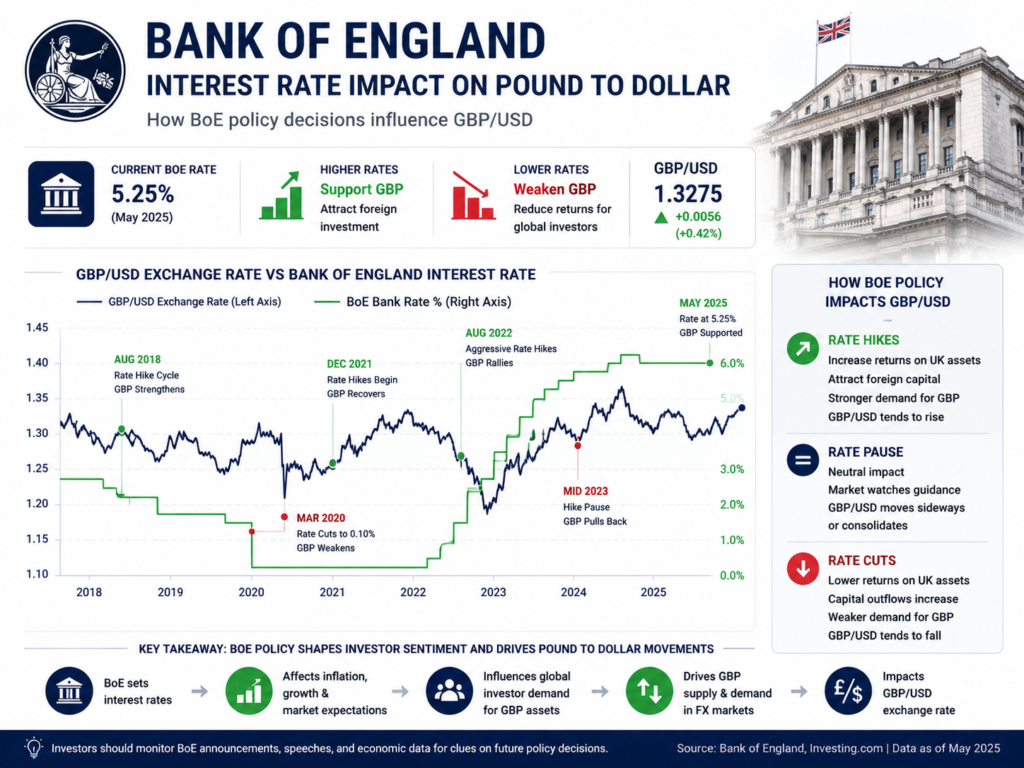
Interest rates remain one of the most important drivers.
Higher rates can attract foreign investment because investors seek better returns on savings and bonds.
Inflation
Inflation measures the pace at which prices rise.
Persistent inflation often leads central banks to adjust interest rates.
Economic Growth
Strong economic growth can strengthen a country’s currency by boosting investor confidence.
Important indicators include:
- GDP growth
- Employment figures
- Retail sales
- Manufacturing activity
Political Stability
Political uncertainty can create volatility in currency markets.
Investors generally prefer stable economic and political environments.
Global Risk Sentiment
During periods of market stress, investors often seek safe-haven assets.
The US Dollar is frequently viewed as a safe-haven currency during times of uncertainty.
The Role of the Bank of England
The Bank of England plays a crucial role in determining the value of Sterling.
Its main responsibilities include:
- Maintaining price stability
- Managing inflation
- Supporting economic growth
- Setting interest rates
Financial markets closely monitor every Bank of England announcement.
Even subtle changes in policy guidance can cause significant movements in the Pound to Dollar exchange rate.
Why Investors Watch the Bank of England
If the Bank signals future rate increases, Sterling may strengthen.
If policymakers suggest rate cuts, Sterling may weaken.
As a result, investors often analyse meeting minutes, speeches and inflation reports.
The Role of the US Federal Reserve
The US Federal Reserve has a similar influence on the Dollar.
Because the Dollar is the world’s primary reserve currency, Federal Reserve decisions can affect global markets.
Key areas monitored by investors include:
- Interest rate decisions
- Inflation outlook
- Employment data
- Economic projections
A stronger US economy often supports the Dollar, while weaker growth can reduce demand.
Historical Pound to Dollar Trends
The Pound to Dollar exchange rate has experienced major fluctuations over the decades.
Historically, Sterling has traded above $2.00 at certain periods and below $1.10 during times of significant economic uncertainty.
Recent years have been influenced by:
- Inflation pressures
- Interest rate cycles
- Global economic shocks
- Energy market disruptions
- Geopolitical tensions
These events demonstrate how sensitive exchange rates can be to changing economic conditions.
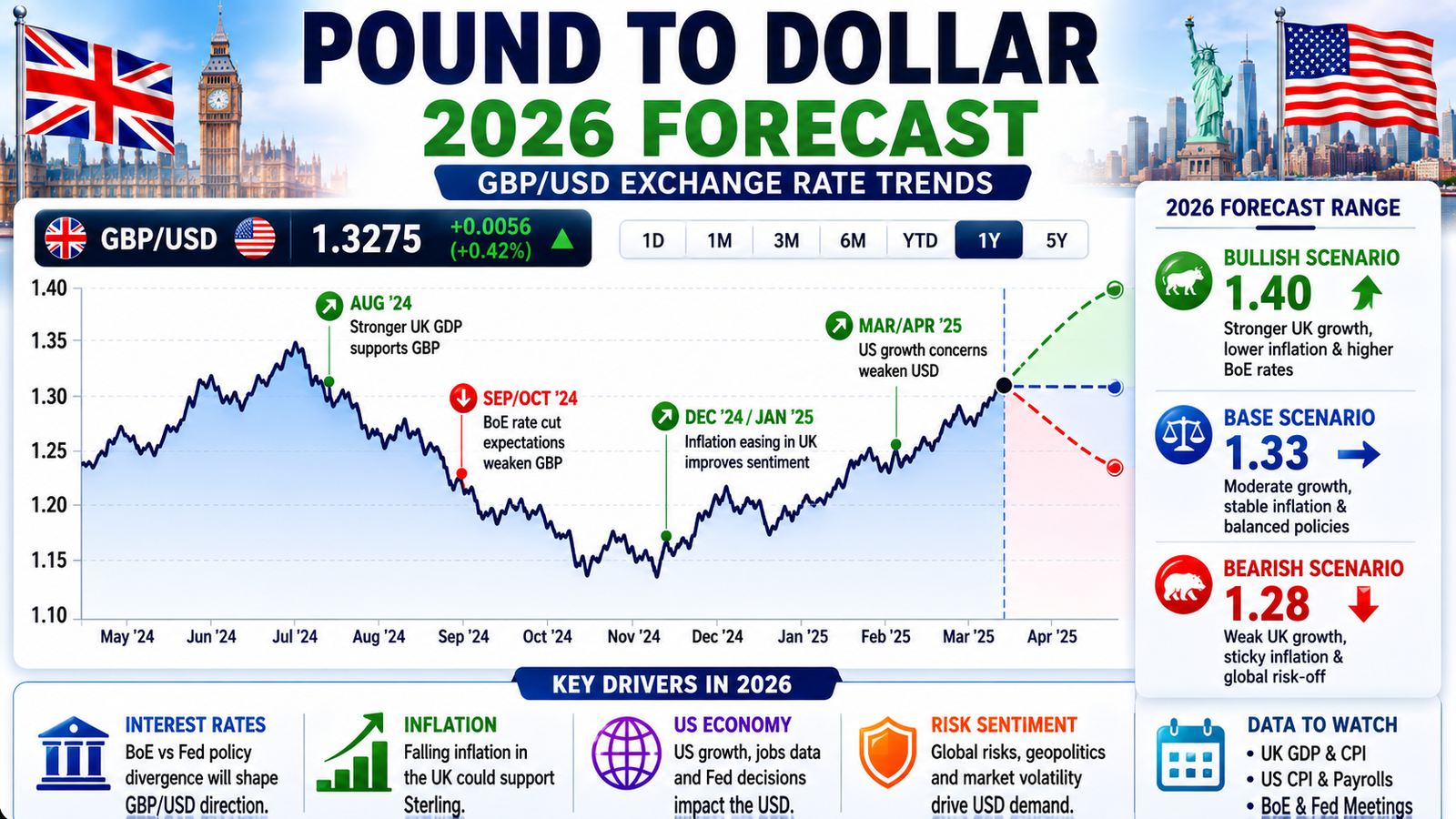
Pound to Dollar Forecast for 2026
One of the most common questions investors ask is:
What is the Pound to Dollar forecast for 2026?
While nobody can predict exchange rates with certainty, several factors are likely to influence GBP/USD during 2026.
UK Inflation Trends
If inflation continues to moderate, the Bank of England may adopt a more balanced approach to monetary policy.
US Economic Growth
The strength of the US economy will remain a major driver of Dollar demand.
Interest Rate Expectations
Future decisions by both central banks could significantly influence exchange rates.
Global Economic Conditions
Trade activity, commodity prices and geopolitical developments may continue affecting market sentiment.
Most analysts expect periods of volatility as markets adjust to changing economic data.
What Pound to Dollar Means for UK Investors
Currency movements can affect investment performance.
Global Index Funds
Many global funds have significant exposure to US companies.
When Sterling strengthens, returns from US investments may appear lower when converted back into Pounds.
US Stocks
Investors buying shares in major American companies are exposed to both stock performance and currency risk.
Diversification Benefits
Holding assets denominated in different currencies can help diversify a portfolio.
However, exchange-rate fluctuations introduce additional risk.
Impact on Businesses
Businesses operating internationally pay close attention to currency markets.
Exporters
A weaker Pound may help exporters by making UK goods cheaper abroad.
Importers
A weaker Pound can increase costs for imported products and raw materials.
Multinational Companies
Large corporations often use currency hedging strategies to manage exchange-rate risks.
Impact on Travellers
For UK travellers visiting the US, exchange rates can significantly affect spending power.
A stronger Pound generally means:
- Cheaper accommodation
- Lower food costs
- Better shopping value
- More favourable travel budgets
Monitoring exchange rates before exchanging money can help travellers maximise value.
Strategies for Monitoring the Pound to Dollar Rate
Investors often follow:
- Bank of England announcements
- Federal Reserve meetings
- Inflation reports
- Employment data
- GDP releases
- Market forecasts
Staying informed can help individuals understand why exchange rates move and how those movements may affect financial decisions.
Key Takeaways
Pound to Dollar Is One of the World’s Most Important Currency Pairs
It influences investors, businesses, governments and consumers.
Pound to Dollar: Interest Rates Remain a Major Driver
Central bank decisions play a critical role in shaping exchange rates.
Pound to Dollar: Economic Data Matters
Growth, inflation and employment figures can cause significant market movements.
Pound to Dollar: Forecasts Are Not Guarantees
Currency markets remain unpredictable.
Pound to Dollar: Investors Should Consider Currency Risk
International investments can be affected by both market performance and exchange-rate changes.
FAQ Section
What does Pound to Dollar mean?
It refers to the exchange rate between the British Pound Sterling and the US Dollar.
Why does the Pound to Dollar rate change?
The rate changes due to economic data, interest rates, inflation and market sentiment.
Is GBP/USD the same as Pound to Dollar?
Yes. GBP/USD is the trading symbol used in financial markets.
What affects the Pound most?
Interest rates, inflation, economic growth and political stability all influence Sterling.
Why is the US Dollar so important?
The Dollar is the world’s leading reserve currency and is widely used in international trade.
Can currency movements affect investments?
Yes. Exchange-rate changes can impact returns on overseas investments.
Is a stronger Pound good for travellers?
Generally, yes. A stronger Pound increases purchasing power abroad.
What is the Pound to Dollar forecast for 2026?
Forecasts vary, but analysts expect continued volatility driven by central bank decisions and economic conditions.
Author Bio
UK Markets Today Editorial Team
UK Markets Today publishes trusted financial content covering investing, business, markets, personal finance, economic developments and stock market analysis for UK readers.
Disclaimer
This article is for educational and informational purposes only and should not be considered financial, investment or trading advice. Currency markets involve risk, and exchange rates can change rapidly. Always conduct your own research before making financial decisions.
CTA
Stay Ahead of Currency Market Trends
Want the latest updates on the Pound to Dollar exchange rate, UK interest rates, inflation and investing opportunities?
Follow UK Markets Today for expert market analysis, financial education and timely economic insights designed specifically for UK investors.