

What Is an Offset Mortgage? How It Works and Whether It’s Worth It
Quick Answer
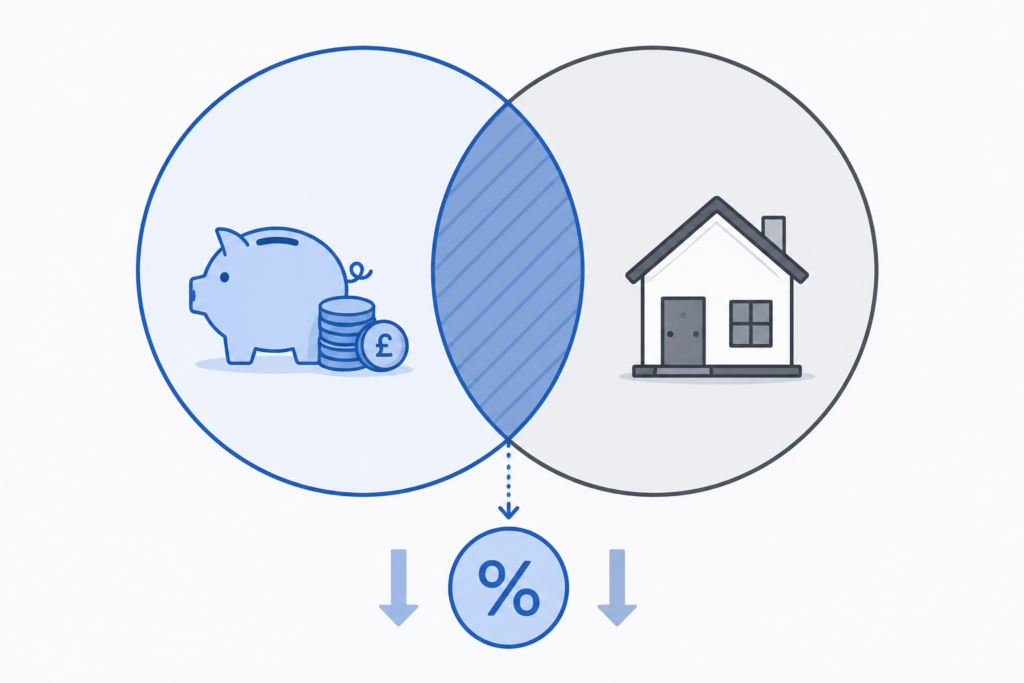
An offset mortgage links your savings account to your mortgage. Instead of earning interest on your savings, you don’t pay mortgage interest on that same amount. If you have a £200,000 mortgage and £20,000 in a linked savings account, you only pay interest on £180,000. Your monthly payment can stay the same, but more of it goes toward the loan itself instead of interest, so you clear the mortgage faster.
Thank you for reading this post, don't forget to subscribe!This article is for general information only and is not financial advice. Speak to an FCA-registered mortgage adviser before making a decision.
How Does an Offset Mortgage Work?
Here’s the mechanic in plain terms: your bank offsets your savings balance against your mortgage balance every day. You don’t lose access to your savings, and you don’t earn interest on them either. In exchange, the bank only charges you mortgage interest on the difference.
Worked example:
- Mortgage: £200,000
- Linked savings: £20,000
- Interest is calculated on £180,000 instead of the full balance
- Mortgage rate: 5%
Without offsetting, £200,000 at 5% costs roughly £10,000 in interest over a year (simplified, ignoring monthly reduction). With £20,000 offset, you’re paying interest on £180,000 instead, roughly £9,000 a year. That’s about £1,000 saved in interest annually, tax-free, for keeping £20,000 in a linked account you can still access.
Compare that to a normal savings account paying 4% interest before tax: £20,000 there earns £800 a year, and if you’re a higher-rate taxpayer, HMRC’s savings interest tax rules take a chunk of that. The offset route often comes out ahead for exactly this reason, it saves you interest rather than paying you interest, so there’s no tax to hand over.
Two ways lenders apply the saving:
- Reduce the term: keep monthly payments the same, pay off the mortgage years earlier.
- Reduce the payment: keep the term the same, pay less each month.
Most lenders let you choose which one you want when you set up the deal.ch one you want when you set up the deal.
Offset Mortgage vs Standard Repayment Mortgage
| Offset Mortgage | Standard Repayment Mortgage | |
|---|---|---|
| Interest charged on | Mortgage balance minus linked savings | Full mortgage balance |
| Savings interest earned | None (savings work instead) | Normal savings rate, taxable |
| Access to savings | Full access, no penalty | N/A |
| Typical rate | Slightly higher than best standard rates | Often the lowest rates on the market |
| Best for | Higher-rate taxpayers, large cash buffers | Straightforward, no savings buffer needed |
| Tax efficiency | High, saved interest isn’t taxed | Savings interest can be taxed |
Who Is an Offset Mortgage Best Suited To?
Most guides skip this part. It’s the part that actually decides whether an offset mortgage is worth it for you.
- Higher-rate and additional-rate taxpayers. Since you’re not earning taxable interest, the saving is effectively tax-free. The higher your tax band, the more this matters.
- Self-employed people or those with variable income. You can dip into linked savings when income is tight, without needing our guide on managing debt and creditor demands to bail you out.
- People sitting on a large cash buffer (inheritance, house sale proceeds, business reserves) who don’t want that money locked away but still want it working for them.
- Anyone who wants flexibility without a formal overpayment process, since offsetting works automatically, day to day.
It’s less useful if you don’t have meaningful savings to link, since the benefit scales with your linked balance. If your balance is small, the interest saved may not outweigh a slightly higher headline rate compared to the best standard deals. It’s also worth checking your credit score ranges before applying, since offset mortgage lenders often set stricter eligibility criteria than standard deals.
Pros and Cons
Pros:
- Tax-free effective return on linked savings
- Full access to your money at all times
- Can shorten your mortgage term or lower monthly payments
- Useful for self-employed or irregular income
- No separate savings product to manage
Cons:
- Offset mortgage rates are often slightly higher than the very best standard rates
- Fewer lenders offer them compared to standard mortgages
- The benefit only scales with a decent savings balance
- Your linked savings earn no interest of their own
Offset Mortgage Calculator
See roughly how much interest you could save by offsetting your savings against your mortgage.

Offset Mortgage Calculator
See roughly how much interest you could save by offsetting your savings against your mortgage.
This is a simplified estimate for illustration only, not financial advice. Actual savings depend on your lender’s calculation method and rate.
Frequently Asked Questions
Is an offset mortgage worth it?
It’s usually worth it if you’re a higher or additional-rate taxpayer with meaningful savings, since the interest saved is effectively tax-free. If your savings balance is small, a standard mortgage with the lowest available rate may work out cheaper overall.
How much can you save with an offset mortgage?
It depends on your linked savings balance and mortgage rate. As a rough guide, every £10,000 offset against a 5% mortgage saves roughly £500 a year in interest, tax-free.
Can you overpay an offset mortgage?
Yes. Most lenders allow overpayments in addition to offsetting, though limits and rules vary by provider, check your specific lender’s terms.
Do you lose access to your savings with an offset mortgage?
No. Offset savings stay fully accessible. You can withdraw or add to the linked account at any time, the offset benefit simply adjusts based on your daily balance.
Is an offset mortgage the same as an offset savings account?
Not quite. The savings account is the tool, the offset mortgage is the overall product structure that links your mortgage and savings together.
Emily Harrington covers UK personal finance and lending products for UK Markets Today, with a focus on mortgage products, savings tools and retail investor education. This article was last reviewed in July 2026 for rate and product accuracy.