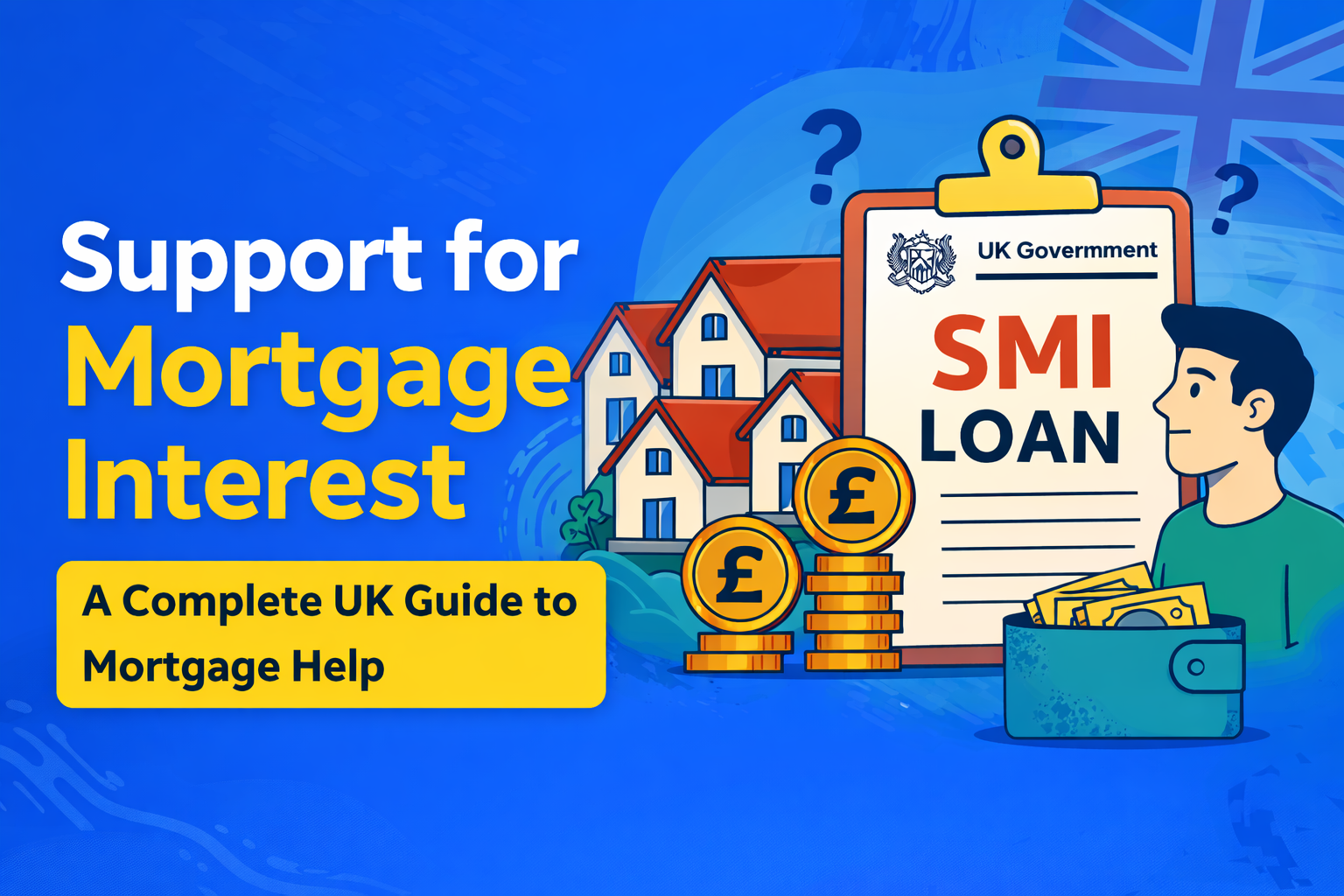
Support for Mortgage Interest: A Complete UK Guide to Mortgage Help
Support for Mortgage Interest (SMI) is a UK government scheme that helps eligible homeowners on benefits pay the interest on their mortgage. In simple terms, it provides financial support when housing costs become difficult to manage due to low income or changing circumstances.
Importantly, support for mortgage interest is aimed at people who are unemployed, retired, living with a disability, or experiencing illness. As a result, it helps reduce the risk of falling behind on mortgage payments and facing repossession.
However, it is essential to understand that SMI is not a benefit. Instead, it is a government-backed loan that is secured against your home. This means the amount you receive must be repaid with interest when you sell your property or transfer ownership.
To ensure accuracy and trust, this guide is based on official UK government information and respected housing advice organisations.
Official guidance:
👉 GOV.UK – Support for Mortgage Interest (SMI)
https://www.gov.uk/support-for-mortgage-interest

What Mortgage Costs Does SMI Help With?
SMI can help pay interest only on:
- The mortgage for the home you live in
- Loans used to repair or improve your home (for example, essential adaptations)
SMI cannot be used to pay:
- Mortgage arrears or missed payments
- Capital repayments
- Mortgage insurance or protection policies
- Loans for second homes or buy-to-let properties
If you’re already behind on payments, you should also seek independent housing advice:
- Citizens Advice – Housing support
- Shelter UK – Repossession and arrears help
Who Is Eligible for Support for Mortgage Interest?
You may qualify for mortgage help on benefits if you own your home and receive one of the following:
- Universal Credit
- Pension Credit
- Income Support
- Income-based Jobseeker’s Allowance (JSA)
- Income-related Employment and Support Allowance (ESA)
Waiting Periods
- Universal Credit: after 3 months
- Income Support / JSA / ESA: after 39 consecutive weeks
- Pension Credit: no waiting period
Even if you do not receive payments because your income is too high, you may still qualify if you are treated as receiving a qualifying benefit.
How Much Mortgage Interest Will SMI Cover?
SMI helps with interest on:
- Up to £200,000 of your mortgage or loan
- Up to £100,000 if:
- You receive Pension Credit, or
- You claimed a qualifying benefit before January 2009
Standard Interest Rate (SIR)
- The government uses a standard interest rate (currently around 3.66%)
- If your actual mortgage rate is lower, the extra amount is credited to your mortgage account
Is Support for Mortgage Interest a Loan?
Yes. SMI is a secured loan, not free financial support.
Key points you must understand before applying:
- Payments are made directly to your lender
- Interest is added to the total amount you owe
- A legal charge is usually placed on your property
- The loan is repaid when you:
- Sell your home
- Transfer ownership
- Or from your estate after death
You will receive an annual statement showing:
- Total SMI paid
- Interest added
- Outstanding balance
More details:
MoneyHelper – Help with mortgage payments
Should You Speak to Your Mortgage Lender First?
Yes – this is strongly recommended.
Many lenders can offer temporary solutions such as:
- Payment holidays
- Interest-only periods
- Extending the mortgage term
These options may reduce monthly costs without increasing long-term debt, unlike SMI.
Independent guidance:
Shelter UK – Talk to your lender early
How to Apply for Support for Mortgage Interest
If You Claim Universal Credit
- Apply directly through your online Universal Credit account
If You Claim Other Benefits
- Complete Form MI12
- Contact your local:
- Jobcentre Plus
- ESA Centre
- Pension Centre
Free help with applications:
- Citizens Advice
- Housing Rights
- Advice NI (Northern Ireland)
What Happens If Your Benefits Stop?
You may restart SMI immediately if:
- Universal Credit restarts within 6 months
- Pension Credit moves to Universal Credit
- You migrate benefits within permitted timeframes
If not, you will need to wait again before payments resume.
Frequently Asked Questions (FAQ)
Can I get Support for Mortgage Interest if I’m on Universal Credit?
Yes. If you’ve been receiving Universal Credit for at least three months, you may be eligible for SMI.
Does SMI pay off my mortgage?
No. SMI only helps with interest payments, not the mortgage balance itself.
Do I have to repay Support for Mortgage Interest?
Yes. SMI is a loan secured against your home and must be repaid with interest when the property is sold or ownership changes.
Can SMI help with mortgage arrears?
No. SMI cannot be used to clear missed payments or arrears. You should seek advice from Citizens Advice or Shelter UK.
Can I stop SMI payments later?
Yes. You can ask for SMI payments to stop at any time, but the amount already paid will still need to be repaid in the future.
Final Thoughts: Is Support for Mortgage Interest Worth It?
Support for Mortgage Interest can be a lifeline for homeowners on low income, helping prevent repossession during difficult periods. However, because it is a loan, it’s essential to understand the long-term impact on your property’s equity.
Before applying:
- Compare lender support options
- Get independent advice
- Consider how repayment may affect future finances
Used carefully, SMI can provide short-term stability while protecting your home but it should always be a well-informed decision.