UK Self Assessment 2026 deadlines and filing guide

UK Self Assessment 2026: Deadlines, Tax Return Dates & HMRC Filing Guide

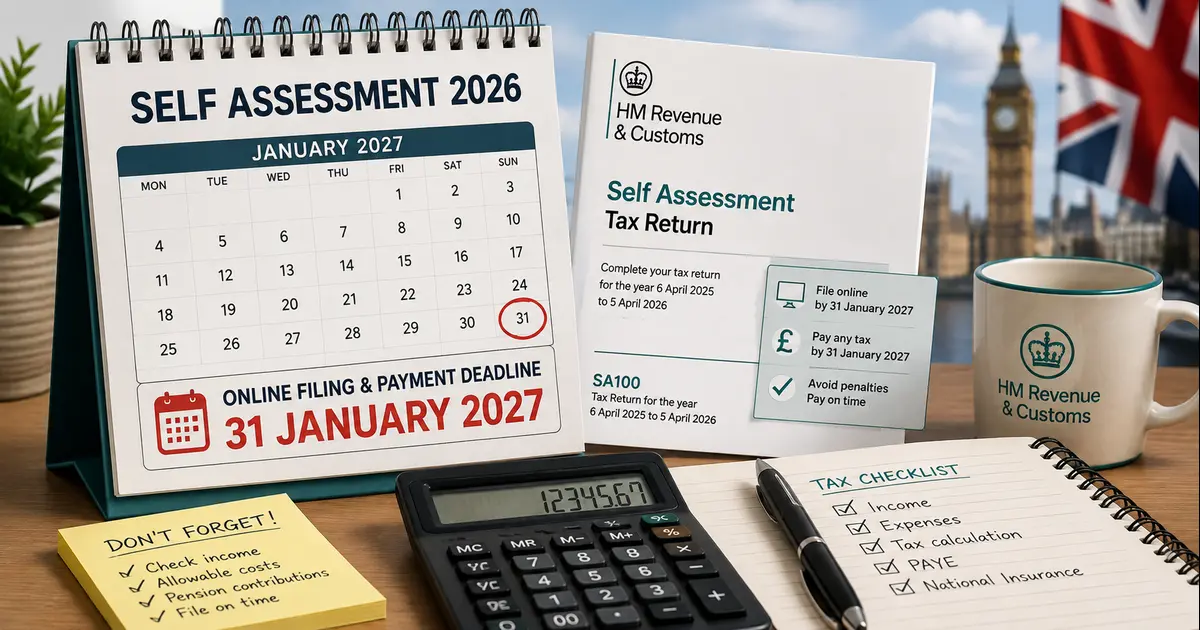
For the 2025 to 26 UK tax year, the main Self Assessment deadlines are 5 October 2026 to register (if required), 31 October 2026 for paper tax returns and 31 January 2027 for online tax returns and paying any tax owed. Missing these deadlines may result in HMRC penalties and interest. Knowing these key dates helps you file your return on time, pay the correct amount and avoid unnecessary charges.

Thank you for reading this post, don't forget to subscribe!

Key Takeaways

  • The 2025–26 UK tax year runs from 6 April 2025 to 5 April 2026, with Self Assessment submissions opening on 6 April 2026.
  • If you need to register for Self Assessment, you should generally do so by 5 October 2026.
  • Paper tax returns must be received by 31 October 2026, while online tax returns are due by 31 January 2027.
  • Any Self Assessment tax owed must also be paid by 31 January 2027 to avoid penalties and interest.
  • Missing HMRC filing or payment deadlines can lead to late filing penalties, late payment charges and additional interest.

Important 2026 Self Assessment Deadlines

TaskDeadlineWhat You Need to Do
Register for Self Assessment (if required)5 October 2026Register with HMRC if you’re filing a Self Assessment tax return for the first time or need to register again.
Submit a Paper Tax Return31 October 2026Make sure HMRC receives your paper return by this date.
Submit an Online Tax Return31 January 2027File your Self Assessment tax return online before the deadline.
Pay Your Self Assessment Tax31 January 2027Pay any tax you owe to HMRC to avoid late payment penalties and interest.
Second Payment on Account (if applicable)31 July 2027Make your second payment on account if HMRC requires you to pay tax in instalments.

INTRODUCTION

Keeping track of the UK Self Assessment deadlines for 2026 is important if you need to report your income and pay tax to HMRC. Missing a registration, filing or payment deadline can lead to penalties, interest charges and unnecessary stress, especially if you’re filing a return for the first time. Many taxpayers are unsure about which dates apply to them, whether they should file a paper or online return or when they need to register with HMRC.

What is UK Self Assessment?

UK Self Assessment 2026 is HMRC tax calculation method for individuals not subject to automatic PAYE deductions. Taxpayers file their own tax returns with details on taxable income, applicable tax reliefs and the amount of tax due at HMRC by the statutory deadlines.

Key Facts

• Self Assessment is the method by which HMRC determines the amount of Income Tax owed by those not subject to PAYE.

• Tax returns are filed by the taxpayer for the relevant tax year, with HMRC assessing the final tax liability based on the submitted information.

• Taxpayers can usually submit tax returns online; alternatively, paper-based forms may be submitted in specific limited circumstances.

• Late filing and late payment of taxes can lead to HMRC imposing penalties and additional interest charges.

Example

An independent IT contractor who pays themselves directly from clients should file a Self Assessment tax return with HMRC as they do not have Income Tax automatically deducted from their salary via PAYE. HMRC would then calculate the amount of Income Tax due on the contractor’s yearly earnings after considering any additional reliefs claimed on the tax return.

Expert Tip

Maintaining organized records of income and expenditures throughout the tax year will simplify the Self Assessment process considerably for taxpayers as they will not need to spend time tracking down documents to verify each expense claimed.

Who needs to file a Self Assessment return?

Not everyone in the UK has to file a self assessment tax return. You will have to send a self assessment tax return to HMRC if you have income that is not taxed through PAYE or you receive a self assessment tax return from HMRC for a particular tax year.

Important Exception

Individuals with additional income may not have to complete a self assessment return if their income is taxed elsewhere and/or falls within HMRC guidelines.

Transition Sentence

Now that you know who needs to file a self assessment tax return, let’s move on to the processes involved with registering for self assessment and the various deadlines that come with it.

What are the UK Self Assessment deadlines for 2026?

HMRC set out different deadlines for Self Assessment depending on taxpayers’ needs. In particular, separate dates are due for registering for Self Assessment, submitting tax returns (paper and online) and settling any taxes owed. Understanding which deadline is due for you is essential to avoid any additional charges and interest.

2026 Self Assessment Timeline

5 October 2026 Register for Self Assessment (if applicable)
31 October 2026 Deadline for submitting a paper tax return
30 December 2026 Online filing deadline for those wishing to pay through PAYE tax code, if applicable
31 January 2027 Online Self Assessment tax return filing deadline
31 January 2027 Tax payment deadline
31 July 2027 Second payment on account, if applicable

Important Deadlines Table

ActionDeadlineWho It Applies ToNotes
Register for Self Assessment5 October 2026First-time filers and those who need to register againRegister with HMRC before filing your return.
Submit a Paper Tax Return31 October 2026Taxpayers filing a paper returnHMRC must receive the return by this date.
Online Filing for PAYE Tax Coding30 December 2026Eligible taxpayersAllows eligible tax bills to be collected through a PAYE tax code.
Submit an Online Tax Return31 January 2027Most Self Assessment taxpayersFinal deadline for online filing.
Pay Your Self Assessment Tax31 January 2027Anyone with tax to payAny outstanding tax should be paid by this date.
Second Payment on Account31 July 2027Taxpayers making payments on accountApplies only where HMRC requires advance payments.

Important Deadline Reminder:

Missing the filing or payment deadline may result in hefty charges and penalties imposed by HMRC.

Pro Tax Tip:

You should always aim to file tax returns before the 31 January deadline as doing so will provide you with an extra period to review your settlement, correct potential errors and ensure sufficient funds are available forHMRC.

Tax Settlement Insight:

Although there are several Self Assessment deadlines for taxpayers to be aware of, 31 January 2027 is the date that should be regarded as the most critical one. This is the final date for filing tax returns (online) and settling any taxes owed.

When can I file 2026 tax return?

You can start filing your 2025-26 UK self assessment tax return from 6 April 2026, HMRC opens the submission of tax returns the day after the tax year-end. You can file your return online or by post. However, the two methods have different deadlines.

Submission of Tax Self Assessment Timetable

Tax Year-end 5 April 2026 Self Assessment tax returns open 6 April 2026 Self Assessment paper tax return deadline 31 October 2026 Self Assessment online tax return deadline 31 January 2027

Note: Taxpayers should be aware that HMRC does not require them to pay any taxes immediately upon filing their tax return. By submitting their tax return early, taxpayers can ensure that they have sufficient time to review their tax liabilities ahead of the final payment deadline.

How do Self Assessments work in 2026?

The UK Self Assessment process requires taxpayers to report their income and other tax details to HMRC and then file their tax return with any payments due by the relevant deadlines.

The first step is to check if you need to file a self assessment tax return or not. If so, and you have not already done so, you need to register with HMRC. Then you need to collate your income, permissible expenses and any other information and use it to complete your tax return. Finally, you need to submit your self assessment return, check the tax calculation and pay any amount due by the due date.

Simple Step by Step Process

Check if you need to file a tax return → Register with HMRC → Collate your relevant income and expenses → Complete your tax return → Submit your return → Check your tax liability calculation → Pay your taxes

UK Self Assessment 2026 process from registration to tax payment

Dates To Note In 2026

Remember that the latest date to register (if needed) is 5th October 2026. Additionally, you must file your tax return online by 31st January 2027 and pay any taxes due by the same date.

How to submit a paper return

If you’re entitled to file a paper Self Assessment return, you can do so from 6 April 2026. HMRC require that your completed return reaches them no later than 31 October 2026, so you’ll need to allow plenty of time for posting.

Who Can File by Paper?

A Self Assessment paper return can be submitted in specific cases, but most people are able to and should, file their return online. If you’re unsure what method of filing applies to you, check HMRC guidance first.

How to Submit a Paper Return

The process of submitting a Self Assessment return by post requires several steps:

1. Get the correct form

2. Collect the information you’ll need to complete the return, including income, allowable expenses and other relevant information

3. Complete the form fully and accurately

4. Double-check the accuracy of all the information and calculations

5. Post your completed return to HMRC, ensuring that it arrives before any applicable deadlines

Paper Filing Deadline

For the 2025/26 tax year, the deadline for HMRC to receive your completed Self Assessment paper return is 31 October 2026. Remember that this is a date by which HMRC must receive your return, not a date by which you must post it. The post takes time, so you should send your return well in advance of the deadline and always retain proof of postage.

Expert Tip

It’s best practice to post your Self Assessment paper return well ahead of the filing deadline and to always retain proof of postage.

How to pay your Self Assessment tax

Once registered, any tax due on a Self Assessment tax return must be paid by the appropriate HMRC deadlines. Taxpayers can pay their bill using a number of HMRC-approved methods

How Much Do I Need to Pay?

After you’ve completed and submitted your Self Assessment tax return, HMRC will determine how much money, you owe based on the information you’ve provided for them. The amount that you need to pay HMRC will be based on the number as shown on the return for your Self Assessment tax. The amount due for tax payment should be paid in full by the due date.

How Can I Pay?

There are a number of ways to pay the amount of tax due for Self Assessment:

Making online or bank transfers

Direct debits (if available and arranged in time)

Debit or credit card payments (if available)

Other HMRC-approved methods of payment

Important Dates to Remember

31 January 2027 – Self Assessment final payment for 2025-26 tax year

31 July 2027 – Second payment on account for 2025-26 tax year

What Are the Consequences of Late Payments?

Late payments of taxes may incur additional costs such as charges and interest from HMRC.

Expert Tip: Double-checking your due dates for tax payment and allowing extra time for payment to clear before the due date is essential.

Special Self Assessment deadlines

Most taxpayers have the same Self Assessment deadlines but there are some special circumstances that require filing a return using a different method or by a different deadline. If you are a trustee of a registered pension scheme, partner in a partnership or overseas company you will have different deadlines to those outlined in the standard Self Assessment deadlines for the 2025/26 tax year.

Trustee

Trustees of approved pension schemes must provide a paper return to HMRC rather than using the online service. These trustees must send in their Self Assessment for the 2025/26 tax year by 31 st January 2027.

Partnership

Partnerships with an accounting date in the February to April period that includes a company as a partner will have different Self Assessment deadlines.

If the partnership’s accounting date falls between 1 st February and 5 th April, company partners must complete online SA100 forms 12 months after the accounting date, whereas other partners must send online forms 9 months after the accounting date.

HMRC must receive paper forms for partnerships with an accounting date between 1st February and 5th April by 9 th March following the end of the accounting year.

Non-Resident Company

Non-resident companies that must file a Self Assessment return must do so using a paper return by 31 st January 2027.

Key Takeaway: Trustee, partnership, and non-resident company taxpayer categories have special Self Assessment deadlines and filing requirements. Always check if you are part of a special category that has different deadlines from the standard Self Assessment filing timetable.

UK Self Assessment 2026 registration filing and payment deadlines

UK Self Assessment 2026 Checklist

Use this checklist to make sure you’ve completed the key Self Assessment steps before the filing and payment deadlines.

Before Filing

☐ Check whether you need to file a Self Assessment tax return.

☐ Register with HMRC if you’re required to do so.

☐ Confirm you’re filing for the correct tax year (2025–26).

☐ Gather your income records, expense details and other relevant tax documents.

Before Submitting

☐ Decide whether you’ll file a paper return or an online return.

☐ Check that all income has been entered correctly.

☐ Review any allowable expenses or tax reliefs you’re claiming.

☐ Check the tax calculation before submitting your return.

Before the Deadline

☐ Submit your return before the correct HMRC deadline.

☐ Keep your submission confirmation as proof that your return was received.

☐ Review the amount of tax you need to pay.

Payment

☐ Pay your Self Assessment tax by the payment deadline.

☐ Check whether you’re required to make payments on account.

☐ Keep proof of payment for your records.

Final Check

☐ Save a copy of your completed tax return.

☐ Keep your HMRC confirmation and supporting records in a safe place.

Frequently Asked Questions

When is the UK Self Assessment due for 2026?

The key Self Assessment deadlines for the 2025/26 tax year are 5 October 2026 (if you need to register), 31 October 2026 (for paper tax returns) and 31 January 2027 (for online tax returns and submitting any tax due).

When can I file my 2025/26 Self Assessment tax return?

HMRC opens the tax return for the 2025/26 tax year for filing on 6 April 2026. You can file your tax return online or by post from 6 April 2026, but paper tax returns must be filed by 31 October 2026 while online tax returns must be filed by 31 January 2027.

What happens if I miss the Self Assessment deadline?

HMRC can impose penalties for late filing of tax returns and/or late payment of taxes due. The longer your submission or payment is overdue, the higher these penalties could be.

Do I need to register for Self Assessment for 2026?

Filing a Self Assessment tax return for the first time or HMRC told you to make a new registration usually means that you must register for Self Assessment with HMRC. For the 2025/26 tax year, the normal deadline for registration for Self Assessment is 5 October 2026.

Can I file my Self Assessment tax return early?

Yes, you can. HMRC opens the tax return for filing from 6 April 2026 so you can file early and get the opportunity to review your tax return, check that the tax liability is correct, and make any necessary corrections to it. You can also use the extra time to arrange the budget needed to settle the liability.

What is the deadline for paying Self Assessment tax?

Any tax due for the 2025/26 tax year is due to HMRC by 31 January 2027. If you are required to pay HMRC by instalments, you may also have to pay a second instalment by 31 July 2027.

Can I print my Self Assessment tax return?

Yes, if you are entitled to file by post, you can. HMRC receives post tax returns for the 2025/26 tax year by 31 October 2026.

What happens if I cannot pay my Self Assessment tax?

If you cannot pay any tax that is due, do not ignore the problem and contact HMRC as soon as possible. This will enable them to consider any reasonable option that might help you manage the difficult situation. It is important to remember that acting sooner rather than later minimises any additional liabilities that HMRC can recover against you.

Sources and Methodology

The information in this guide was researched and checked against official HMRC and GOV.UK guidance. We reviewed the latest available rules for the 2025–26 Self Assessment tax year, including registration requirements, filing deadlines, payment dates, penalties and special filing rules, to help ensure the content is accurate at the time of publication.

Primary Sources

  • GOV.UK – Self Assessment registration guidance
  • GOV.UK – Self Assessment tax return guidance
  • HMRC – Self Assessment filing deadlines
  • HMRC – Self Assessment payment deadlines
  • HMRC forms and guidance for the 2025–26 tax year

What Was Verified

  • Self Assessment registration deadline
  • Paper tax return deadline
  • Online tax return deadline
  • Self Assessment tax payment deadline
  • Late filing and late payment penalties
  • Special filing rules for trustees, partnerships and non-resident companies

Last Checked

Last verified: 10 August 2026. As HMRC rules and deadlines can change, always check the latest official GOV.UK guidance before submitting your Self Assessment tax return.

Author & Last Updated

Author
Emily Harrington

Role / Expertise
Founder, UK Markets Today

Short Bio
Emily Harrington is the Founder of UK Markets Today and an SEO content strategist who researches UK taxation, personal finance, mortgages and business topics. He focuses on turning official guidance into practical, easy-to-understand content that helps readers make informed financial decisions.

Reviewed By
Not independently reviewed by a qualified tax professional.

Last Updated
10 August 2026 (Fact-checked against the latest available HMRC and GOV.UK guidance.)

Similar Posts