Easy-Access vs Fixed-Rate Savings Accounts: What’s Best in 2026?
Easy-access or fixed-rate savings? How they differ, what AER means, and how the 3.75% base rate feeds into your choice.
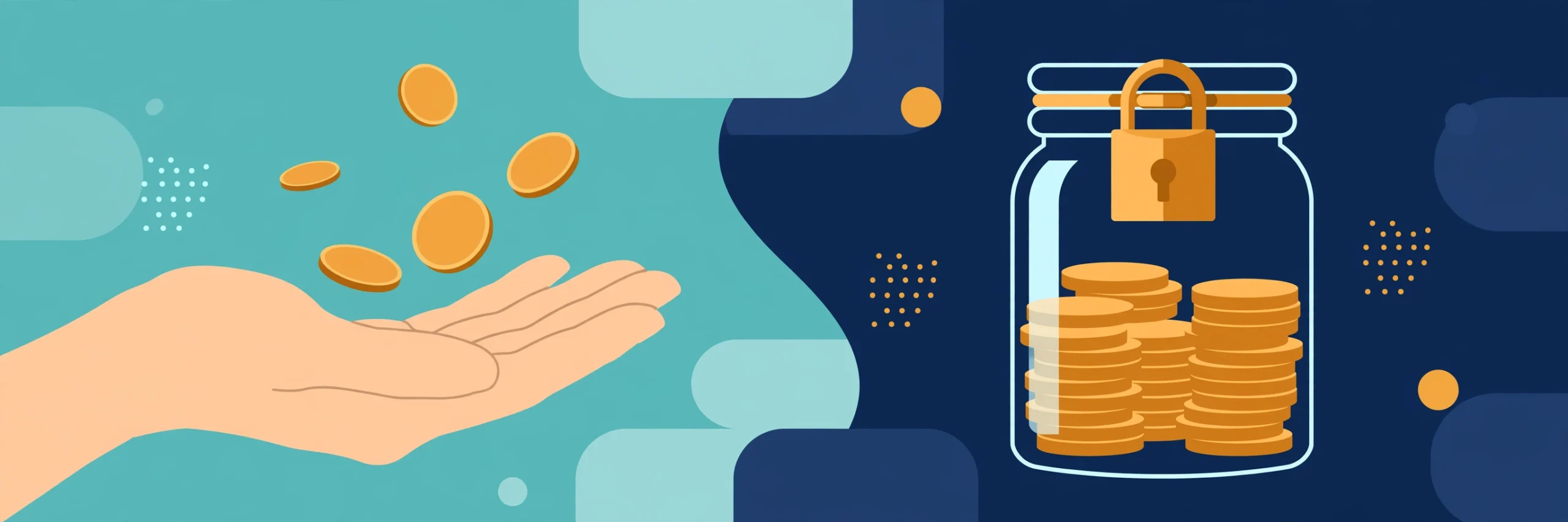
TL;DR: Easy-access accounts let you withdraw anytime but usually pay less; fixed-rate accounts pay more in exchange for locking your money away for 6 months to 5 years. Both are covered by £120,000 FSCS protection per institution. Always compare accounts on AER, and never lock away money you might need.
The trade-off in one table
| Easy-access | Fixed-rate | |
|---|---|---|
| Withdrawals | Anytime, usually unlimited | Locked for the term; early access rare or penalised |
| Interest rate | Variable, can fall anytime | Fixed for the whole term |
| Typical rate vs the other | Lower | Higher (usually) |
| FSCS protection | £120,000 per person, per institution | £120,000 per person, per institution |
| Best for | Emergency funds, bills, short-term goals | Money you definitely won’t need during the term |
What AER actually means
AER, Annual Equivalent Rate, is, in MoneyHelper’s words, “the total interest you’ll receive on your savings in one year,” shown as a percentage. It lets you compare accounts fairly because it accounts for how often interest is paid. Compare on AER, not the headline “gross” rate.
How the base rate affects your savings
Savings rates broadly track expectations for the Bank of England base rate, which was held at 3.75% on 17 September 2026 (the sixth hold in a row). When the base rate falls, easy-access rates usually follow within weeks; fixed-rate deals move earlier, on expectations. That means today’s top fixed rate is a bet on where rates go next, here’s where the base rate stands.
When easy-access wins
For your emergency fund, for bills, and for any goal under a year away. Flexibility beats a fraction of a percent when the money has a job to do soon.
When fixed-rate wins
For money you won’t need during the term, say, savings for a goal two years out. You trade flexibility for certainty: the rate can’t be cut mid-term no matter what the Bank of England does.
A middle path: laddering
Don’t know when you’ll need the money? Split it. Keep some in easy access and fix the rest across different terms (e.g. one-year and two-year fixes). As each fix matures you can re-fix or spend, you get most of the rate benefit with some flexibility intact. Compare current options in our best savings accounts guide.
If you decide a fix is right for you, compare the current deals in our guide to the best fixed rate savings accounts UK, which lists 1, 2, 3 and 5 year rates checked on 16 October 2026, plus the penalties and protection rules that come with fixing.
Frequently asked questions
Can I take money out of a fixed-rate account early?
Usually no, and where early access is allowed, expect to lose interest or pay a penalty. Assume the money is gone until maturity.
Are fixed rates always higher than easy-access rates?
Usually, but not guaranteed. When markets expect rate cuts, providers may price fixes below the best easy-access deals. Check both.
Is my money safe if the bank fails?
Cash savings are FSCS-protected up to £120,000 per person, per UK-regulated institution (joint accounts: £240,000). Spread larger sums across institutions.
Should I use an ISA version?
If you’ll earn enough interest to breach your personal savings allowance, yes, cash ISAs pay interest tax-free, in easy-access and fixed flavours.
Checked 30 September 2026. Savings rates move daily, compare live AERs before choosing. Sources: MoneyHelper, MoneySavingExpert.
Part of our Savings and Interest hub.
Got a UK money question?
Ask it in the Ask UKMT live chat. No sign up, no names, and the answers are checked against official sources. Open the live chat