Find Your Child Trust Fund: 827,000 Young People Are Sitting on About £2,310 Each
TL;DR: Born between 1 September 2002 and 2 January 2011? You almost certainly have a Child Trust Fund, even if you have never heard of it. HM Revenue and Customs (HMRC) says about 827,000 matured Child Trust Funds are still unclaimed, worth about £2,310 each on average. Finding yours is free on GOV.UK and the…

TL;DR: Born between 1 September 2002 and 2 January 2011? You almost certainly have a Child Trust Fund, even if you have never heard of it. HM Revenue and Customs (HMRC) says about 827,000 matured Child Trust Funds are still unclaimed, worth about £2,310 each on average. Finding yours is free on GOV.UK and the form takes about 5 minutes. Last checked: 7 October 2026.
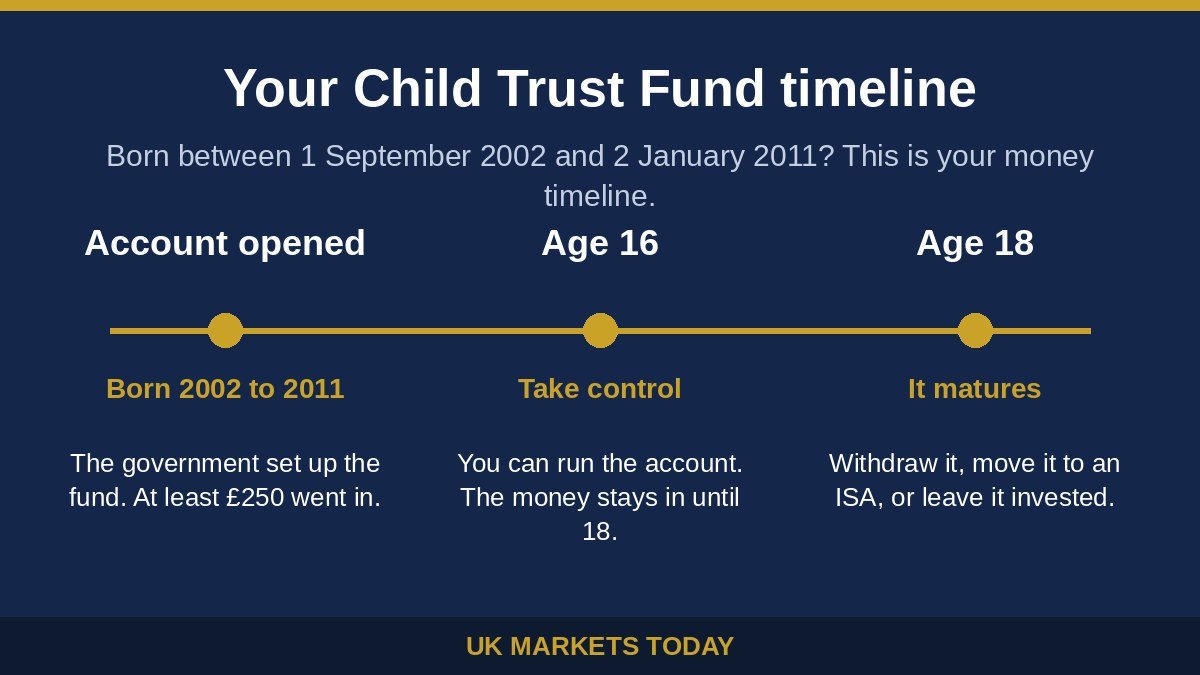
A Child Trust Fund is a tax free savings account that the government set up for children born between 1 September 2002 and 2 January 2011. Every account started with a government deposit of at least £250, and parents, family and friends could add more over the years.
Almost 3 million of these accounts have already been claimed or moved into an ISA since September 2020, according to HMRC figures released on 16 September 2026. But about 827,000 are still sitting untouched. Many of the owners have no idea the money exists. This guide shows you how to check, free, and what to do when you find it.
Do I have a Child Trust Fund?
The test is simple. If you were born in the UK between 1 September 2002 and 2 January 2011, an account was opened for you, even if your parents never picked a provider. That covers everyone aged roughly 15 to 24 today, and at least £250 went in at the start.
Here is the part most people miss: if your parents did not choose an account, the government opened one for you anyway. HMRC placed the money with a provider on your behalf. So “my family never set one up” does not mean there is nothing to find.
Signs an account exists:
- Your parents received a Child Trust Fund voucher or letters from a bank, building society or friendly society when you were a baby.
- Annual statements arrived addressed to a parent, called the registered contact.
- Your family moved house when you were young, so the letters stopped arriving. The account did not stop. It is still there.
If you are 18 or over, your account has already matured and the money is waiting for your instructions. If you are 16 or 17, you can take control of the account now, but you cannot withdraw the money until you turn 18.
How to find your Child Trust Fund
Follow these steps in order. The whole check costs nothing.
- Ask a parent or guardian first. They may know the provider, or still have old statements. Knowing the provider makes everything faster.
- If you know the provider, contact them directly. A bank, building society or friendly society holds the account. They will confirm the balance and tell you what to do next.
- If you do not know the provider, use the free GOV.UK service. The Find a Child Trust Fund service on GOV.UK asks HMRC to trace the provider for you. You fill in one form with your National Insurance number and date of birth. It takes about 5 minutes, and you have to finish it in one go.
- Wait for the letter. HMRC writes to you with the name of the provider, usually within 3 weeks if you apply online. HMRC tells you where the account is, not how much is in it. You then contact the provider to get the balance.
- No National Insurance number to hand? You can view it in the HMRC app and keep it in your phone wallet. Download the app free from your usual app store.
Almost 500,000 young people used this locator tool in the nine months to August 2026, so you would not be doing anything unusual. It is a normal, official service.
For parents: finding your child’s Child Trust Fund
A parent or guardian of a child under 18 can ask HMRC to find the provider too. You will need your child’s full name, address and date of birth, plus any previous names you or your child have used. Your child’s National Insurance number helps if you have it, but for parents it is optional.
The parent who runs the account is called the registered contact. Only the registered contact can move the account to another provider, change the type of account or update the details. If that is you, old statements will show your child’s Unique Reference Number, which speeds things up.
Two dates matter:
- At 16, your child can take control of the account themselves. They can only take the money out at 18.
- At 18, control passes to your child automatically. The money belongs to them, and parents cannot withdraw it.
While your child is under 18, anyone can pay in up to £9,000 a year across family and friends. One more rule worth knowing: a child cannot hold a Child Trust Fund and a Junior ISA at the same time, but the Child Trust Fund can be transferred into a Junior ISA. A Junior ISA provider can arrange the move.
Found it? What to do next
Most guides stop at finding the account. The decision that follows is worth more than the search.
At 18 the account matures. No new money can be paid in. Until you act, the money stays in the matured account, where nobody else can touch it. You then have three choices:
- Withdraw it. The money is yours and there is no tax to pay on it. If you need it for university, a first car or a rental deposit, that is a fair use.
- Transfer it into an adult ISA. This keeps the money inside a tax free wrapper, so it can keep growing without tax on the interest or gains. Ask an ISA provider to arrange the transfer, rather than withdrawing and paying in yourself. Not sure an ISA beats a normal savings account for you? Our ISA vs savings account comparison works through the tax and access differences. Our guide to the best cash ISA rates in the UK shows what your money could earn now.
- Leave it where it is. This is the default, and often the worst option. See the charges point below.
Watch the charges. Stakeholder Child Trust Funds, the type the government opened by default, can charge up to 1.5% a year under the scheme rules. That is more than many modern ISAs charge, and a cash CTF can also pay a poor rate of interest (compare it with the best savings accounts in the UK). Year after year, high charges and low interest quietly shrink what your £250 start has grown into. Moving the money at 18, or moving a younger child’s fund into a Junior ISA, stops that drip.
A Child Trust Fund is only one pot of forgotten money. Pensions, bank accounts and Premium Bonds go missing too. Our guide to unclaimed money in the UK walks through the rest, all free to check.
Never pay to find your Child Trust Fund
Read this before you search anywhere else: the official route is free from start to finish. HMRC charges nothing. Your provider charges nothing to tell you your balance.
Some websites dress up to look official and charge a fee to “trace” your fund, or offer to find “your £2,310” in return for a cut of the money. All they do is submit the same free 5 minute form, or point you to it. Paying them is money for nothing.
Stay safe with three rules:
- Only enter your details on GOV.UK. Check the address bar before you type anything.
- Never pay a fee, and never hand bank details to a tracing firm.
- Be wary of social media adverts promising found money for a fee. The real thing costs £0.
Child Trust Fund FAQs
How do I know if I have a Child Trust Fund?
If you were born in the UK between 1 September 2002 and 2 January 2011, an account was opened for you, even if your parents never chose one, because the government opened it instead. The only way to be certain is to ask a parent, contact a provider you remember, or run the free check on GOV.UK.
How long does it take to find a Child Trust Fund?
The GOV.UK form takes about 5 minutes. HMRC usually writes back within 3 weeks of an online request with the provider’s name. You then contact the provider for the balance. If you hear nothing within 6 weeks, you can write to HMRC, quoting your reference number if you have one.
Can my parents find my Child Trust Fund?
Yes, while you are under 18. A parent or guardian can ask HMRC to trace the provider, and the registered contact can deal with the provider directly. From 16 you can search for your own account. At 18 the account is yours alone, and your parents cannot access the money.
What happens to a Child Trust Fund at 18?
It matures. You take over the account automatically, no new money can be paid in, and you choose what happens next: withdraw the money tax free, transfer it into an adult ISA, or leave it in the matured account. If you do nothing, it simply stays there until you act.
Can I transfer a Child Trust Fund into an ISA?
Yes. Before 18, a parent can transfer it into a Junior ISA, because a child cannot hold both at once. At 18, you can transfer a matured Child Trust Fund into an adult ISA and keep the tax free wrapper. Ask the new provider to arrange the transfer for you.
Is it free to find a Child Trust Fund?
Yes, completely. The GOV.UK locator service, HMRC and your provider all charge nothing at any stage. Anyone asking for a fee, or offering to find your fund in return for a share of the money, is charging you for submitting the same free 5 minute form you can send yourself.
Sources: HMRC figures in the Annual Savings Statistics, released 16 September 2026, reported in the GOV.UK news release on Child Trust Fund claims, and the GOV.UK Child Trust Fund guide. Figures and rules checked on 7 October 2026. This page is information only, not financial advice.
Got a UK money question?
Ask it in the Ask UKMT live chat. No sign up, no names, and the answers are checked against official sources. Open the live chat