UK GDP Grows 0.7% in Q3 2026: Rates, Mortgages, Savings
UK GDP grew by 0.7% in Q3 2026, the ONS said on 12 November 2026, up from 0.5% in Q2 and exactly matching the Bank of England forecast. What it means for rates, mortgages and savings.
TL;DR: UK GDP grew by 0.7% in the third quarter of 2026 (July to September), the Office for National Statistics said on 12 November 2026. Growth picked up from 0.5% in the second quarter and matched the 0.7% the Bank of England expected. The economy is 1.9% bigger than a year ago.
What the ONS said
The Office for National Statistics (ONS) published its first estimate of UK GDP for the third quarter of 2026 on Thursday 12 November 2026. Real GDP, which measures the value of everything the UK produces after adjusting for inflation, grew by 0.7% compared with the second quarter.
September was the strongest month of the quarter. Monthly GDP grew by 0.2% in September, after no growth in August and growth of 0.4% in July. Real GDP per head, which divides the economy by the population, also grew by 0.7% in the quarter and is 1.7% higher than a year ago.
How it compares with Q2 and with expectations
Growth of 0.7% is a step up from 0.5% in the second quarter of 2026 and 0.6% in the first quarter. It is also exactly what the Bank of England expected. The Bank said in its November Monetary Policy Report that GDP growth was 0.5% in the second quarter and was expected to pick up to 0.7% in the third. The ONS figure landed right on that forecast, so there was no surprise for markets or for rate setters.
This is a first estimate, so it can be revised as more data arrives. Since 2000, the average revision between the first estimate and the final figure has been 0.08 percentage points, the ONS says.
What drove the growth
Services did most of the work. The services sector grew by 0.9% in the quarter, led by business-facing services such as admin and support, IT and professional services. The production sector grew by 0.1%, with manufacturing up 0.9%. Construction was the weak spot, falling by 0.7%, with private housebuilding down 4.7%.
Household spending rose by 0.6% in the quarter, and business investment rose by 0.4%.
What it means for interest rates
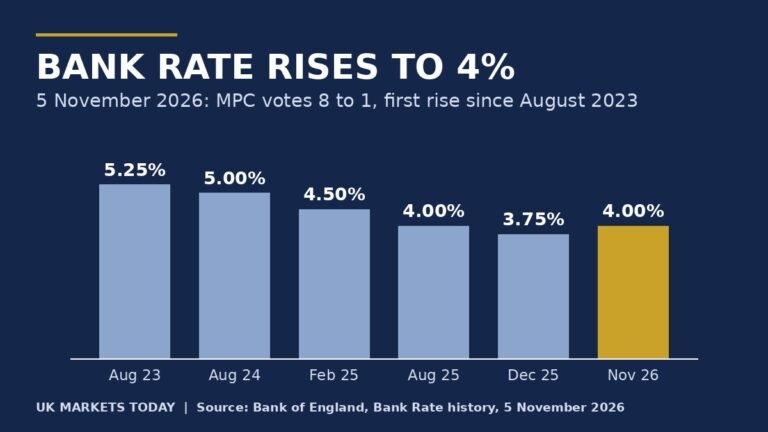
The Bank of England raised Bank Rate to 4% on 5 November 2026, up from 3.75%, and its next decision is on 17 December 2026. A growth figure that lands exactly on the Bank’s own forecast gives it little reason to change course in a hurry. Steady growth with no nasty surprise usually points to rates staying where they are for now, rather than a quick cut or another rise. The December decision will depend far more on inflation and jobs data than on this GDP number.
What it means for your money
For mortgages, nothing changes overnight. Tracker and variable rates follow Bank Rate, which is 4% until at least 17 December. If you are coming off a fixed deal soon, the steady growth picture means lenders have no new reason to slash or hike fixed rates sharply. Check our mortgage overpayment calculator to see what extra payments could save you.
For savers, the message is similar. With Bank Rate at 4% and no cut signalled by this data, the best easy access and fixed savings rates should hold for now, but they rarely stay still for long. If your savings are earning well below 4%, now is a good time to compare. Our cash ISA rates page tracks the best easy access rates each week.
For jobs and pay, a growing economy is better news than a shrinking one, but 0.7% in a quarter is steady rather than spectacular. Real GDP per head growing 0.7% means the economy is growing a little faster than the population, which is what people need to feel better off.
Read the full figures in the ONS GDP first quarterly estimate for July to September 2026, and our Bank Rate explainer for what the 4% rate means in detail.
Nothing in this article is financial advice. It is general information based on the ONS release of 12 November 2026.
Got a UK money question?
Ask it in the Ask UKMT live chat. No sign up, no names, and the answers are checked against official sources. Open the live chat
Follow UK Markets Today on Google
Get our latest guides in your Google feed: set UK Markets Today as a preferred source.