State Pension UK 2026: Eligibility, Age, Amount & How to Claim
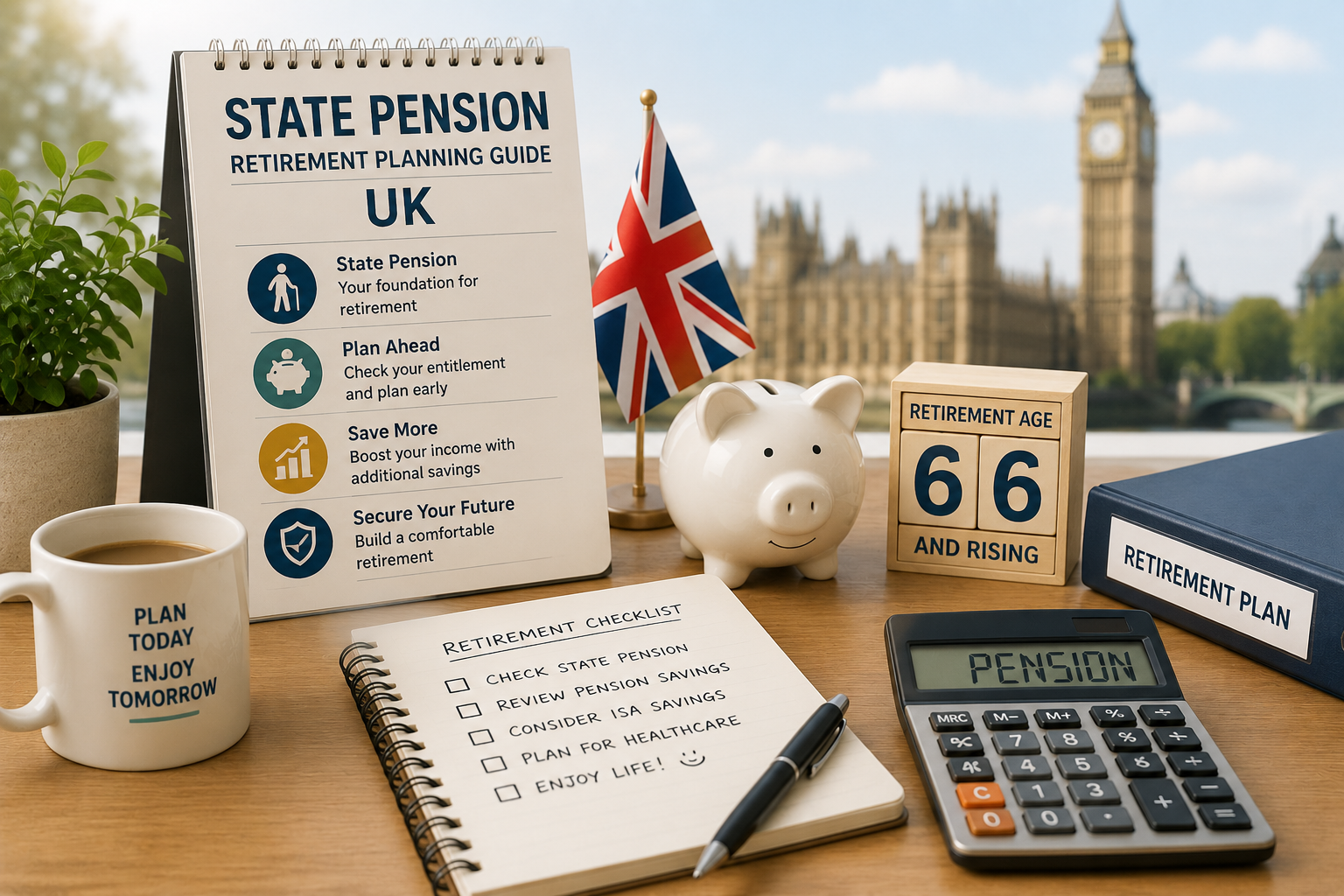
Planning for retirement is one of the most important financial decisions you’ll ever make. Understanding the State Pension can help you estimate your future retirement income and decide whether you need additional savings. The Pension forms the foundation of retirement income for millions of people across the UK, but how much you receive depends largely on your National Insurance contribution record and when you become eligible.
Thank you for reading this post, don't forget to subscribe!Although the Pension provides regular income in retirement, it may not be enough to maintain your desired lifestyle on its own. That’s why many people combine it with workplace pensions, personal pensions and private savings. In this guide, we’ll explain how the State Pension works, who qualifies, how much you may receive and practical steps you can take to maximise your retirement income.
State Pension: Quick Answer
The State Pension is a regular payment from the UK Government available to people who have reached Pension age and have built enough qualifying National Insurance contributions. The amount you receive depends on your contribution history and the pension rules that apply to you.
What Is the State Pension?
The State Pension is a government-funded retirement benefit designed to provide financial support after you reach the official Pension age.
Unlike workplace pensions, the Pension isn’t automatically based on investment returns. Instead, your entitlement depends mainly on your National Insurance contribution record during your working life.
Many retirees use the Pension as a basic source of retirement income while relying on workplace pensions, personal pensions or savings to cover additional living costs.
Who Can Receive the State Pension?
Not everyone automatically qualifies for the full State Pension.
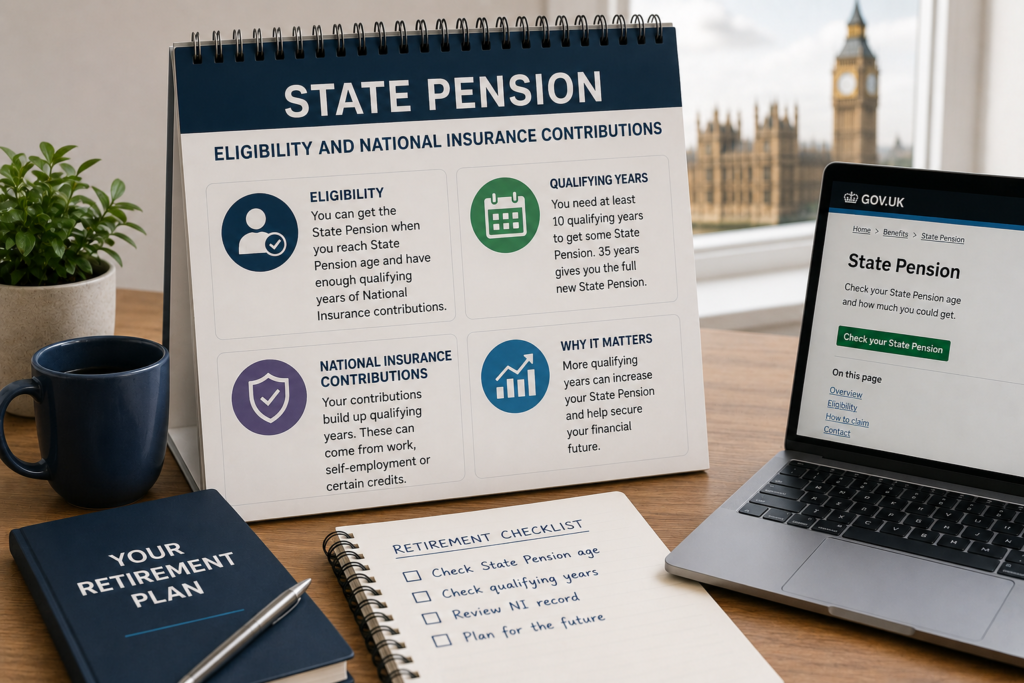
Eligibility generally depends on:
- Reaching State Pension age
- Building qualifying National Insurance contributions
- Meeting UK Government eligibility rules
If you’ve worked, paid National Insurance or received qualifying National Insurance credits, you may qualify for either a full or partial Pension.
People who have spent time caring for children or family members, received certain benefits or worked abroad may also have qualifying years depending on their circumstances.
State Pension Age Explained
The age at which you can claim your State Pension isn’t the same for everyone.
Your State Pension age depends on:
- Your date of birth
- Current UK Government legislation
- Future changes announced by Parliament
Because pension ages may change over time, it’s important to check your own eligibility rather than relying on general assumptions.
Planning ahead gives you more flexibility if you intend to retire before or after reaching Pension age.
How Much Is the State Pension?
One of the most common questions is how much the State Pension pays.
The exact amount depends on:
- Your qualifying National Insurance years
- Whether you qualify for the new State Pension or older system
- Annual Government reviews and increases
- Any deductions that may apply
Payments are normally reviewed each year and increases may depend on government policy and economic conditions.
For many retirees, the Pension covers essential living expenses but is often supplemented by additional retirement income.
National Insurance and the State Pension
Your National Insurance record plays one of the biggest roles in determining your Pension entitlement.
Qualifying years can come from:
- Employment
- Self-employment
- National Insurance credits
- Certain government benefits
If you have gaps in your National Insurance record, you may have options to improve your future entitlement, depending on your individual circumstances.
Checking your National Insurance history early allows you to identify potential gaps while you still have time to address them.
How to Check Your State Pension Forecast
A Pension forecast provides an estimate of:
- Your expected retirement income
- Your qualifying years
- Your projected State Pension age
- Whether you can improve your entitlement
Reviewing your forecast regularly helps you understand whether additional retirement planning may be beneficial.
Many people check their forecast every few years, particularly after changing jobs, becoming self-employed or taking career breaks.
How to Claim the State Pension
You don’t always receive your Pension automatically.
Before claiming, it’s useful to:
- Check your Pension age
- Review your National Insurance record
- Confirm your forecast
- Ensure your personal details are up to date
Applying before you expect payments to begin can help avoid unnecessary delays.
Can You Increase Your State Pension?
In some situations, it may be possible to improve your future Pension entitlement.
Options may include:
- Building additional qualifying years
- Checking National Insurance credits
- Reviewing contribution gaps
- Delaying your claim if appropriate
Because every person’s circumstances are different, reviewing your pension record well before retirement is often beneficial.
State Pension and Retirement Planning
Although the Pension provides valuable financial support, many financial experts recommend treating it as one part of a broader retirement strategy.
Additional retirement income may come from:
- Workplace pensions
- Personal pensions
- ISAs
- Savings accounts
- Investments
- Property income
Combining multiple income sources can provide greater financial flexibility throughout retirement.
Common State Pension Mistakes
Many people unintentionally reduce their retirement readiness by making avoidable mistakes.
Common examples include:
Not Checking National Insurance Records
Small gaps can affect future entitlement.
Assuming the Pension Will Be Enough
Many retirees need additional income beyond the State Pension.
Ignoring Pension Forecasts
Regular reviews help identify opportunities to improve retirement planning.
Leaving Retirement Planning Too Late
Starting earlier provides more options for improving retirement income.
State Pension: Key Takeaways
- The Pension provides regular retirement income for eligible UK residents.
- National Insurance contributions largely determine entitlement.
- Checking your forecast helps you plan ahead.
- Workplace pensions and private savings can complement the State Pension.
- Reviewing your retirement plan regularly helps improve long-term financial security.
How the Pension Fits Into Your Retirement Plan
While the Pension provides a reliable source of retirement income, it is designed to offer a basic level of financial support rather than fully replace your salary. Most financial planners recommend combining the Pension with workplace pensions, private pensions, Individual Savings Accounts (ISAs) and other investments.
A diversified retirement plan can help you:
- Maintain your desired lifestyle after retirement.
- Manage unexpected healthcare or living expenses.
- Protect your purchasing power against inflation.
- Reduce reliance on a single source of income.
Reviewing your retirement strategy every few years can help ensure you’re on track to meet your financial goals.
Tips to Maximise Your Pension
There are several practical steps you can take to improve your retirement prospects.
Check Your National Insurance Record
Review your National Insurance contribution history regularly to identify any missing qualifying years.
Claim National Insurance Credits
If you’ve been caring for children, receiving certain benefits or unable to work due to specific circumstances, you may qualify for National Insurance credits.
Consider Voluntary Contributions
Some people can increase their future Pension entitlement by making voluntary National Insurance contributions, depending on their personal circumstances.
Review Your Retirement Plans
Retirement goals often change over time. Reviewing your pension arrangements after major life events can help keep your plans on track.
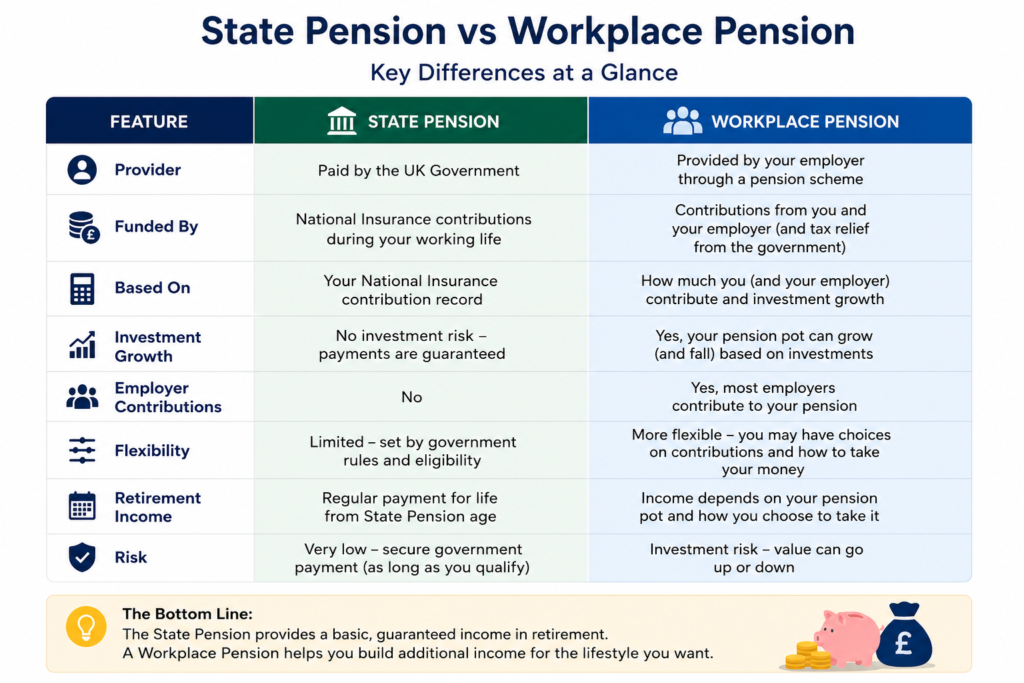
State Pension vs Workplace Pension
Although both provide retirement income, they work differently.
| Feature | State Pension | Workplace Pension |
|---|---|---|
| Provider | UK Government | Employer and Pension Provider |
| Based On | National Insurance contributions | Employee and employer contributions |
| Investment Growth | No | Yes |
| Employer Contributions | No | Usually Yes |
| Flexibility | Limited | Depends on scheme |
| Retirement Income | Government payment | Based on pension savings |
Many retirees receive income from both, helping to create a more balanced financial future.
Pension and Tax
The Pension is considered taxable income. However, whether you actually pay tax depends on your total annual income from all sources.
This may include:
- Workplace pensions
- Private pensions
- Employment income
- Rental income
- Investment income
Understanding how different income sources interact can help you plan your retirement more effectively.
Why It’s Important to Review Your State Pension Regularly
Retirement planning isn’t something you do once and forget.
Review your State Pension if:
- You change jobs.
- You become self-employed.
- You spend time working abroad.
- You take a career break.
- You approach retirement age.
- Government pension rules change.
Regular reviews help ensure your retirement strategy remains aligned with your financial goals.
Common Myths About the State Pension
Myth 1: Everyone Receives the Same Amount
The amount you receive depends on your qualifying National Insurance record.
Myth 2: The Pension Is Enough for Everyone
Many retirees need additional income from workplace pensions, personal pensions or savings.
Myth 3: You Don’t Need to Check Your Pension Forecast
Checking your forecast can highlight opportunities to improve your future retirement income.
Myth 4: Pension Planning Can Wait Until Your 50s
Starting retirement planning earlier generally provides more opportunities to grow your savings.
State Pension: Key Takeaways
- The Pension is a key part of retirement income for millions of UK residents.
- Your National Insurance record largely determines your entitlement.
- Checking your Pension forecast helps you prepare for retirement.
- Workplace pensions and private savings can complement the State Pension.
- Reviewing your retirement plan regularly can improve your long-term financial security.
- Starting retirement planning early provides greater flexibility and more time to build savings.
Frequently Asked Questions
What is the State Pension?
The State Pension is a regular payment from the UK Government for eligible individuals who have reached State Pension age and meet the National Insurance contribution requirements.
How do I qualify for the State Pension?
Eligibility is generally based on your age and National Insurance contribution history.
Can I receive the full State Pension?
Receiving the full amount depends on your qualifying National Insurance years and your personal circumstances.
How do I check my State Pension forecast?
You can view your forecast online through official UK Government services to estimate your future entitlement.
Is the State Pension taxable?
Yes. The State Pension forms part of your taxable income, although the amount of tax you pay depends on your total annual income.
Can I work while receiving the State Pension?
Yes. Many people continue working after reaching State Pension age, although employment income may affect their overall tax position.
Can I increase my State Pension?
Depending on your circumstances, improving your National Insurance record or making voluntary contributions may increase your future entitlement.
Is the State Pension enough to retire comfortably?
For many people, the State Pension forms the foundation of retirement income but is supplemented by workplace pensions, personal pensions or other savings.
Author Bio
UK Markets Today Editorial Team
UK Markets Today publishes trusted news, financial guides, investing insights and personal finance content for UK readers. Our editorial team researches every article using reliable government and financial sources to help readers make informed financial decisions.
Finance Disclaimer
Disclaimer: This article is for informational and educational purposes only and should not be considered financial, investment, tax or legal advice. Pension rules, payment amounts, eligibility criteria and government policies may change over time. Always verify the latest information using official UK Government resources or consult a qualified financial adviser before making retirement decisions.
Call to Action
Plan Your Retirement with Confidence
Understanding the State Pension is one of the first steps towards building a secure financial future. By reviewing your National Insurance record, checking your pension forecast and combining the Pension with other retirement savings, you can make better-informed financial decisions.
Stay up to date with the latest UK pension news, retirement planning guides and personal finance insights by following UK Markets Today.