Balance Transfer Credit Cards: How 0% Deals Work in the UK
Balance transfer cards explained: 0% periods, transfer fees, and the traps to avoid.
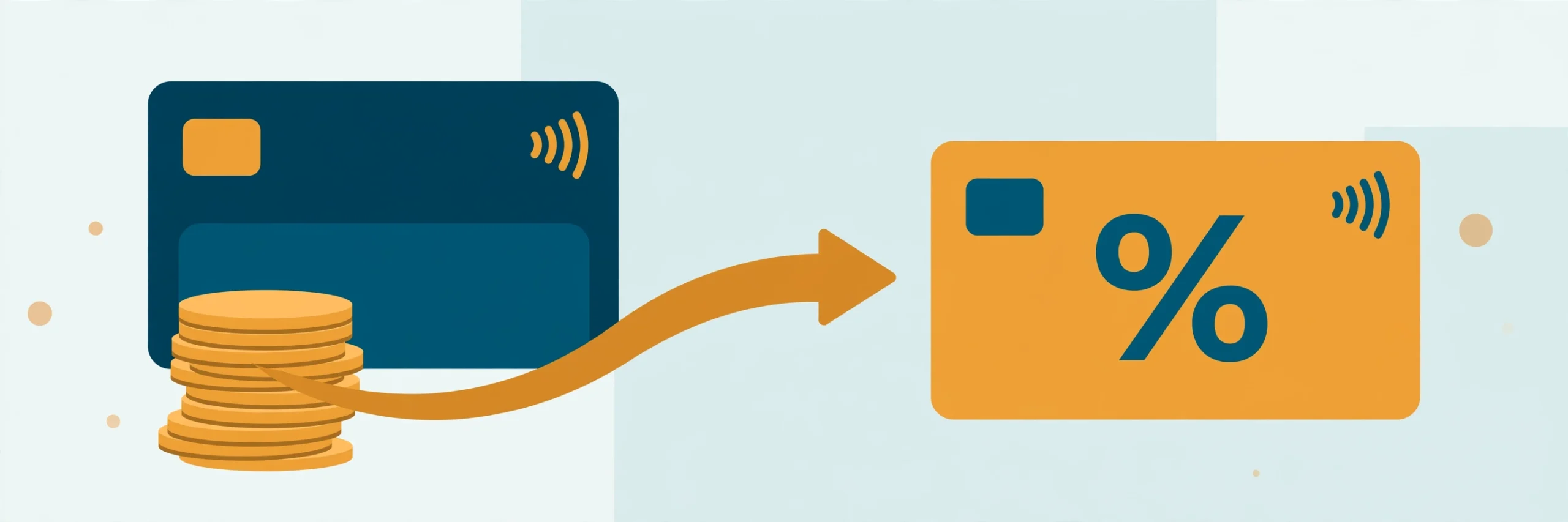
TL;DR: A balance transfer card moves existing credit card debt to a new card at 0% interest for a set period, typically 12 to 36 months. You pay a transfer fee, usually 3% to 3.5% of the balance, which is added to what you owe. The aim is to clear the debt before the 0% ends, because the standard rate (often around 24.9% APR) then applies to whatever is left.
How balance transfer cards work
You apply for the new card, request the transfer (usually within 60 to 90 days of opening), and the new provider pays off your old card. You now owe the new provider the transferred balance plus the fee. No interest accrues during the 0% window, so every payment cuts the debt itself. You usually cannot transfer between cards in the same banking group (for example within the Lloyds group or the NatWest group).
The fee: roughly 3% to 3.5%
The fee is the price of the deal. On a £3,000 transfer at 3.09%, you pay about £93, added to the balance. Compare it against staying put: at 24.9% APR, £3,000 costs roughly £62 a month in interest alone, so the fee usually pays for itself quickly if you use the 0% period properly.
Balance transfer vs the alternatives
| Balance transfer card | 0% purchase card | Staying put | |
|---|---|---|---|
| Best for | Existing debt | New spending | Neither |
| Typical 0% period | 12 to 36 months | 20 to 26 months | None |
| Fee | 3% to 3.5% of balance | None | None |
| After 0% ends | Standard APR (often ~24.9%) | Standard APR | Standard APR |
Mistakes that cost people money
- Missing the transfer window: most cards require the transfer within 60 to 90 days of opening.
- Spending on the card: new purchases may not be at 0%. Keep the card for the transferred balance only.
- Paying only the minimum: clear the balance before the 0% ends or the remainder jumps to the standard rate.
- Applying for several cards at once: each full application leaves a hard search. Use an eligibility checker (a soft search) first.
Frequently asked questions
Does a balance transfer hurt my credit score?
The application involves a hard search, which can temporarily lower your score. But clearing expensive debt and lowering your utilisation usually helps over time. How to check your score free.
Can I transfer the balance again when the 0% ends?
Yes, many people chain 0% deals, paying a new fee each time. Approvals are never guaranteed, so always have a plan to clear the debt.
What is the longest 0% balance transfer deal?
Deals change frequently. In late September 2026, headline offers reached up to 36 months. Treat “longest ever” claims on older articles with suspicion: some long deals have been withdrawn.
Balance transfer or personal loan?
A 0% card is usually cheaper if you can clear the debt within the interest-free period. A loan suits larger debts you need years to repay. APR explained.
Deals change frequently; check current offers before applying. General information, not financial advice. Facts checked 1 October 2026. Sources: MoneyHelper, MoneySavingExpert.Carrying a balance you want gone for good? Our free credit card payoff calculator shows the month your balance clears, and how much interest you save by paying a fixed amount every month.
>Got a UK money question?
Ask it in the Ask UKMT live chat. No sign up, no names, and the answers are checked against official sources. Open the live chat