Petrol Prices UK Today: Why Are Prices Rising? Here’s What It Means for You
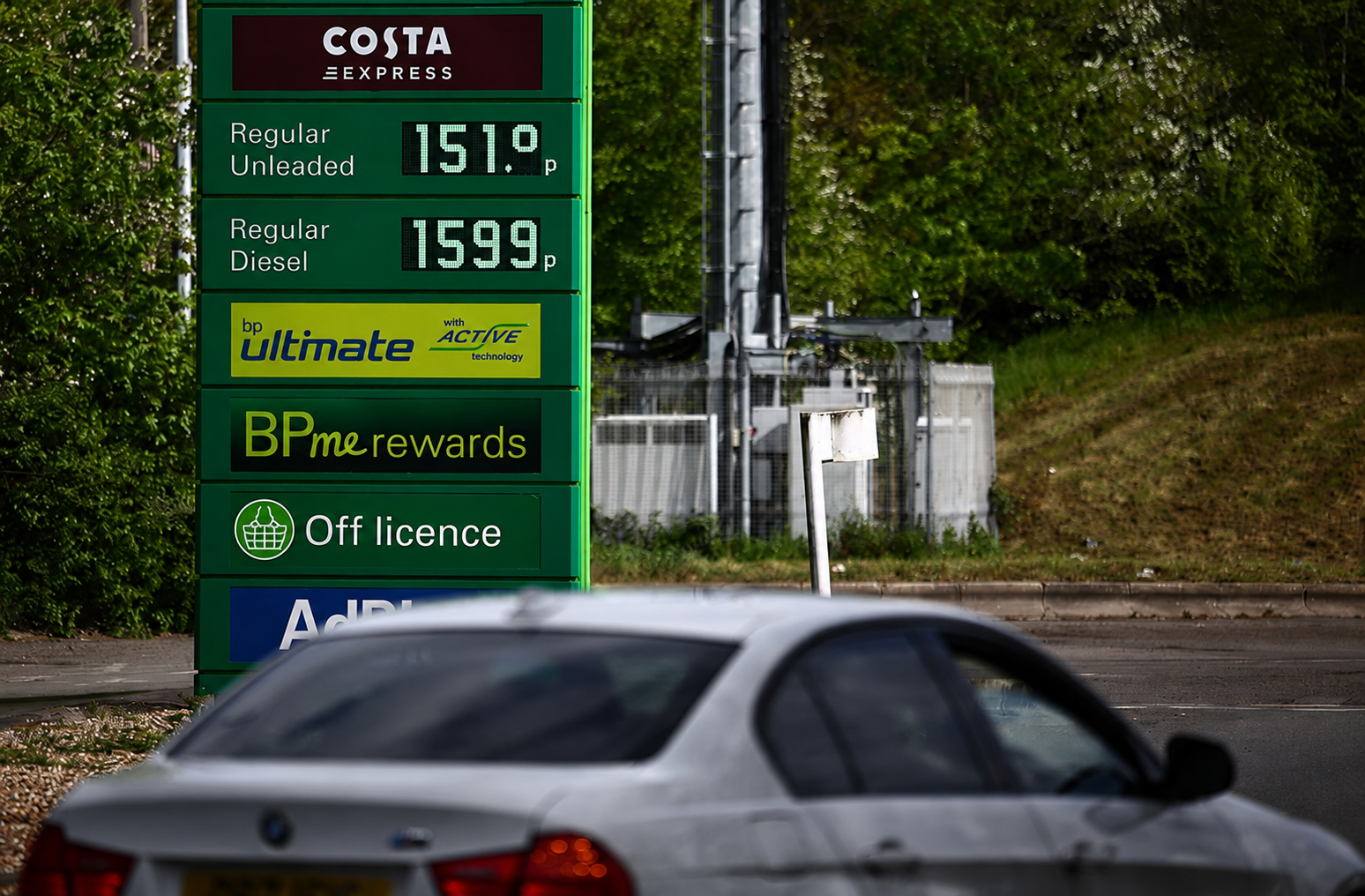
Petrol Prices UK Today are higher than many drivers expected. The average petrol price has now moved above 150p per litre, making it the highest level seen in almost two years. If you’ve recently filled up your car, you’ve probably noticed that a full tank now costs more than it did just a few weeks ago.
Thank you for reading this post, don't forget to subscribe!Many people are asking the same questions:
- Why are petrol prices going up?
- Will prices keep rising?
- Should I fill up my car now or wait?
In this guide, we’ll explain everything in simple English. You’ll learn why fuel prices are increasing, how much extra you could pay, and what it means for your everyday budget.
The latest UK fuel price data is regularly published through RAC Fuel Watch, which tracks average petrol and diesel prices.
Petrol Prices UK Today: Why Have Prices Increased?
Think about baking a cake.
If flour suddenly becomes much more expensive, the bakery has to charge more for each cake.
Petrol works in almost the same way.
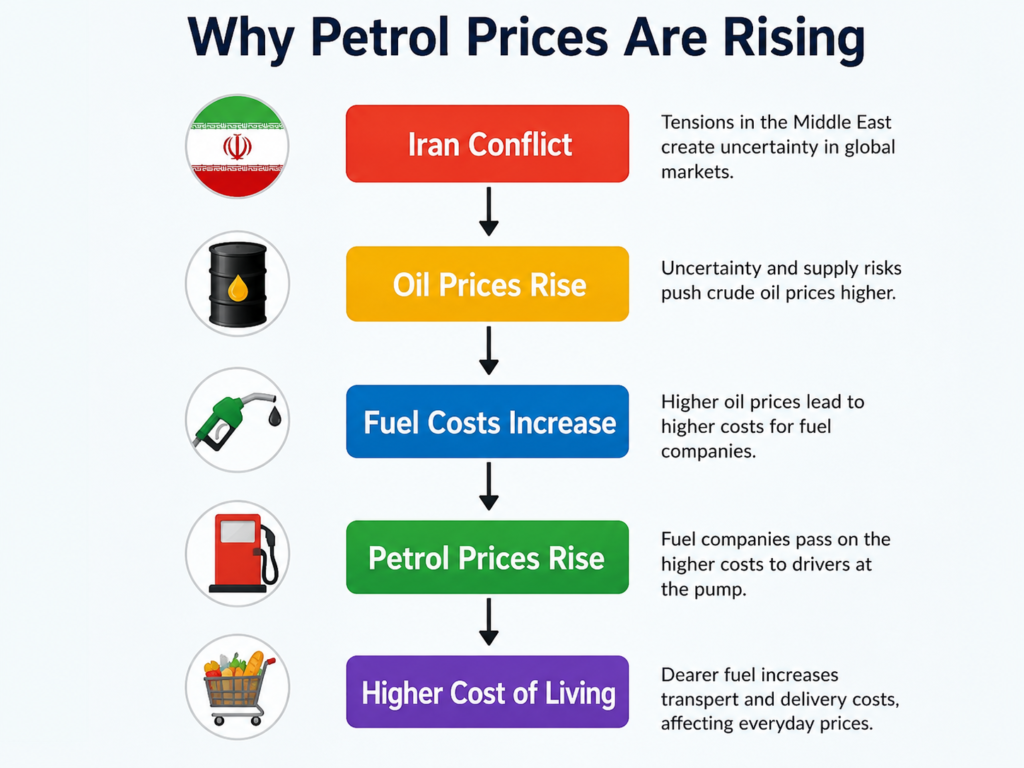
The main ingredient is crude oil.
When oil prices rise, petrol becomes more expensive to produce and transport.
Recently, global oil prices increased because traders became worried that fighting in the Middle East could affect supplies. That pushed oil prices higher and UK petrol prices followed.
Why Did Petrol Prices Rise So Quickly?
Many people are surprised by how quickly prices changed.
Oil is bought and sold every day around the world.
If something major happens, such as conflict affecting oil supply, prices can move within hours.
Petrol stations then receive new deliveries at higher wholesale prices.
As those deliveries arrive, pump prices begin rising across the country.
Why Don’t Petrol Prices Fall As Fast?
This is one of the biggest questions drivers ask.
When oil prices rise…
✅ Petrol prices often rise quickly.
When oil prices fall…
❌ Petrol prices usually come down much more slowly.
There are several reasons.
First, petrol stations may still be selling fuel they bought at higher prices.
Second, around 40–45% of the price you pay is made up of fuel duty and VAT.
Finally, every petrol station sets its own prices, so some reduce prices faster than others.
How Much More Will It Cost You?
Let’s look at a simple example.
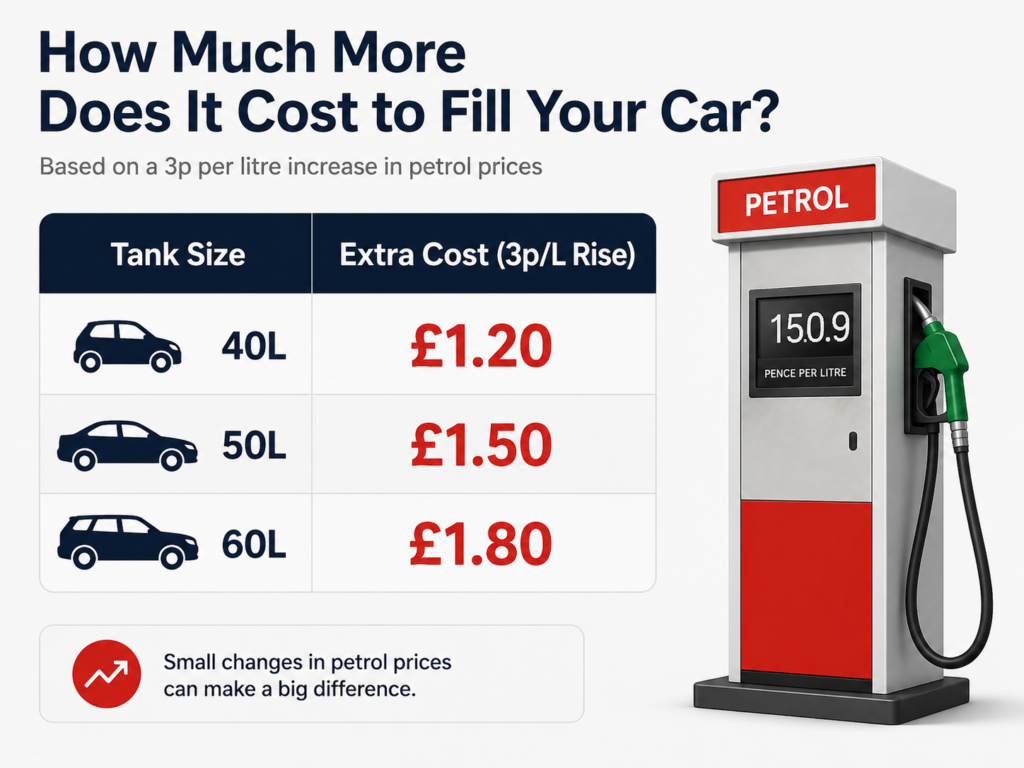
If petrol rises by 3p per litre:
40-litre tank
Extra cost:
£1.20
50-litre tank
Extra cost:
£1.50
That might not sound like much.
But if you drive every day and fill your tank every week, the extra cost adds up over a year.
What Does This Mean for the Cost of Living?
Higher petrol prices don’t only affect drivers.
Almost everything we buy is delivered by road.
Food.
Clothes.
Furniture.
Online shopping.
When transport becomes more expensive, businesses often pass those extra costs on to customers.
That’s one reason why inflation can rise.
Could Higher Petrol Prices Affect Your Mortgage?
The answer is:
Yes, indirectly.
Here’s how it works.
Higher oil prices
↓
Higher petrol prices
↓
Higher inflation
↓
Bank of England watches inflation
↓
Interest rates may stay higher
↓
Mortgage payments could stay higher
It doesn’t happen overnight, but fuel prices are one of the many things that influence the wider economy.
Should You Fill Up While Petrol Prices UK Today Are Rising?
Nobody knows exactly what petrol prices will do next.
However, these simple tips can help.
✔ Compare prices using fuel comparison apps.
✔ Avoid panic buying.
✔ Fill up before long journeys if prices continue rising.
✔ Drive smoothly to use less fuel.
Small changes can save money over time.
What Could Happen Next to Petrol Prices UK Today?
Much depends on what happens around the world.
If oil prices fall again, petrol prices should slowly come down.
If supply problems continue, prices could stay high or even rise further.
Experts will also be watching inflation, exchange rates and global demand for oil.
Petrol Prices UK Today FAQs
Why Are Petrol Prices UK Today So Expensive?
Oil prices have increased because of concerns about global supply, making fuel more expensive across the UK.
Will Petrol Prices Go Down Again?
They probably will if oil prices fall, but it may take several weeks before drivers see lower prices at petrol stations.
Why Is Diesel Also More Expensive?
Diesel is also made from crude oil, so its price usually moves for similar reasons.
Should I Fill Up Before The Weekend?
If prices are still rising, filling up before a long journey could help you avoid paying slightly higher prices later. However, there is no need to panic buy fuel.
Conclusion
Petrol Prices UK Today are affecting millions of drivers across the country. While higher oil prices are the main reason, taxes, transport costs and retailer pricing also influence what you pay at the pump.
Understanding why prices change helps you make smarter decisions about your weekly budget. Whether you’re commuting to work or planning a family trip, keeping an eye on fuel prices can help you manage your spending more effectively.