UK Inflation Rises to 3.5% in September 2026: What It Means for Your Money
UK CPI inflation rose to 3.5% in September 2026, up from 3.1% in August, driven mainly by fuel, the ONS said on 21 October. Core CPI rose to 2.8%. What the figure means for savings rates, mortgages ahead of the 5 November Bank Rate decision, and the April uprating link.
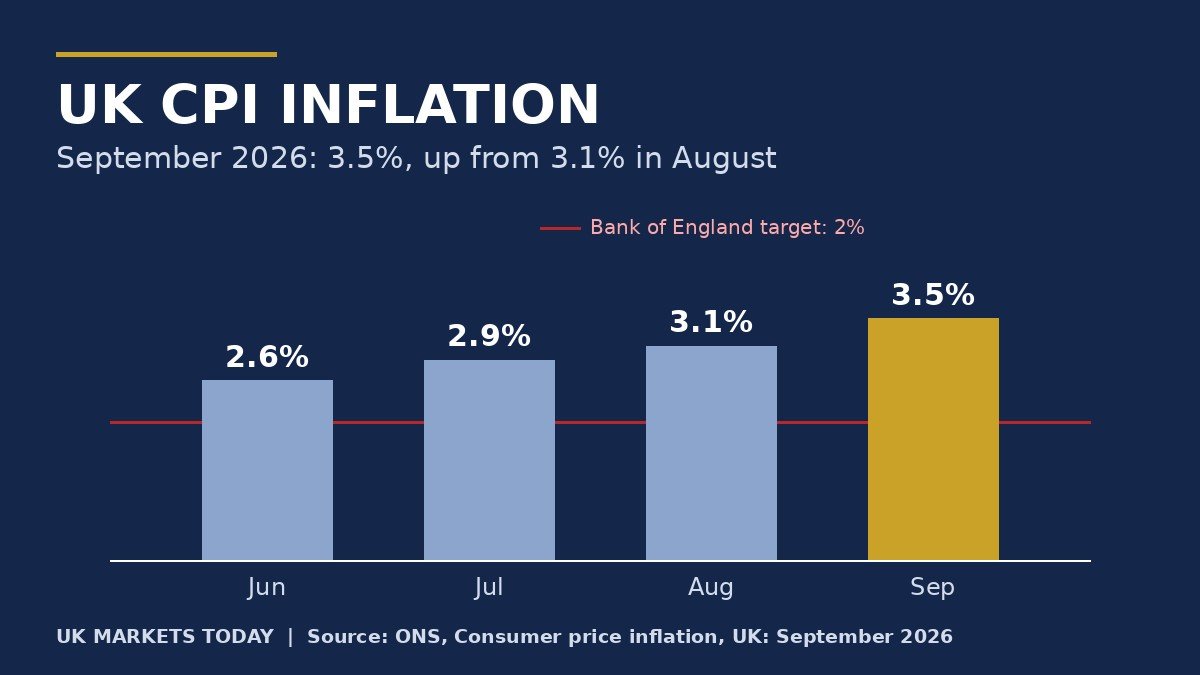
TL;DR: UK inflation rose to 3.5% in the 12 months to September 2026, up from 3.1% in August, the ONS said on 21 October. That is the highest CPI rate since October 2025. Fuel prices were the main driver. Core inflation also rose, to 2.8% from 2.6%. Bank Rate is still 3.75%, and the Bank of England decides next on Thursday 5 November 2026.
By Emily Harrington. Last checked: 21 October 2026. Sources: the Office for National Statistics (ONS) and the Bank of England, linked at the point of each claim. This article is information only and is not financial advice.
What is the UK inflation rate for September 2026?
The Consumer Prices Index (CPI) rose by 3.5% in the 12 months to September 2026, up from 3.1% in August, and by 0.4% in the month alone. The full release is the ONS bulletin, Consumer price inflation, UK: September 2026.
| Measure | August 2026 | September 2026 |
|---|---|---|
| CPI annual rate | 3.1% | 3.5% |
| CPIH annual rate | 3.3% | 3.6% |
| Core CPI (excludes energy, food, alcohol and tobacco) | 2.6% | 2.8% |
| CPI goods annual rate | 2.7% | 3.2% |
| CPI services annual rate | 3.4% | 3.7% |
Core, goods and services inflation all rose too, and 3.5% is well above the Bank of England target of 2%.
What pushed UK inflation up in September 2026?
Transport, particularly motor fuels, made the largest upward contribution, the ONS said. Restaurants and hotels made the largest downward contribution, because hotel prices rose by less than a year ago.
Transport prices rose by 6.6% in the year to September, up from 4.6% in August. Motor fuels rose by 29.8% in the year, up from 23.0%. Petrol rose 8.2 pence per litre in the month to 169.5 pence, and diesel rose 10.7 pence to 192.5 pence. Air fares, live music and computer games also pushed up.
What does 3.5% inflation mean for savings rates?
Any account paying less than 3.5% is losing spending power while this rate lasts. On £10,000, prices rising at 3.5% add about £350 a year to the same basket. An account paying 1.00% as an example adds only £100, a shortfall of about £250 before tax. That is the cost of doing nothing.
Compare your rate with the tables in our guide to the best savings accounts and our best cash ISA rates page. Cash ISA interest is tax free. Couples should also see our joint savings accounts guide, because joint interest is normally split for tax.
What does it mean for mortgages and the 5 November Bank Rate decision?
Bank Rate is 3.75%, and the next decision is on Thursday 5 November 2026, as the Bank of England lists on its Monetary Policy Committee dates page. This is the last full CPI release the committee sees before it decides.
A higher print, with core and services rising too, makes a cut on 5 November very hard to argue for, and keeps the question of a rise live. Our Bank of England Base Rate Forecast sets out the scenarios and what each would cost on a mortgage. Trackers usually move after a Bank Rate change. Fixed deals are priced from market expectations, so they can move before 5 November.
The trap: reading one month as the whole story
Do not remortgage or lock savings away for years on one month of data alone. September was driven mainly by fuel, and fuel prices can fall back fast. Check your rates now, note deal end dates, and be ready to act after 5 November.
Why the September figure matters for April
September CPI is the month that usually feeds into the State Pension and benefits uprating decision for the following April. That is the usual link, not a confirmed uprating, and no April 2027 rate was announced today. If a payment were uprated in full, the maths is £3.50 extra for every £100 paid. The actual rise is a government decision, normally set out around the Budget.
Frequently asked questions
What was UK inflation in September 2026?
CPI inflation was 3.5% in the 12 months to September 2026, up from 3.1% in August 2026, the ONS said on 21 October 2026. CPIH was 3.6%, up from 3.3%. Core CPI was 2.8%, up from 2.6%.
Why did UK inflation rise in September 2026?
Transport, particularly motor fuels, made the largest upward contribution, the ONS said. Petrol averaged 169.5 pence per litre and diesel 192.5 pence. Restaurants and hotels pulled the rate down slightly.
Will the Bank of England change Bank Rate on 5 November 2026?
Nobody knows yet. Bank Rate is 3.75% today. Inflation at 3.5%, with core at 2.8%, makes a cut unlikely and keeps a rise in the debate. The decision and the November Monetary Policy Report are published on 5 November 2026.
Do this next, in this order
- Check the rate on each savings account. Below 3.5%, your money is losing spending power at the current rate.
- Compare it with the checked tables in our savings and cash ISA guides, and move money sitting on a dropped rate.
- If your mortgage deal ends within six months, note the date and read the base rate forecast scenarios before choosing a new fix.
- Wait for the confirmed April uprating announcement before budgeting on any State Pension or benefits rise.
Sources: ONS, Consumer price inflation, UK: September 2026, published 21 October 2026. Bank of England, Monetary Policy Committee dates page, checked 21 October 2026 (Bank Rate 3.75%, next decision 5 November 2026). Worked examples are our own maths from those figures. General information only, not financial advice.
Got a UK money question?
Ask it in the Ask UKMT live chat. No sign up, no names, and the answers are checked against official sources. Open the live chat