UK Mortgage Rates Rise Again: What It Means for Homeowners in 2026
Last Updated: 1 October 2026 UK Mortgage Rates are rising again. September 2026 brought the first month-on-month increase in average fixed rates for eight months, as a wave of lender repricing pushed typical deals back towards 6%. The latest changes could affect homeowners, first-time buyers and anyone planning to remortgage in 2026. In this guide,…

Last Updated: 1 October 2026
UK Mortgage Rates are rising again. September 2026 brought the first month-on-month increase in average fixed rates for eight months, as a wave of lender repricing pushed typical deals back towards 6%. The latest changes could affect homeowners, first-time buyers and anyone planning to remortgage in 2026. In this guide, updated for October 2026, we explain why UK mortgage rates are increasing, who is affected and what you can do next.
Today’s Snapshot
| Key Update | Latest Information |
|---|---|
| Major lenders | NatWest, Santander, HSBC, TSB and Lloyds each raised selected fixed rates twice in September; Coventry raised its whole range. Skipton bucked the trend with cuts from 25 September. |
| Why rates are rising | Higher market borrowing costs and increased uncertainty have pushed up swap rates used to price fixed mortgages. |
| Who is affected | Home buyers, homeowners remortgaging and first-time buyers. |
| Bank Rate | 3.75% |
| Average rates (late Sept) | 2-year fix around 5.9%, 5-year fix around 5.9% (Moneyfacts); best buys from about 5.2%. |
| Next Bank of England meeting | 5 November 2026 |
September broke an eight-month run of falling average mortgage rates. Moneyfacts data shows average two and five-year fixed rates both rose during the month, with swap rates climbing to their highest since autumn 2023 as investors priced in the chance of further Bank of England rate rises.
UK Mortgage Rates: Quick Answer
UK mortgage rates are rising again because the cost for lenders to borrow money has increased. When funding becomes more expensive, banks often pass some of those costs on to borrowers through higher mortgage rates.
If you’re buying your first home, remortgaging or your current fixed deal is ending soon, you may face higher monthly repayments than borrowers who secured a mortgage earlier this year. However, the increase does not necessarily mean everyone should rush into a new deal. Your best option depends on your financial situation, loan type and how long you plan to stay in your property.
Why Are UK Mortgage Rates Rising Again?
Many people assume mortgage rates only move when the Bank of England changes its base rate.
In reality, lenders also look at financial markets.
One of the biggest factors is swap rates, which influence the cost of offering fixed-rate mortgages.
In September, swap rates climbed to their highest since autumn 2023 as investors reacted to renewed geopolitical tensions, rising energy prices and expectations that the Bank of England could raise borrowing costs further. As funding became more expensive, several lenders responded by increasing selected mortgage products.
Think of it like this:
If it costs a bank more to obtain money today than it did last month, it may increase mortgage prices for new customers to protect its margins.
That is why mortgage rates sometimes rise even when the Bank of England has not changed the base rate.
Which UK Mortgage Rates Have Increased?
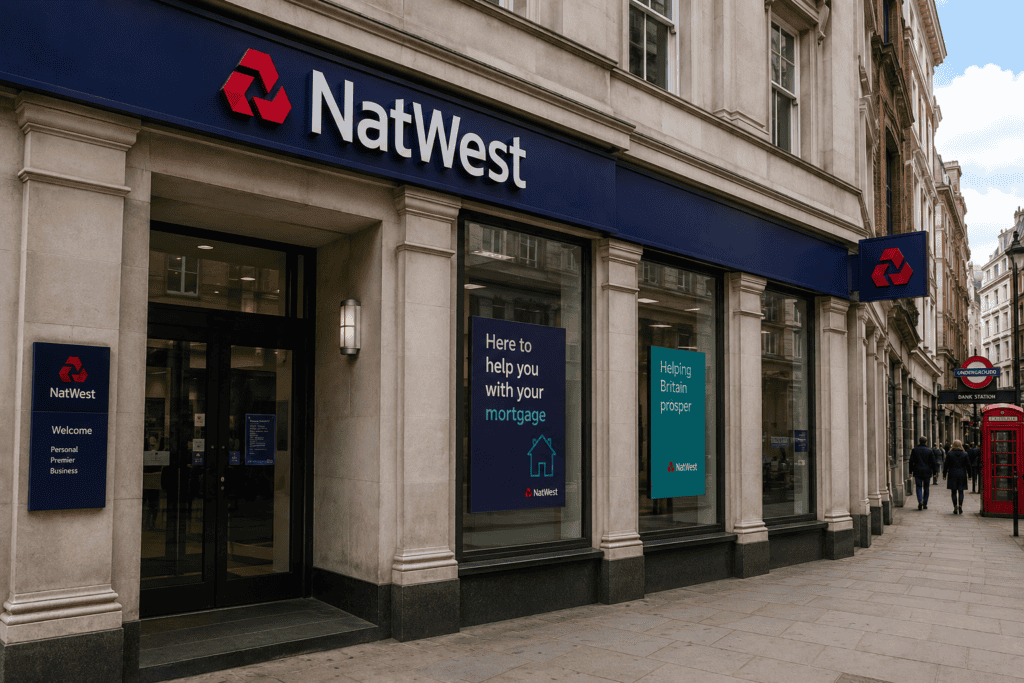
September was an unusually busy month for lender repricing. NatWest, Santander, HSBC, TSB and Lloyds each increased selected fixed rates twice during the month, while Coventry Building Society raised rates across its entire range and Nationwide repriced selected deals.
It was not all one way. Skipton Building Society cut fixed rates by an average of 0.15 percentage points from 25 September and extended its Delayed Start Mortgage, which lets borrowers defer their first payment for up to three months, to home movers.
By late September, Moneyfacts put the average two-year fixed rate at 5.92% and the average five-year fix at 5.94%. The cheapest deals stayed well below the averages: Nationwide was offering a no-fee two-year fix at 5.19% for borrowers with a 40% deposit, while Skipton’s five-year fix at 4.91% (with a £1,995 fee) led the 60% loan-to-value tables.
The gap between average and best-buy rates is a reminder that shopping around matters more than ever when rates are volatile.
How Much More Could UK Mortgage Rates Cost You?
Even a small increase in mortgage rates can make a noticeable difference over time.
Example
Imagine you borrow £200,000 on a repayment mortgage.
If your interest rate rises from 5.50% to 5.90% on a 25-year term, your monthly payment could increase by around £48.
That works out to roughly £576 more each year.
While every mortgage is different, this example shows why even modest rate increases matter for household budgets.
How Do UK Mortgage Rates Affect First-Time Buyers?
The recent changes are likely to have the biggest impact on:
- First-time buyers applying for a new mortgage
- Homeowners whose fixed-rate deal is ending soon
- People planning to remortgage
- Buyers who have not yet locked in a mortgage offer
If you’re already on a fixed-rate mortgage, your monthly payment usually won’t change until your current deal expires.
Does This Mean the Housing Market Is Slowing?
Higher mortgage rates can reduce affordability because buyers may qualify for smaller loans or face higher monthly repayments.
That can lead some people to delay buying a home, while others may choose to stay in their current property rather than move.
However, the UK housing market is influenced by many factors, including employment, wages, inflation and consumer confidence, not mortgage rates alone. Recent reports suggest higher borrowing costs are adding pressure to housing activity, but conditions vary across regions and price ranges. In September 2026, Zoopla reported annual house price growth slowing to 0.8%, its weakest in more than two years, while Bank of England data showed mortgage approvals for house purchase falling to 54,900 in August, the lowest since December 2023.
Fixed vs Tracker UK Mortgage Rates
If you’re choosing a new mortgage, you’ll usually have two main options: a fixed-rate mortgage or a tracker mortgage.
Fixed-Rate Mortgage
With a fixed-rate mortgage, your interest rate stays the same for an agreed period, typically two, three or five years.
Advantages:
- Your monthly repayments stay predictable.
- Easier to budget.
- You’re protected if interest rates rise.
Disadvantages:
- You won’t benefit immediately if mortgage rates fall.
- Early repayment charges may apply if you leave the deal before it ends.
Tracker Mortgage
A tracker mortgage follows the Bank of England Bank Rate, plus a set percentage.
For example, if your tracker is Bank Rate + 1% and the Bank Rate is 3.75%, you’ll pay 4.75%.
If the Bank Rate increases, your monthly payments usually rise. If it falls, your repayments could decrease.
Choosing between a fixed-rate and tracker mortgage depends on your financial circumstances, your attitude to risk and your expectations for future interest rates.
Should You Lock in a Mortgage Rate Now?
There isn’t a one-size-fits-all answer.
If your current mortgage deal is ending within the next few months, it may be worth comparing available offers sooner rather than later.
Many lenders allow borrowers to secure a mortgage offer several months before completion, giving you some protection if rates continue to rise.
However, if market conditions improve before your mortgage starts, your lender or broker may help you switch to a better available deal.
Speaking with a qualified mortgage adviser can help you understand which option suits your circumstances.
What Does This Mean for First-Time Buyers?
Higher mortgage rates can make buying a first home more expensive.
You may notice:
- Higher monthly repayments.
- Reduced borrowing limits.
- Larger deposit requirements for some products.
- More competition for lower-rate mortgage deals.
If you’re planning to buy your first home, consider:
- Improving your credit score.
- Saving a larger deposit if possible.
- Comparing deals from different lenders.
- Using an independent mortgage broker to explore more options.
Even in a higher-rate environment, many buyers continue to purchase homes by choosing properties within a realistic budget.

What Should Homeowners Do About UK Mortgage Rates?
If you’re already on a fixed-rate mortgage, there’s usually no immediate action required until your deal is close to ending.
However, homeowners should:
- Review when their current mortgage expires.
- Compare remortgage deals early.
- Check whether overpayments are allowed without penalties.
- Monitor future Bank of England announcements.
- Speak with their lender if they’re worried about affordability.
Planning ahead can often provide more options than waiting until the last minute.
Remortgage Timeline: What to Do 6 Months Before Your Deal Ends
Most borrowers can lock in a new mortgage offer three to six months before their current deal expires. Starting early gives you a safety net if rates keep rising, and most lenders will let you switch to a cheaper deal if rates fall before completion. Here is a simple timeline:
- 6 months before: check when your current deal ends and whether early repayment charges apply if you leave early. Pull your credit report and fix any errors.
- 4 to 5 months before: compare product transfer offers from your current lender against deals from other lenders, ideally with an independent broker who can see the whole market.
- 3 months before: secure a mortgage offer at the best available rate. Most offers last three to six months, so this usually covers you until your deal ends.
- 1 month before: re-check the market. If a cheaper deal has appeared, ask your broker or lender about switching your application before completion.
- Deal end date: make sure the new mortgage completes on time so you never slip onto your lender’s standard variable rate, which currently averages above 7%.
For the full step-by-step process, see our guide to remortgaging in the UK.
What to Watch Over the Coming Months
Several factors could influence UK mortgage rates during the rest of 2026:
- The Bank of England’s next decision on 5 November 2026, with markets pricing a strong chance of a quarter-point rise after September’s 6-3 vote to hold.
- UK inflation data, after CPI rose to 3.1% in August.
- The Autumn Budget on 28 October 2026, which could shift borrowing expectations.
- Future Bank of England interest rate decisions.
- UK inflation data.
- Financial market expectations.
- Global economic uncertainty.
- Competition between mortgage lenders.
While no one can predict exactly where mortgage rates will move next, the November rate decision and the Budget are the two dates that matter most for borrowers this autumn.
Frequently Asked Questions
Are UK mortgage rates rising in 2026?
Yes. September 2026 saw the first month-on-month rise in average fixed mortgage rates for eight months, with the average two-year fix reaching 5.92% and the average five-year fix 5.94% by late September, according to Moneyfacts.
Why are mortgage rates increasing if the Bank Rate hasn’t changed?
Fixed mortgage rates are influenced by market funding costs, including swap rates, not just the Bank of England Bank Rate.
Will my existing mortgage payment increase?
If you’re already on a fixed-rate mortgage, your repayments usually remain the same until your current deal ends.
Should I remortgage now?
If your current deal expires soon, comparing mortgage offers early may help you secure a competitive rate.
Are first-time buyers affected the most?
Many first-time buyers face higher monthly repayments because they often need larger mortgages and have smaller deposits.
Could mortgage rates fall later this year?
Mortgage rates may change depending on inflation, Bank of England decisions and financial market conditions. Future movements cannot be guaranteed.
What is a swap rate?
A swap rate reflects the cost lenders pay to secure funding for fixed-rate mortgages. Higher swap rates often lead to higher mortgage pricing.
Is a fixed-rate mortgage safer?
Many borrowers prefer fixed-rate mortgages because repayments remain predictable during the fixed period.
Can I switch my mortgage before my deal ends?
Some borrowers can, but early repayment charges may apply. Check your mortgage agreement before making changes.
Where can I compare mortgage deals?
Mortgage comparison websites, independent brokers and individual lenders all provide information on current mortgage products.
Our View on UK Mortgage Rates
Recent increases in UK mortgage rates highlight how quickly borrowing costs can change, even without an immediate change to the Bank of England Bank Rate.
For many households, the most important step isn’t rushing into a decision, it’s understanding your options. Reviewing your mortgage early, comparing lenders and seeking professional advice can help you make informed financial decisions.
Whether you’re buying your first home, moving house or preparing to remortgage, staying informed about interest rates and market conditions will put you in a stronger position.
Key Takeaways
- Several major UK lenders have increased selected mortgage rates.
- Rising market funding costs are one of the main reasons behind the changes.
- First-time buyers and homeowners approaching remortgage are likely to be most affected.
- Fixed-rate mortgages provide payment certainty, while tracker mortgages move with the Bank Rate.
- Comparing mortgage deals early may help borrowers secure better rates.
Related Articles
Continue reading:
- UK Inflation Today (July 2026): Latest CPI Data Explained and What It Means for Your Money
- Will UK Interest Rates Rise Again? How Higher Oil Prices Could Affect Your Mortgage
Disclaimer: This article is for general informational and educational purposes only and should not be considered financial, investment, mortgage or legal advice. While we aim to keep our content accurate and up to date, mortgage rates, interest rates and market conditions can change without notice. Always verify the latest information with official sources or consult a qualified financial or mortgage adviser before making any financial decisions.
Got a UK money question?
Ask it in the Ask UKMT live chat. No sign up, no names, and the answers are checked against official sources. Open the live chat
Follow UK Markets Today on Google
Get our latest guides in your Google feed: set UK Markets Today as a preferred source.