
UK Minimum Wage 2026: Rates, Who Gets What, and What Changes in April 2027
The UK minimum wage in 2026 is £12.71 an hour for workers aged 21 and over, £10.85 for 18 to 20 year olds, and £8.00 for under 18s and apprentices. It rises on 1 April 2027 to £13.21.

By Deeraj Kiran | Published 11 November 2026 | Last checked: 11 November 2026
Every rate in this guide was checked on 11 November 2026 against GOV.UK and the Low Pay Commission. The National Living Wage is £12.71 an hour for workers aged 21 and over, and it rises to £13.21 on 1 April 2027. This guide gives general information only. It is not financial advice, and it is not a personal recommendation.
TL;DR, the quick answer
The UK minimum wage in 2026 is £12.71 an hour for workers aged 21 and over, £10.85 for 18 to 20 year olds, and £8.00 for under 18s and apprentices. It rises on 1 April 2027 to £13.21, £11.27 and £8.31. At 37.5 hours a week, the National Living Wage pays £24,784.50 a year before tax. Check your payslip against the rate for your age, because mistakes happen and any money you are owed can be claimed back.
Verdict: budget on £12.71, not £13.21. The 2027 rise is confirmed, but it does not reach your pay until 1 April 2027. If your employer still pays last year’s £12.21 rate, you are losing 50p an hour, which is £975 a year at 37.5 hours a week.
What is the UK minimum wage in 2026?
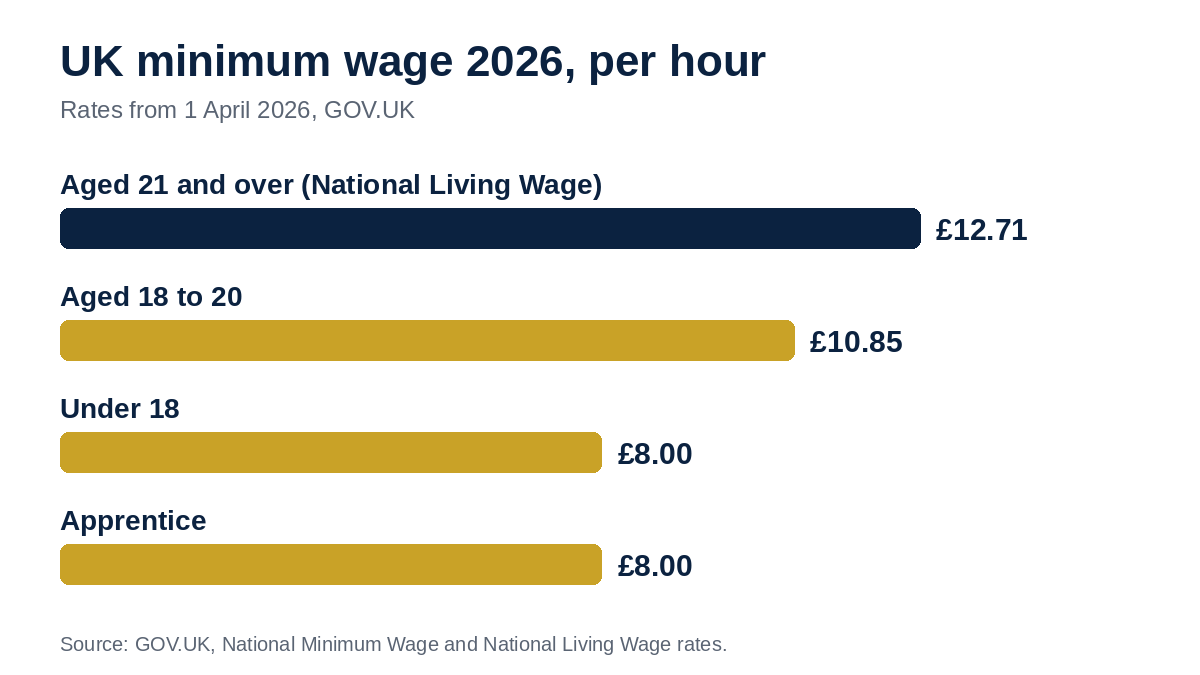
The UK minimum wage in 2026 depends on your age. Workers aged 21 and over get the National Living Wage of £12.71 an hour. Workers aged 18 to 20 get £10.85 an hour. Workers under 18 and apprentices get £8.00 an hour. These rates have applied since 1 April 2026 and change again on 1 April 2027.
| Who | Hourly rate from 1 April 2026 |
|---|---|
| 21 and over (National Living Wage) | £12.71 |
| 18 to 20 | £10.85 |
| Under 18 | £8.00 |
| Apprentice | £8.00 |
Source: GOV.UK, National Minimum Wage and National Living Wage rates, checked 11 November 2026.
You must be at least school leaving age to get the National Minimum Wage. The National Living Wage is the top rate, and it is for workers aged 21 and over. Apprentices get the apprentice rate if they are under 19, or if they are 19 or over and in the first year of their apprenticeship. A 21 year old apprentice in the first year gets £8.00 an hour. Once that apprentice has finished the first year, the rate for their age applies, so a 21 year old then gets £12.71.
These rates are higher than the year before. From April 2025 to March 2026 the rates were £12.21, £10.00, £7.55 and £7.55. So the National Living Wage rose by 50p, or 4.1%, the 18 to 20 rate rose by 85p, or 8.5%, and the under 18 and apprentice rates rose by 45p, or 6.0%. If a page or a payslip still shows £12.21 as the current rate, it is out of date.
How much is the minimum wage a week, a month and a year?
At 37.5 hours a week, the National Living Wage of £12.71 an hour pays £476.63 a week, £2,065.38 a month and £24,784.50 a year before tax and National Insurance. At 40 hours a week it pays £508.40 a week and £26,436.80 a year. Younger workers earn less, because their hourly rate is lower.
| Your hourly rate | 37.5 hours a week | 40 hours a week |
|---|---|---|
| £12.71 (21 and over) | £476.63 a week, £2,065.38 a month, £24,784.50 a year | £508.40 a week, £2,203.07 a month, £26,436.80 a year |
| £10.85 (18 to 20) | £406.88 a week, £1,763.13 a month, £21,157.50 a year | £434.00 a week, £1,880.67 a month, £22,568.00 a year |
| £8.00 (under 18 and apprentice) | £300.00 a week, £1,300.00 a month, £15,600.00 a year | £320.00 a week, £1,386.67 a month, £16,640.00 a year |
These are gross figures, before tax and National Insurance, worked out as hours a week times 52 weeks. The rate is hourly, so it applies whatever your hours are. At 20 hours a week on £12.71 you earn £254.20 a week before tax. To see what lands in your bank after tax and National Insurance, use our take-home pay calculator.
What is the National Living Wage?
The National Living Wage is the legal minimum hourly rate for workers aged 21 and over. It is not a voluntary rate and it is not the same as the Real Living Wage. Since 1 April 2024 it has applied from age 21. Before that it started at 23, and before April 2021 it started at 25.
The Low Pay Commission advises the government on the rate each year, and the government sets it. The Commission recommends a rate that protects low paid workers without costing jobs. The government accepted its October 2026 recommendations in full on 28 October 2026. The Commission also recommended pausing the move to one single adult rate, so the age threshold stays at 21 for now. The government had aimed to lower it to 18 over time, but the Commission said the risks to young workers’ jobs had grown.
Pay is only half the story. Prices are still rising, with CPI at 3.5% in September 2026, and the Bank of England raised Bank Rate to 4% on 5 November 2026. Read our Bank of England base rate explainer for what that means for your money.
What changes to the minimum wage in April 2027?
On 1 April 2027 every minimum wage rate rises by 3.9%. The National Living Wage goes from £12.71 to £13.21 an hour. The 18 to 20 rate goes from £10.85 to £11.27. The under 18 and apprentice rates go from £8.00 to £8.31. The government accepted the Low Pay Commission’s recommendation in full on 28 October 2026.
| Who | From 1 April 2027 | Rise |
|---|---|---|
| 21 and over (National Living Wage) | £13.21 | 50p, 3.9% |
| 18 to 20 | £11.27 | 42p, 3.9% |
| Under 18 | £8.31 | 31p, 3.9% |
| Apprentice | £8.31 | 31p, 3.9% |
Source: Low Pay Commission recommendations, 28 October 2026. The Autumn Budget 2026 confirmed the same April 2027 rates.
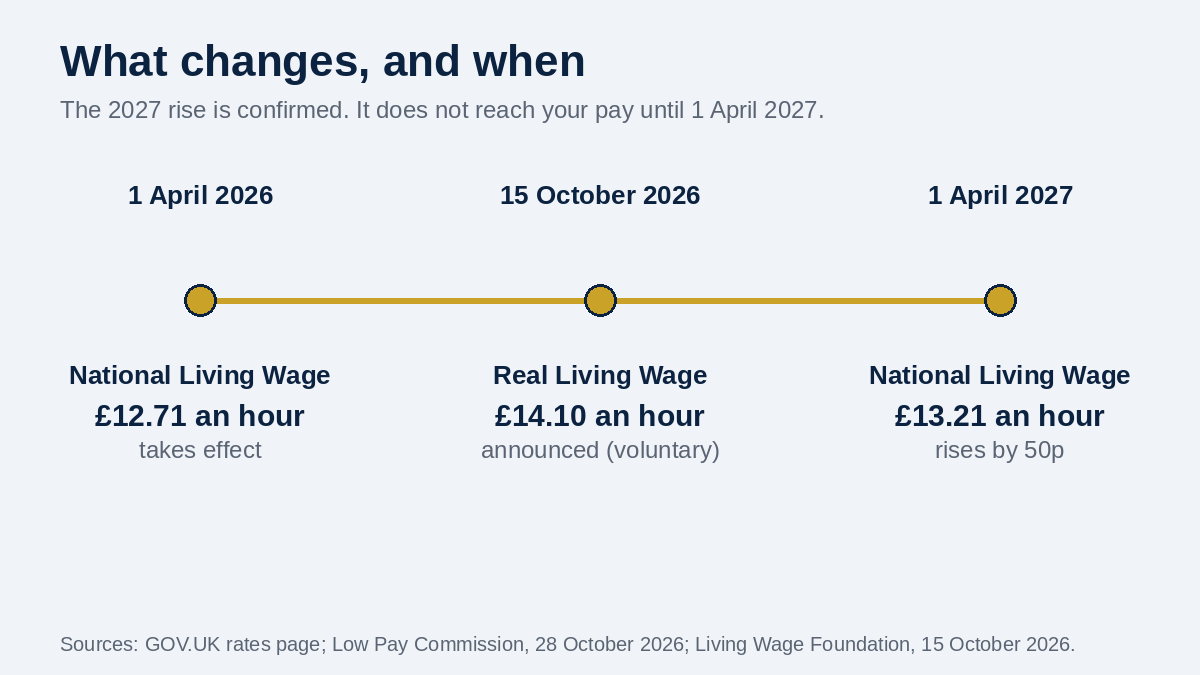
At 37.5 hours a week, £13.21 pays £495.38 a week and £25,759.50 a year, which is £975.00 a year more than now, or £81.25 a month more. At 40 hours a week it pays £528.40 a week and £27,476.80 a year, which is £1,040.00 a year more. Younger workers gain too. At 37.5 hours a week, 18 to 20 year olds gain £819.00 a year, and under 18s and apprentices gain £604.50 a year.
The new rates apply from the first pay reference period starting on or after 1 April 2027, so your April pay may still be partly at the old rate depending on when your pay period starts. The accommodation offset, the most an employer can deduct from your pay for accommodation, rises to £11.53 a day. If the rise leaves you with spare cash, check the best savings rates today before it sits in a low paying account.
What is the Real Living Wage, and is it different?
The Real Living Wage is a voluntary rate set by the Living Wage Foundation, not the government. It is £14.10 an hour outside London and £15.45 in London, announced on 15 October 2026. Your employer can choose to pay it, but the law does not force them to. The National Living Wage and National Minimum Wage are the legal minimums.
The gap is real money. The Real Living Wage is £1.39 an hour above the National Living Wage, which is £2,710.50 a year at 37.5 hours a week. In London the gap is £2.74 an hour, or £5,343.00 a year at 37.5 hours a week. The rate is worked out from living costs by the Resolution Foundation for the Living Wage Foundation, and it applies to workers aged 18 and over. Close to 17,000 employers are accredited, and they have until 1 May 2027 to bring the new rates into pay packets. You can check whether your employer is one of them on the Living Wage Foundation site.
The trap: four minimum wage mistakes that cost people money
1. Budgeting on £13.21 now. The April 2027 rise is confirmed, but it is not your rate today. If you plan spending on £13.21 before 1 April 2027, you will be short by 50p an hour, which is £81.25 a month at 37.5 hours a week.
2. Trusting a page that still shows £12.21. That was last year’s National Living Wage, from April 2025 to March 2026. Many pages still show it. If your employer still pays it, you are losing £975 a year at 37.5 hours a week.
3. Thinking the Real Living Wage is the law. £14.10 an hour sounds like the rate everyone should get, but it is voluntary. Only the National Living Wage and the National Minimum Wage are legal minimums, and only those can be enforced.
4. Apprentices who stay on £8.00 after year one. An apprentice aged 19 or over moves to the rate for their age after the first year. A 21 year old apprentice in year two should get £12.71, not £8.00. Staying on the apprentice rate costs £4.71 an hour, which is £9,184.50 a year at 37.5 hours a week.
What if my employer pays less than the minimum wage?
If your employer pays less than the minimum wage, you are owed the difference as back pay. Check your rate with the free GOV.UK minimum wage calculator, then speak to your employer. If that does not fix it, contact Acas for free advice on 0300 123 1100. HMRC enforces the minimum wage and can make employers pay what they owe.
Work out your hourly rate first. Divide your gross pay by the hours you worked. Then check it with the GOV.UK minimum wage checker. If the number is short, speak to your employer and show them the GOV.UK rates page. If that does not fix it, contact Acas on 0300 123 1100 for free advice. HMRC can investigate and make your employer pay back what you are owed.
Charges your employer makes must not take your pay below the minimum wage. If your employer charges you for something they require, such as a uniform, that charge must not push your pay below the rate. If your employer provides accommodation, the amount they can deduct is capped by the accommodation offset, which rises to £11.53 a day from April 2027.
Frequently asked questions
What is the UK minimum wage in 2026?
The UK minimum wage in 2026 is £12.71 an hour for workers aged 21 and over, £10.85 for 18 to 20 year olds, and £8.00 for under 18s and apprentices. These rates have applied since 1 April 2026.
How much is £12.71 an hour a month?
At 37.5 hours a week, £12.71 an hour is £2,065.38 a month before tax and National Insurance. At 40 hours a week it is £2,203.07 a month. Use our take-home pay calculator to see what that leaves after tax.
Does the minimum wage apply to part-time workers?
Yes. The minimum wage is an hourly rate, so it applies whatever your hours are. At 20 hours a week on £12.71 you earn £254.20 a week before tax, and at 10 hours a week you earn £127.10.
What is the minimum wage for a 17 year old?
A 17 year old gets £8.00 an hour from 1 April 2026. On 1 April 2027 the under 18 rate rises to £8.31 an hour.
When does the minimum wage go up?
The minimum wage goes up on 1 April every year. The next rise is 1 April 2027, when the National Living Wage goes from £12.71 to £13.21 an hour.
Do apprentices get the minimum wage?
Yes. Apprentices get £8.00 an hour if they are under 19, or if they are 19 or over and in the first year of their apprenticeship. After the first year, apprentices aged 19 or over get the rate for their age, so a 21 year old gets £12.71.
Who is not covered by the minimum wage?
Most employees and workers are covered, including people working part time, through an agency or on a casual basis. Genuine self-employed people, volunteers, members of the armed forces and some people living in a religious community have different rules or exclusions. Tips and gratuities do not replace the employer’s minimum-wage obligation, so your employer must pay at least the legal rate before tips.
Do this next, in this order
- Check your last payslip. Divide your gross pay by the hours you worked and compare it with the rate for your age.
- If you are paid monthly, run the numbers through our take-home pay calculator to see what lands in your bank.
- If your pay is short, speak to your employer first, then call Acas on 0300 123 1100.
- Put 1 April 2027 in your diary. The National Living Wage rises to £13.21, worth £975 a year more at 37.5 hours a week.
- Check Money Weather each morning for the rates and deadlines that affect your money, and browse our free UK money tools for the calculators in this guide.
Last checked: 11 November 2026. Sources: GOV.UK National Minimum Wage and National Living Wage rates; Low Pay Commission recommendations, 28 October 2026; Living Wage Foundation, 15 October 2026. This guide gives general information only. It is not financial advice.
Got a UK money question?
Ask it in the Ask UKMT live chat. No sign up, no names, and the answers are checked against official sources. Open the live chat
Follow UK Markets Today on Google
Get our latest guides in your Google feed: set UK Markets Today as a preferred source.