
Will UK Interest Rates Rise Again? How Higher Oil Prices Could Affect Your Mortgage
Published: 16 July 2026 • Updated: 16 July 2026 • Reading Time: 8 min read
Millions of UK homeowners are asking the same question: will UK interest rates rise again? With oil prices climbing and inflation still under close watch, understanding what happens next could help you prepare for changes to your mortgage, savings and household budget.
Today’s Snapshot (16 July 2026)
| Key Update | Latest |
|---|---|
| Current Bank Rate | 3.75% |
| UK Inflation | 2.8% |
| Next Bank of England Meeting | 30 July 2026 |
| Oil Prices | Higher due to global supply concerns |
| Will rates rise? | Possible, but not guaranteed. Policymakers are watching inflation closely before making their next decision. |
Quick Answer
Could UK interest rates rise again?
Yes, they could.
If higher oil prices keep pushing up the cost of goods and services, inflation could stay above the Bank of England’s 2% target for longer. If that happens, the Bank may decide to keep interest rates higher for longer or even raise them again.
However, no decision has been made yet. The Bank of England will review the latest economic data before its next interest rate announcement on 30 July 2026.
That means homeowners, buyers and anyone with a mortgage should keep an eye on the next few weeks.
Why UK Interest Rates Matter to Every Household
Imagine this.
You wake up one morning and hear that oil prices have increased again.
Your first thought might be:
“I don’t drive much, so why does this matter to me?”
The answer is simple.
Oil affects almost everything around us.
It helps transport food to supermarkets.
It moves building materials across the country.
It powers factories, delivery vans and many businesses.
When oil becomes more expensive, businesses often pay more to operate. Many eventually pass some of those extra costs on to customers.
That is one reason inflation can remain higher than expected.
If inflation stays high for too long, the Bank of England may decide that interest rates need to stay higher as well.
So, while oil prices and mortgages might seem unrelated, they are connected through the wider economy.

How Oil Prices Could Influence UK Interest Rates
Oil prices move every day.
Sometimes they fall.
Sometimes they rise sharply.
Recently, prices have been supported by concerns over global supply, geopolitical tensions and uncertainty in energy markets. When traders believe there could be less oil available in the future, prices often increase.
For the UK, higher oil prices matter because the country imports a large amount of energy.
Businesses that rely on transport, manufacturing or logistics usually feel these higher costs first.
Eventually, some of those costs can reach households through higher prices for everyday goods and services.
That is why economists pay close attention whenever oil prices move significantly.
How Higher Oil Prices Could Affect UK Interest Rates
Let’s make this easy to understand.
Imagine a local bakery.
Yesterday, it spent £100 delivering bread to nearby shops.
Today, fuel costs have increased.
Now delivery costs £120.
The bakery has two choices.
- Accept lower profits.
- Increase the price of bread.
Many businesses choose a combination of both.
Now imagine thousands of businesses making similar decisions.
Food becomes slightly more expensive.
Furniture costs more to transport.
Air travel becomes more expensive.
Online deliveries cost more.
Over time, these increases can push inflation higher.
Inflation simply means that the average price of goods and services rises over time.
When inflation remains above the Bank of England’s target, policymakers consider whether interest rates should remain higher to slow spending across the economy.
From Oil Prices to Mortgage Payments
Here’s a simple way to understand the connection.
Higher oil prices
↓
Businesses face higher costs
↓
Some prices increase
↓
Inflation remains higher
↓
The Bank of England reviews inflation
↓
Interest rates may stay higher for longer or rise if inflation proves persistent
↓
Mortgage costs could increase for some homeowners
This does not mean higher oil prices automatically lead to higher mortgage payments.
Instead, they are one of several factors that influence the Bank of England’s decisions.
Why the Bank of England Changes UK Interest Rates
The Bank of England has one main goal.
It wants inflation to stay close to 2% over the medium term.
If inflation rises too quickly, people spend more money because prices keep increasing.
Businesses may also increase wages and prices faster.
This can create a cycle where inflation becomes harder to control.
One of the Bank’s main tools is the Bank Rate, often called the base interest rate.
When interest rates are higher:
- Borrowing becomes more expensive.
- Some people spend less.
- Saving becomes more attractive.
- Demand across the economy slows.
Over time, this can help reduce inflation.
Finding the right balance is never easy.
Raise rates too much and economic growth may slow.
Cut rates too quickly and inflation could rise again.
That is why every interest rate decision is carefully debated by the Bank’s Monetary Policy Committee.
Are UK Interest Rates Likely to Rise Again?
This is the question many homeowners are asking.
The honest answer is:
Nobody knows for certain.
Financial markets, economists and banks all study the same data, but the final decision belongs to the Bank of England.
At the moment, policymakers are closely watching several key areas:
- Inflation
- Wage growth
- Energy prices
- Consumer spending
- Business activity
- Global economic risks
If inflation falls steadily towards the Bank’s target, interest rates may remain unchanged or eventually move lower.
If inflation starts rising again because of persistent energy costs or stronger price pressures across the economy, another rate increase becomes more likely.
That is why every new inflation report and every major move in oil prices receives so much attention.
How UK Interest Rates Could Affect Your Mortgage
This depends on the type of mortgage you have.
If You Have a Fixed-Rate Mortgage
Your monthly payments usually stay the same until your fixed deal ends.
That means today’s headlines are unlikely to affect your repayments immediately.
However, if your fixed deal expires later this year, the interest rates available at that time could be different.
If You Have a Variable or Tracker Mortgage
Your payments could change if lenders adjust their rates following future Bank of England decisions.
Even a relatively small increase in interest rates can make borrowing more expensive over the life of a mortgage.
For that reason, many homeowners are watching the next Bank of England meeting carefully.
If You’re Planning to Buy Your First Home
This is also an important time.
Mortgage rates influence how much you can afford to borrow.
Higher borrowing costs can reduce affordability, while lower rates may increase the amount lenders are willing to offer.
Understanding where interest rates may be heading can help first-time buyers make more informed decisions rather than rushing into the market.
How UK Interest Rates Could Change Mortgage Payments
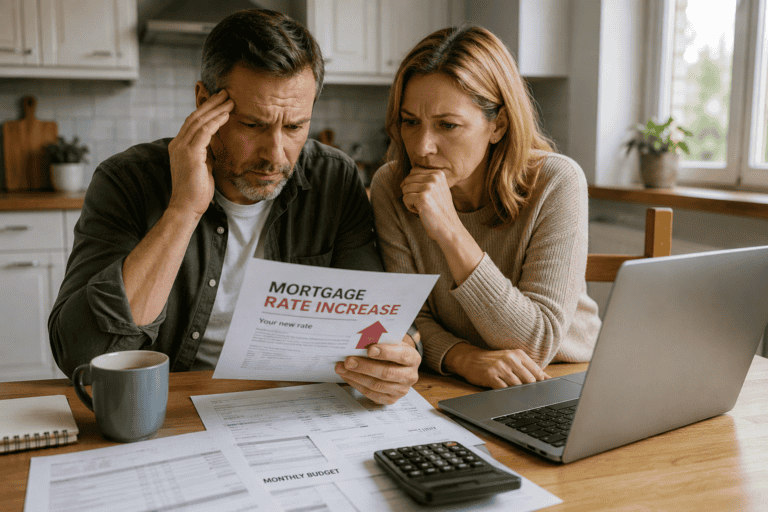
Many homeowners worry that even a small rise in interest rates could make their monthly payments much more expensive.
The truth is that the impact depends on three things:
- How much you still owe on your mortgage.
- Whether you have a fixed, tracker or variable-rate mortgage.
- How long you have left to repay the loan.
The examples below are illustrative only. Your actual payments will depend on your lender, mortgage term and interest rate.
| Mortgage Balance | If Rates Rise by 0.25% | Approximate Monthly Increase* |
|---|---|---|
| £200,000 | Small increase | Around £25–£35 |
| £300,000 | Moderate increase | Around £35–£50 |
| £500,000 | Larger increase | Around £60–£90 |
*These examples are estimates designed to show how a small change in interest rates can affect monthly repayments.
Although these figures may not seem huge, over a full year they can add hundreds of pounds to household costs.
That is why many homeowners follow every Bank of England interest rate announcement closely.
Should You Fix Your Mortgage Before UK Interest Rates Change?
There is no single answer that suits everyone.
A fixed-rate mortgage offers certainty. Your monthly repayments stay the same for the length of your deal, making it easier to budget.
A tracker or variable-rate mortgage can sometimes offer lower rates, but your repayments may change if interest rates move.
Before making any decision, ask yourself:
- Can I comfortably afford higher monthly payments?
- Is my current fixed deal ending soon?
- Do I value payment certainty over flexibility?
- Have I compared offers from different lenders?
If you are unsure, consider speaking with a qualified mortgage adviser before changing your mortgage.
How UK Interest Rates Affect Savings Accounts
Interest rates do not only affect borrowers.
Many savings accounts usually offer better returns when interest rates are higher.
This means some savers may benefit from higher rates, while borrowers with variable-rate loans may face higher repayments.
It is one reason why interest rate decisions affect almost every household in the UK.
How UK Interest Rates Could Affect House Prices
Possibly.
When borrowing becomes more expensive, some buyers may decide to wait before purchasing a home.
If fewer people are buying, demand can slow, which may reduce pressure on house prices.
However, the housing market is influenced by many factors, including:
- Employment levels
- Wage growth
- Housing supply
- Regional demand
- Consumer confidence
For this reason, interest rates are only one part of the picture.
What UK Households Should Do if UK Interest Rates Rise
While nobody can predict future interest rate decisions with certainty, there are practical steps that can help you prepare.
Review Your Budget
Check how much room you have in your monthly finances if repayments increase slightly.
Know When Your Mortgage Deal Ends
If your fixed-rate mortgage expires soon, start comparing options well before the renewal date.
Build an Emergency Fund
Having savings can provide extra security if household bills rise unexpectedly.
Avoid Making Decisions Based on Headlines Alone
Daily market movements can look dramatic, but the Bank of England bases its decisions on a wide range of economic data, not one single event.

What Are Economists Watching Before the Next Bank of England Decision?
Ahead of the Bank of England’s next meeting on 30 July 2026, analysts are focusing on several important indicators.
Inflation
If inflation remains above the Bank’s 2% target, pressure for tighter monetary policy could increase.
Energy Prices
Oil and gas prices remain an important factor because they influence transport, manufacturing and household energy costs.
Wage Growth
Strong wage growth can support consumer spending, but it may also contribute to inflation if businesses raise prices to cover higher payroll costs.
Consumer Spending
Retail sales and household spending help show whether higher interest rates are slowing demand across the economy.
Together, these indicators will help shape the Bank’s next decision.
Frequently Asked Questions
Will UK interest rates rise again in 2026?
It is possible, but no decision has been announced. The Bank of England will continue assessing inflation, economic growth and other key indicators before deciding whether any further changes are needed.
Why do oil prices affect interest rates?
Higher oil prices can increase business costs. If those costs lead to higher inflation across the economy, the Bank of England may decide to keep interest rates higher for longer or increase them if inflation remains persistent.
Will my mortgage definitely become more expensive?
Not necessarily.
If you have a fixed-rate mortgage, your monthly repayments usually stay the same until your current deal ends.
If you have a tracker or variable-rate mortgage, future Bank of England decisions could affect your repayments.
Is inflation still a problem in the UK?
Inflation has fallen from its recent peaks, but it remains above the Bank of England’s long-term target. Policymakers continue to monitor price pressures across the economy.
Should I switch to a fixed-rate mortgage?
That depends on your personal circumstances, financial goals and the mortgage products available to you. Comparing offers and seeking independent financial advice can help you make an informed decision.
Our View
Higher oil prices do not automatically mean that UK interest rates will rise again.
However, they are an important signal that cannot be ignored.
If energy costs continue pushing up inflation, the Bank of England may decide that interest rates need to stay higher for longer or, if inflation becomes more persistent, consider further action.
For homeowners, the best approach is not to panic but to stay informed.
Review your mortgage, understand your repayment options and keep an eye on key economic updates rather than reacting to every headline.
The coming weeks, particularly the Bank of England’s decision on 30 July 2026, will provide a clearer picture of where UK interest rates could head next.
Key Takeaways
- Higher oil prices can contribute to inflation, but they do not automatically trigger an interest rate rise.
- The Bank of England considers a wide range of economic data before making any decision.
- Homeowners with variable-rate or tracker mortgages are generally more exposed to future rate changes.
- Fixed-rate borrowers are usually protected until their current deal ends.
- Staying informed and planning ahead is often more valuable than reacting to short-term market movements.
Disclaimer: This article is for general information only and should not be considered financial advice. Always consider your personal circumstances and seek independent financial advice before making important financial decisions.