Bank of England Raises Base Rate to 4%: What It Means for Your Mortgage, Savings and the Pound
The Bank of England raised Bank Rate from 3.75% to 4% on 5 November 2026, an 8 to 1 vote, the first rise since August 2023. What it means for tracker and fixed mortgages, savings and the pound.
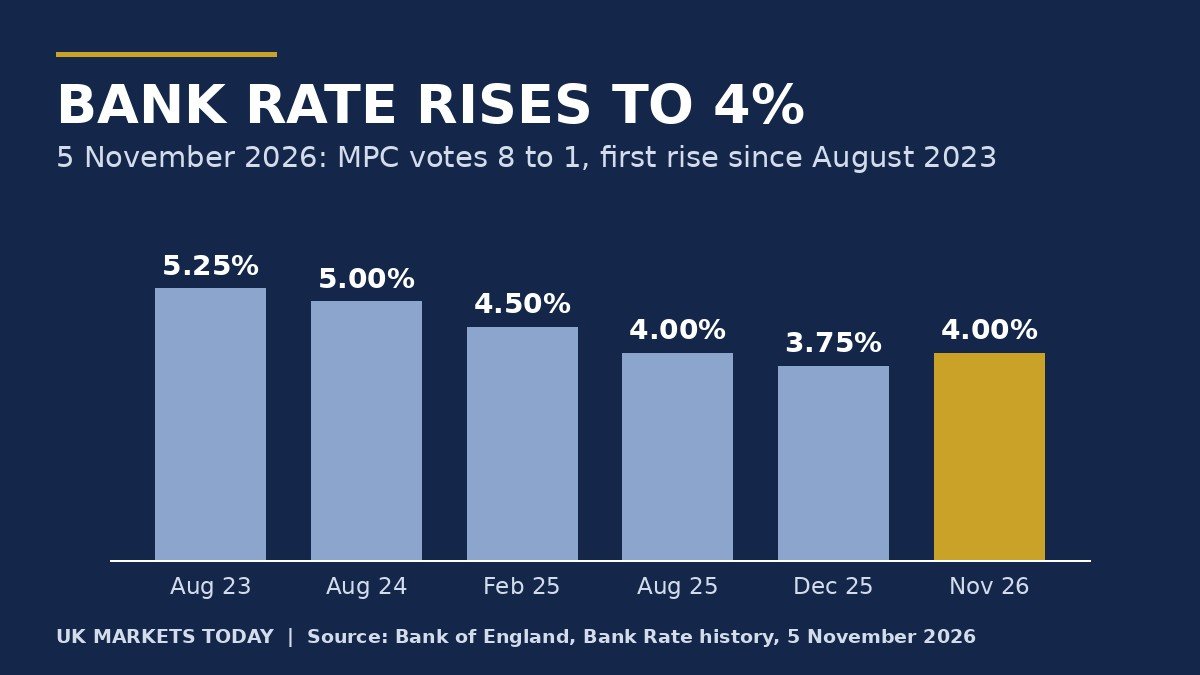
TL;DR: The Bank of England raised Bank Rate from 3.75% to 4% on Thursday 5 November 2026. The Monetary Policy Committee voted 8 to 1 for the rise, the first increase since August 2023. Verdict: if you are on a tracker mortgage, budget for about £29 a month more on every £200,000 you owe. If your mortgage is fixed, nothing changes until the fix ends. Savers should check whether their bank passes the rise on, because many will not do it in full or at once.
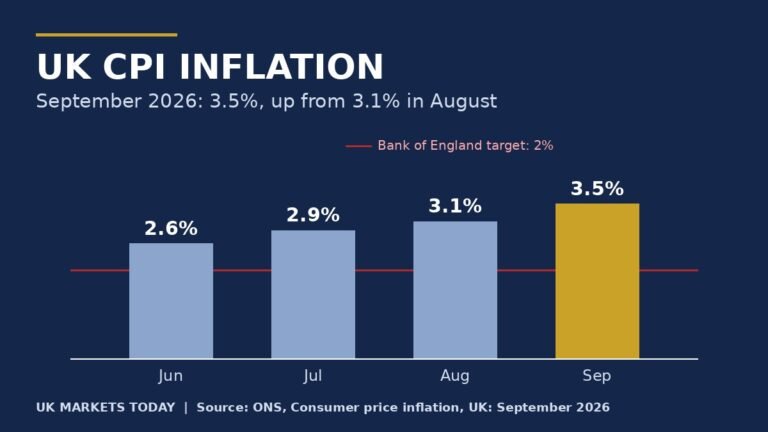
The Bank acted because energy prices keep pushing inflation up. UK CPI inflation was 3.5% in September, and the Bank now expects it to reach around 5% by the middle of next year. The rise is meant to stop higher energy costs feeding into other prices and pay. Read the decision in the Bank of England Monetary Policy Summary and Minutes for November 2026.
| The decision at a glance | What the Bank said |
|---|---|
| Bank Rate before today | 3.75% |
| Bank Rate from 5 November 2026 | 4% |
| Vote | 8 to 1 for a 0.25 point rise. Catherine L Mann voted for a 0.5 point rise, to 4.25% |
| Inflation now | 3.5% in September 2026 |
| Inflation expected | Around 4.5% in early 2027 and around 5% by the middle of 2027, then falling |
| Next decision | Thursday 17 December 2026 |
By Deeraj Kiran. Last checked: 5 November 2026. Sources: Bank of England, linked at the point of each claim. Our Bank of England base rate forecast page has been updated with the outcome.
Why did the Bank raise rates now?
The conflict in the Middle East is now in its ninth month, and global energy prices have kept rising from an already high level. Over the 15 working days to 27 October, Brent crude averaged $108 a barrel and UK natural gas 216 pence per therm, 38% and 81% higher than at the time of the Bank’s July report. CPI inflation rose to 3.5% in September, up from 2.6% in June.
There is still little sign that higher energy costs have spread into wider prices and wages. The Bank raised rates anyway, because the pressure building in the pipeline is now judged enough to warrant a rise, and activity has held up better than expected. The Budget on 28 October is expected to trim 0.25 points from CPI inflation by the middle of 2027, which the Bank has already counted in its forecasts. The full reasoning is in the Bank’s November 2026 Monetary Policy Report.
What does the rate rise mean for your mortgage?
It depends on your deal type. On a tracker mortgage, your rate follows Bank Rate, so a 0.25 point rise usually adds the full 0.25 points to your rate within a month. On a standard variable rate, your lender decides how much to pass on, and most pass on a large part of a rise. On a fixed deal, nothing changes until the fix ends.
Worked example, computed by us: a £200,000 repayment mortgage over 25 years costs £1,169.18 a month at 5% and £1,198.50 a month at 5.25%. A quarter point on the rate is £29.32 a month, or about £352 a year, on that balance and term. On £100,000 the same move is roughly £15 a month.
Fixed rates are priced from market expectations, not from today’s decision, and benchmark two-year mortgage rates have already risen by nearly 50 basis points since the beginning of September, the Bank said. Much of today’s rise was already in the price of a new fix before the Bank acted. If your fix ends in the next six months, read our remortgaging guide for the timings, and check the numbers on our free mortgage calculator.
What does it mean for your savings?
A rise is good news for savers, with a catch. Easy access savings rates tend to follow Bank Rate with a lag, and banks pass rises on more slowly than cuts. Fixed savings bonds are priced from expectations, so the best fixed rates often appear before a rise is confirmed.
Worked example, computed by us: £10,000 in easy access savings earns £375 a year at 3.75% and £400 a year at 4%, a difference of £25 a year, and only if your bank passes the full rise on. Check what your account actually pays against our best savings accounts guide.
The cost of doing nothing is real. £10,000 in an account paying 1% earns £100 a year, while prices rising at 3.5% take about £350 of buying power from that same £10,000. That is a shortfall of about £250 a year before tax, and it grows while the money sits in a low-paying account.
What does it mean for the pound?
Higher UK rates can support the pound, because UK savings and bonds pay more than they did, which can attract money into sterling. But the Bank does not set rates to manage the pound, and the pound also moves on the Middle East conflict, on global risk appetite and on what other central banks do. No one can promise you a direction for sterling from this decision alone.
Will the Bank raise rates again?
Not decided. Governor Andrew Bailey said: “Today’s increase shouldn’t be seen as the first in an inevitable long sequence of hikes. But, unless the conflict in the Middle East is resolved, neither does it seem likely to be the last increase.” Deputy Governor Clare Lombardelli said a further rise is likely to be needed in the near term unless inflation pressures weaken. Alan Taylor called today a “one-for-now” insurance rise and said the next move could be up, down, or sideways.
The Bank’s survey of market participants had a median path of 4% in November and 4.25% in February. That is a survey of expectations, not a promise. The next decision is on Thursday 17 December 2026.
Trap: fixing in a panic at a price that already includes more rises
The mistake to avoid today is rushing into a new fixed deal because rates went up, without noticing that fixed rates had already risen by nearly 50 basis points since the beginning of September. A fix taken now locks in that pricing, including the market’s expectation of further rises. That may still be the right choice for you, but it is not a way to beat today’s decision: the market moved before the Bank did. Compare the deal on its own terms, check the early repayment charge, and do not let a headline push you into a fix you have not costed.
Frequently asked questions
Will my mortgage go up straight away?
If you are on a tracker, yes, usually within a month and by the full 0.25 points. On a standard variable rate, your lender will write to you with the new rate, and most lenders pass on a large part of a rise. On a fixed deal, your payment does not change until the fix ends.
Will my savings rate rise?
Maybe, and probably not by the full 0.25 points or at once. Banks pass rises to savers slowly and partially, and the best rates are rarely the ones your existing account drifts onto. Check your rate today against the best available, and move the money if the gap is wide.
Will the Bank raise rates again in December?
Not decided. The next decision is on Thursday 17 December 2026. The Governor said this should not be seen as the first in an inevitable long sequence of rises, but also that it is unlikely to be the last unless the Middle East conflict is resolved. The deciding evidence will be energy prices and whether pay and prices start rising faster.
Do this next, in this order
- Check your mortgage type: tracker, standard variable rate or fixed, and when any fix ends.
- If you are on a tracker, work out your new payment. On £200,000 over 25 years, a 0.25 point rise adds about £29 a month. Put that figure in your budget now, not when the letter arrives.
- If your fix ends in the next six months, read the remortgaging guide and start comparing deals. Do not wait for the fix to end before you look.
- Check what your savings earn today. If the rate is far below the best available, move the money.
- Note Thursday 17 December 2026, the next Bank decision, and check back here that evening for what it means.
Sources: Bank of England, Monetary Policy Summary and Minutes, November 2026; Bank of England, Monetary Policy Report, November 2026; Bank of England, Bank Rate history. This article is information only and is not financial advice.
Got a UK money question?
Ask it in the Ask UKMT live chat. No sign up, no names, and the answers are checked against official sources. Open the live chat
Follow UK Markets Today on Google
Get our latest guides in your Google feed: set UK Markets Today as a preferred source.